Overview
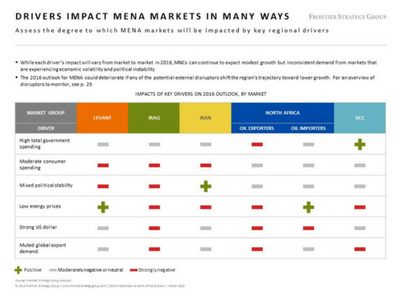
Although business activity in the Middle East & North Africa is not grinding to a halt, business and consumer sentiment are being shaken by low oil prices, political instability, and ongoing conflicts.
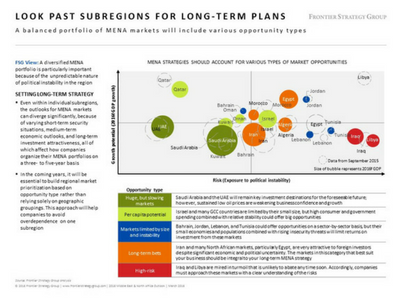
Slowing growth in the region’s biggest markets leaves less room for error in execution, and companies will need to work hard to capture demand in a variety of regional markets, rather than simply relying on large Gulf Cooperation Council (GCC) markets to compensate for difficulties elsewhere.
In particular, companies that hope to capture long-term opportunities in Algeria, Egypt, and Iran must implement growth plans sooner rather than later in order to stay ahead of competition.
Strong competition in stable but slow-growth markets will force companies to demonstrate value, adjust pricing, and maximize the capabilities of local partners, while market share will remain critical in less-certain markets where big opportunities will emerge only in the medium term.
What you will learn
- What are the main drivers shaping the outlook for the Middle East & North Africa region
- How will the country and sub-regional outlooks for key markets like Iran, GCC, and North Africa evolve
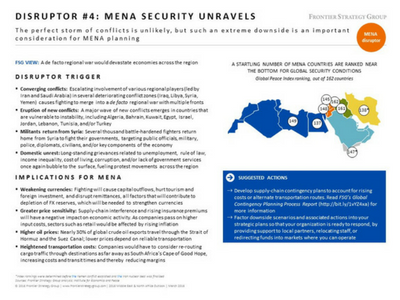
- Which scenarios and disruptors will have the greatest impact on the region
What you will receive
- Immediate access to the 31-page PDF report
- Exclusive email updates covering emerging markets business topics
- Special discounts on future report purchases