Historically, commercial tactics in India have either focused on creating hedges to protect from a slowing market or maximizing growth during boom periods. Moving forward, corporate headquarters are increasingly going to mandate a focus on profitability during both the peaks and the troughs. Executives have to accept the level of volatility of the Indian market and implement commercial practices that maximize returns during all phases of the business cycle.
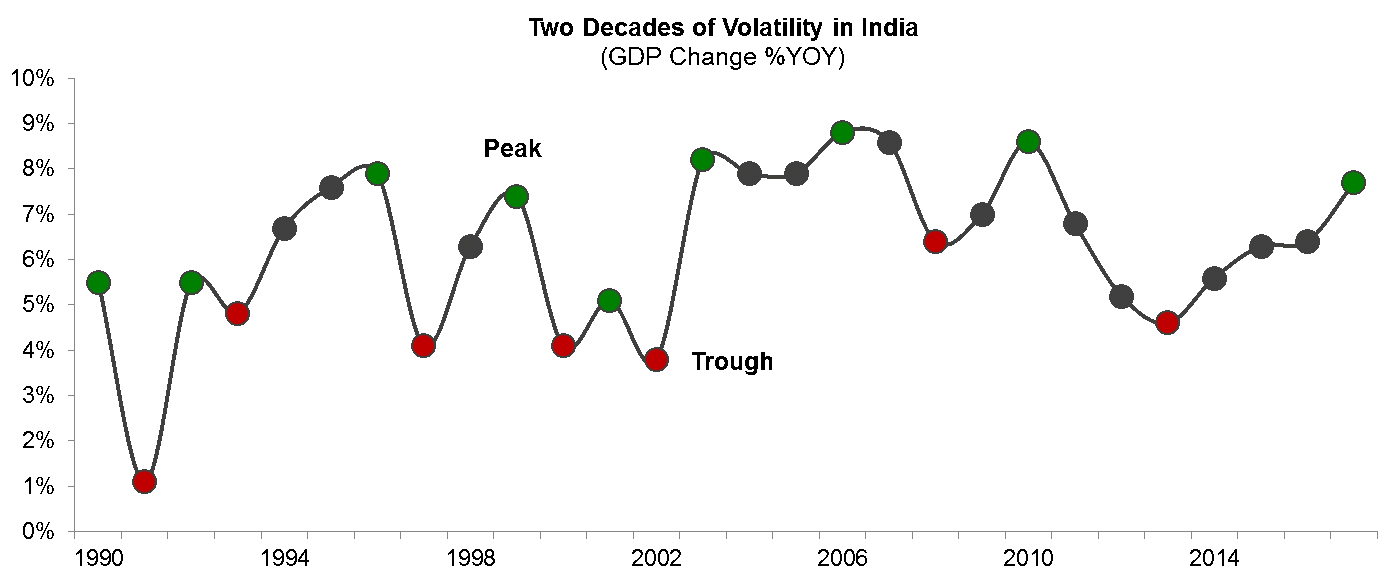
The graph below illustrates India’s volatility over the past two decades, which is why it’s vital to keep these two things in mind:
- Preparing for a mature market: Companies that have committed to staying in India for the long run, despite the challenges associated with doing business in the country, should revisit their commercial strategies in order to be more effective during the next phase of execution as the market continues to mature
- Handling peaks and troughs: Volatility is not uncommon to India; companies need to accept the level of variance that exists in this country and adopt commercial practices that maximize returns during the peaks and the troughs
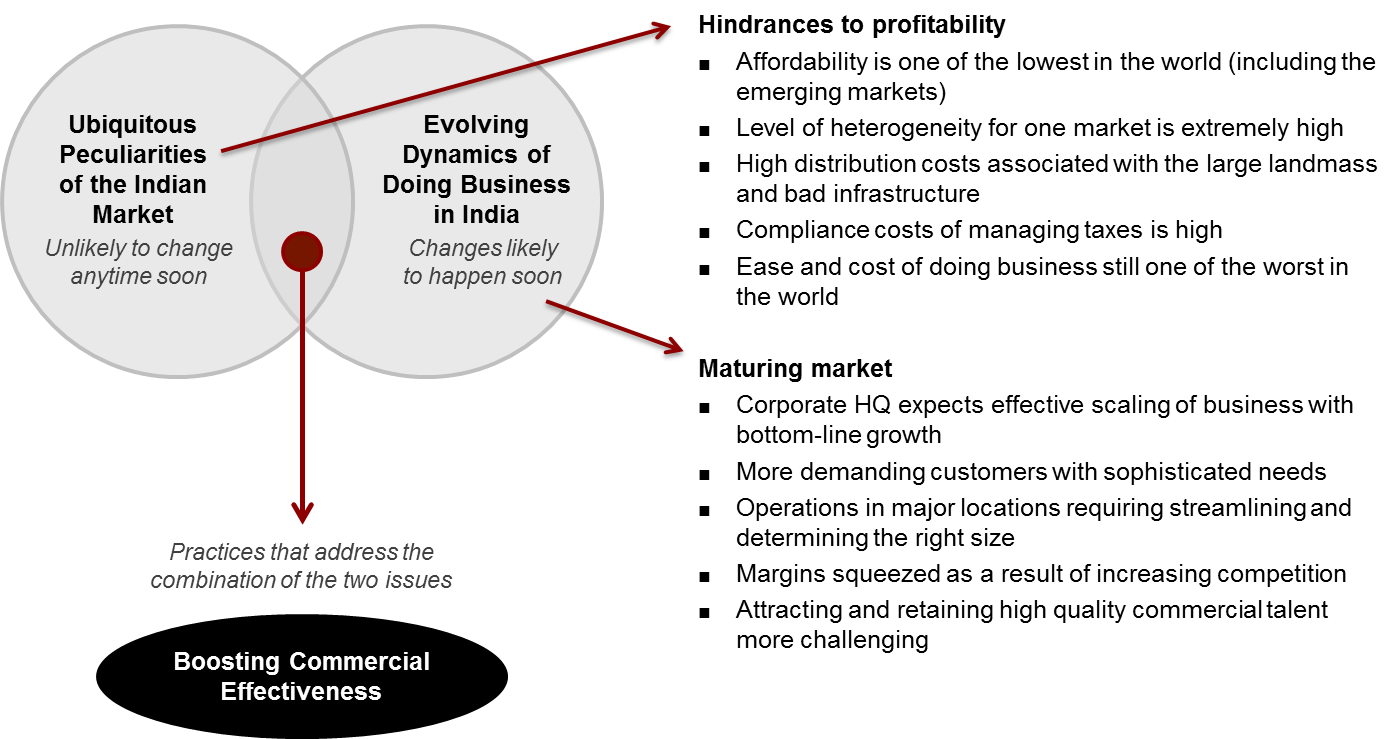
In addition to India’s volatility, another challenge in the region is understanding the market dynamics and peculiarities of India. In order to prepare for the next phase of growth in India, executives need to be constantly analyzing the constants and variables of the marketplace, which will eventually impact the firm’s ability to achieve commercial excellence. The image below helps to further illustrate this concept, but keep in mind that companies looking to boost their commercial effectiveness need to focus on the specific phase of the commercial process that requires readjustment. Though challenging, this task is not insurmountable. With the proper methodology and process in place, India will provide great opportunity to MNCs. FSG breaks down the process into three key phases and provides 10 case studies of firms that are addressing these issues in India most effectively. FSG’s clients can access the full-report here.


Speak Your Mind