About Shishir Sinha

Shishir Sinha is a Research Analyst for Frontier Strategy Group’s Asia Pacific division based out of Singapore. His role involves creating both quantitative and qualitative analytical-models to evaluate the impact of political, economic, and business trends across the ASEAN-5 markets and India, on FSG’s clientele globally.

Shishir holds a B.Sc. in Economics and Finance from Singapore Management University. Prior to joining FSG, he worked as a research analyst for leading financial institutions such as Citibank and Credit Suisse. He has lived in India, Thailand and Singapore, and is fluent in English and Hindi.

Find more about me on:

Recent Posts

Indian E-Commerce Poised for Growth

E-commerce in IndiaWhile an e-commerce boom in India has been thought to be on the horizon for a long time now, the industry is finally showing signs that it is heading in that direction despite having several false starts.

Why now?

  • Critical Mass: The Indian e-commerce industry is finally close to achieving the critical mass required for it to genuinely go through the boom that has been predicted to happen several tmes over the past decade. The number of unique visitors on retail sites doubled between 2011 and 2013, and more than 1.5 million more are visiting every month.
  • B2B is open: To develop the sub-sector without being politically unpopular, the Department of Industrial Policy and Promotion clarified its regulations on B2B e-commerce, allowing foreign firms to have 100% ownership in such ventures.
  • B2C is likely to open up very soon: The Prime Minister’s Office is in favor of opening up the fast-growing e-retail sector to FDI—a move that will allow global majors such as Amazon and eBay to invest in the country. Preparing for the upcoming change will help companies stay ahead of their competition.

Why should e-commerce matter to multinationals?

  • Large, Fast-growing Base: India’s fast-growing online population has now surpassed that of Russia, Brazil, and Japan to become the third-largest Internet population in the world. It also has one of the youngest populations of Internet users in the world, providing a large base of users who will more easily adapt to technological changes.
  • Strong Growth Expectations: With the introduction of faster Internet, an increase in urban disposable income, and the launch of global players with sophisticated platforms, some experts expect the e-commerce industry to be worth US$ 70 billion by 2025.

Key Consumer E-Commerce Trends:

  • Significant Non-Metro Following: Contrary to popular belief, e-commerce users are not purely from the top metropolitan areas of India; in 2011, cities with a population of less than one million accounted for almost 48% of total e-commerce users. Another study showed that more than 57% of the revenue from e-commerce products and 54% from the e-commerce services industry was derived from beyond the top eight metros.
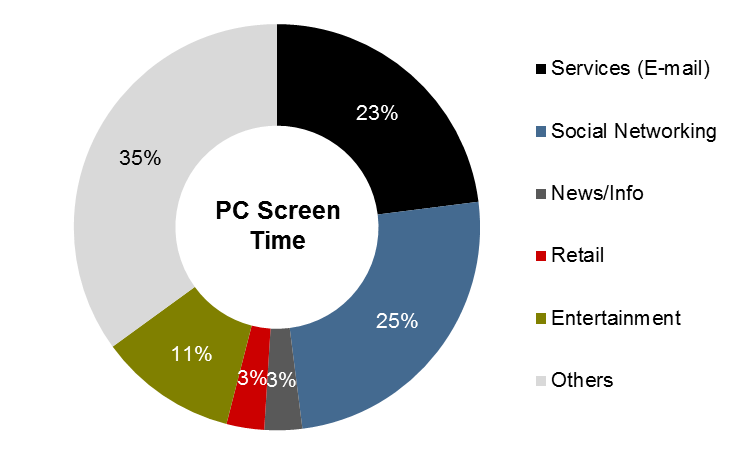
  • Time spent on retail not high: A closer look at the division of time spent online by users reveals that most of it is browsing through social-networking websites and on services (see chart below). With only 3% of screen time spent on actual retail, companies need to be exploring marketing (advertising) opportunities for influencing consumers’ final purchases.PC Screen Time

Key Business E-Commerce Trends:

    • SMEs will continue to be early adopters: SMEs are the primary users of B2B e-commerce in India (see case study on slide 21), because they manage businesses with relatively lesser amounts of capital and operate on a low-cost basis. Embracing this cost-efficient technological tool has allowed SMEs to create a self-serving business model, where they can access channel partners and customers through a single platform.
    • MNC’s likely to test with small orders and SMEs: Some large firms and MNCs in India have begun testing their B2B e-commerce platforms but are keeping them on a small scale to assess the integrity of the system. Avenues for testing a B2B platform would include launching it to (a) very small orders that are otherwise left unattended, (b) small firms that have not traditionally been of interest due to scale, or (c) firms looking for samples to test the product.

Holistic Strategy: Companies need to develop a holistic e-commerce strategy with tactics to handle both the online and offline channels. Not all industries will benefit from using online platforms for conducting commerce. But with users spending increasingly large amounts of time online and becoming dependent on the Internet for gathering of crucial information, companies need to investigate and form a social media strategy to create an impact.

Reminder of India’s Potential: Three Experiences Almost Not Possible Five Years Ago

India SunriseAs one spends time in India at a point when the economy seems to be falling apart, it is easy to forget the advances this generally slow moving country has made on several fronts over the past few years. Though growth has moved off its high trajectory, having seen average GDP growth of almost 8% between 2002 and 2008, the underlying story of its great potential in the long run remains intact. The country has an immense domestic consumption base which is young and has yet to experience the level of income boom seen by China and other large developing countries; India’s private consumption per capita remains below that of most Southeast Asia countries and is 2.5 times smaller than China’s, 5 times smaller than South Africa’s, and most than 7 times smaller than that of Brazil.

Three simple experiences from my trip to India where I spent substantial time with executives in Mumbai and Delhi, which would have been nearly impossible five years ago, quickly reminded me of the potential that many companies continue to see in India and the changes they are bringing to the way the country is going to develop over the next decade.

  1. Rise of E-Commerce – Success of Flipkart: Items purchased = six best-selling novels in paperback, Amount paid = US$67, cost of delivery = US$0, mode of payment = Cash on delivery. It is not hard to understand how Flipkart.com, one of India’s largest e-commerce platforms, has become so successful, so quickly. Launched in 2007 by two ex-Amazon employees, the firm recently raised US$200 million (putting its valuation at roughly US$2.5 billion) to, “ to spruce up Flipkart’s technology capabilities, logistics chain and staff strength as it shifts to a marketplace business model, where retailers use the online platform to sell brands to customers directly,” said Chief Executive Sachin Bansal. Companies such as Flipkart are likely to become more popular in India as E-commerce is on the rise. We are already seeing interesting concepts being launched, such as Easy Fix, a service that provides professional repairmen for household needs in Delhi. According to recent report by McKinsey, India is on the threshold of a digital revolution. Driven by cheaper mobile handsets and the spread of wireless data networks, the number of Internet users in India is expected to nearly triple from 125 million in 2011 to 330 million by 2016- E-Commerce has to become an integral part of everyone company’s strategy.
  2. Proliferation of Luxury Brands in India - Starbucks: After its failed attempt to enter India as early as 2007, the global coffee shop chain finally opened-up its first outlet in the country in October 2012, with a focus on the urban mega-centers of Mumbai and Delhi. Operating in a joint-venture format with the Tata Group, Starbucks sees great potential in the rising upper-middle-class of India, which has a large propensity to consume luxury products. The company currently operates about 15 stores but plans on having a total of 50 stores by the end of just this year. This large consumption appetite coupled with the opening of sectors to foreign investments, such as the passing of the single- and multi-brand retails bills, should only lead to more such luxuries being available over the next decade. As of May, 18 single brand retailers have been given approval to invest into India with the total value of investments at US$173 million.
  3. Execution of Mega Projects – New Delhi Airport: Finally, sitting at the swanky new airport in Delhi, one is forced to question the general pessimism associated with India’s ability to execute on mega projects, especially those associated with infrastructure development. The Indira Gandhi International Airport (terminal 3), inaugurated in 2010, was built at a record pace of 37 months, compared to 76 months taken for Singapore’s Changi Airport T3 and 60 months taken by both Heathrow’s T5 and Beijing’s T3, highlighting the capability of India’s private sector to manage and execute large scale construction projects (US$2.7 billion) in a sector which is generally known for corruption, bureaucracy, and delays. With the increased focused from the government towards attracting private players and structuring PPP (public-private-partnership) type construction projects, it would not be a surprise to witness a quicker pace of development in the infrastructure space over the next decade.

Same Problem, New Name: India’s growth prospect has been hampered purely by the lack of political will and inability to enforce the market reforms that are necessary to bring the country back on track. The utter sluggishness in policy making has had many different names (impacts) over the past few years; high inflation, policy logjam, high fiscal deficit, high current account deficit, and now, currency devaluation. It would not be a stretch to assume that conditions are likely to remain uncertain and without much improvement until the elections of 2014, but this lull-period by no means foreshadows the longer term growth trajectory of this country. Domestic consumption has always been part of India’s growth story and can be revived easily; the government simply needs to get its act together and work on reviving the much needed investments to get out the current mess.

Increasing Need for Regional Analysis in India

Magnify India

My colleague Shijie Chen recently wrote about the need for provincial analysis to uncover new business opportunities in China. Regional analysis is also needed for India since a study of the parts is more revealing than a study of the whole. Comparative performance analysis of the Indian states has become more prominent than studies of national strategies, as state-based reforms will likely be one of the key drivers of higher national growth in the future. Here are four things to consider:

  1. Divergence in development: India’s economic growth story has not been one of coherent national expansion—it has been one of scattered tales of development, making the study of its individual parts highly important
  2. Above average states: At a time when the country is going through a slowdown, companies need to find the opportunities in states where there has been sustained high growth; in 2011, 75% of the states grew above the national average, and 25% experienced a double-digit economic expansion
  3. Coalition politics lead to regionalism: Because the central government is composed of coalition of parties, economic competition between the states has increased as regional parties vie to distinguish themselves
  4. States with their own policies: State governments are also likely to begin introducing their own economic policies to promote growth. Narendra Modi, chief minister of Gujarat, has introduced a five-year export policy in the state to promote its products on an international level. It is the first of its kind to be adopted in the country

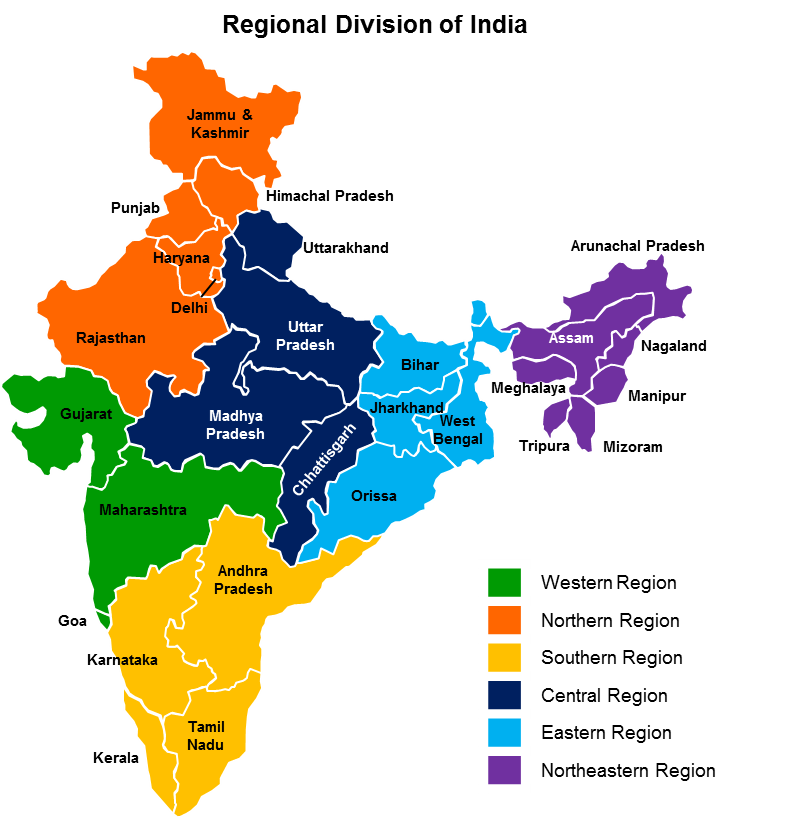
Regional Division of India

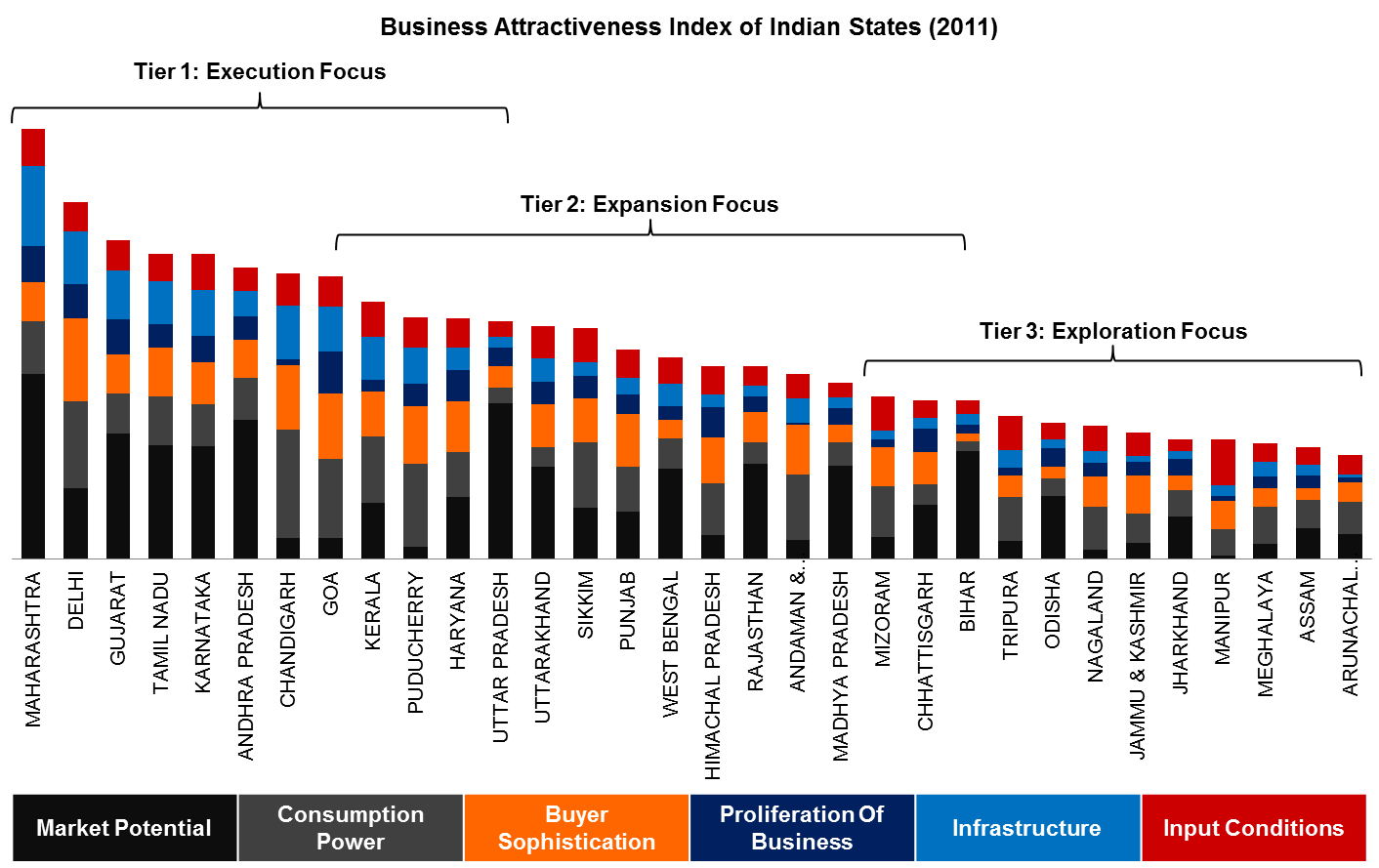
Frontier Strategy Group aggregated critical variables into an index and benchmarked the states in India against each other to understand their structural differences:

  • Factors chosen: Six areas of focus were chosen based on factors that are considered imperative for making investments
  • Weights: Weights were chosen to favor states that would reveal a long-term attractiveness
  • Normalization: Variables were normalized in order to account for the size differences between the states

After ranking the states, we divided them up into three key areas as you’ll note in the chart below (this division would differ from business to business)

  1. Execution Focus: Established States Where Optimization of Operations is Necessary
    These are states where several MNCs have had a presence for over a few decades, making these markets established and well penetrated, necessitating a pivot in strategy from one that is expansion focused to execution focused
  2. Expansion Focus: Growth Trends are Key Deciding Factor States under this umbrella are those where you currently have a presence or potentially consider creating one. Analysis of these expansion-focus states should not be conducted purely on a size basis, because many of them have grown tremendously over the past decade; a study of change in growth trends is more relevant for gauging true potential
  3. Exploration Focus: Mostly Eastern, Northeastern, and Central States of IndiaAn exploration focus is needed in states where your firm does not have a presence but would be interested in exploring; especially the top-tier or highly-populated cities in such states. Companies should conduct longer-term comparative studies to judge the true performance of some of these up-and-coming states in the eastern, northeastern, and central parts of India

Business Attractiveness Index of Indian States

India’s economic growth story has not been, and will not be, one of coherent national expansion; it will remain one of scattered tales of development. As the country goes through a phase of decade-low growth, companies need to find opportunities in states where there will be sustained growth, wealth creation, and overall development.

Engaging Distributors in ASEAN

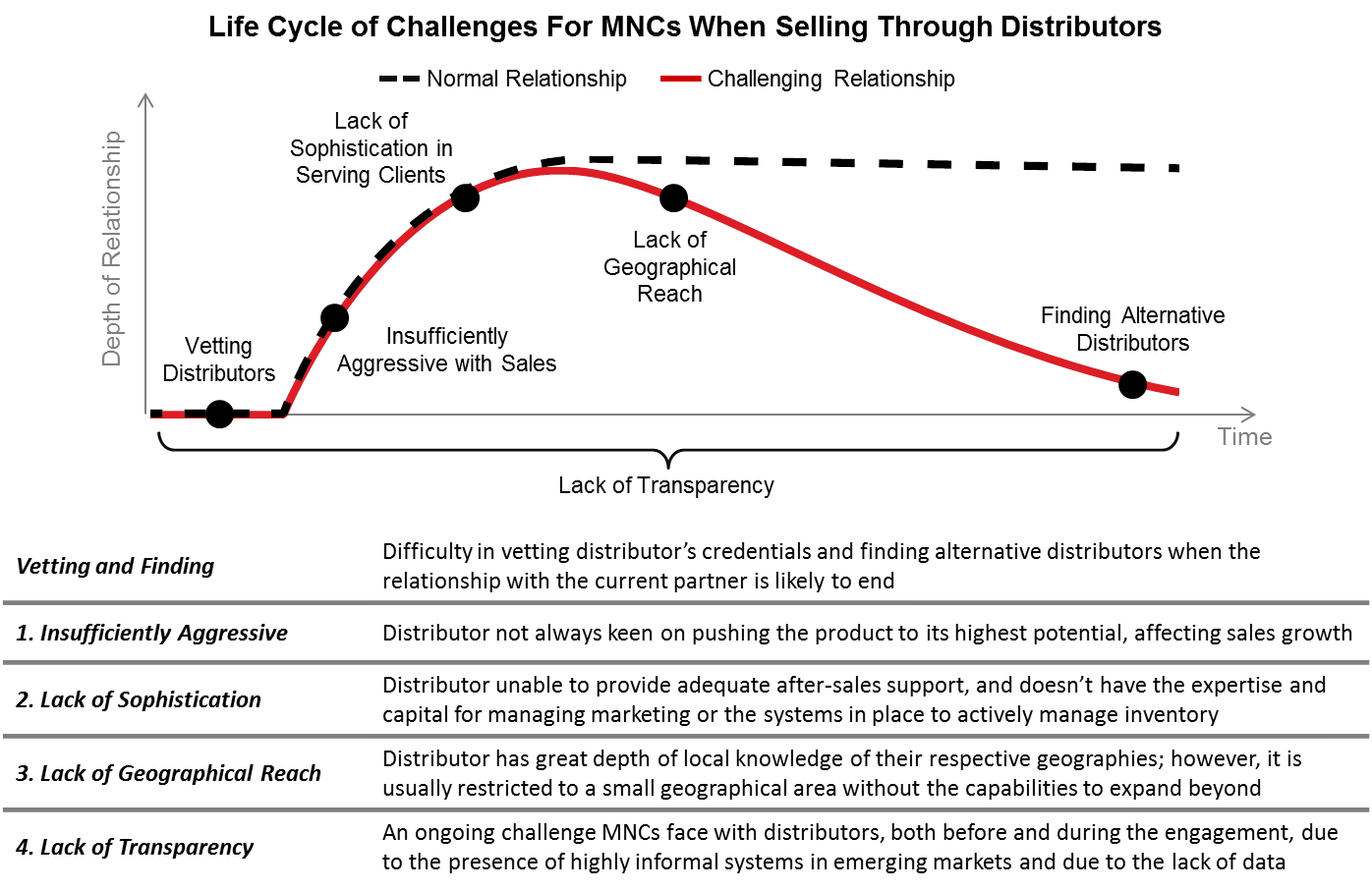
Following my previous post on optimal management of distributors in ASEAN, I want to discuss several key issues that arise when engaging distributors in the ASEAN region as indicated in the image below:


Life Cycle of Challenges for MNCs When Selling Through Distrubutors

Address the Lack of Aggressiveness

Understand Where Your Product Fits in the Distributor’s Portfolio

■ Sales representatives of MNCs might not find their distributors to be aggressive enough until they truly understand the role their product is playing in the distributor’s portfolio and his business

■ Training your team about the economics of the distributor’s business will allow your sales representatives to set more realistic targets while creating a more sustainable relationship between both parties

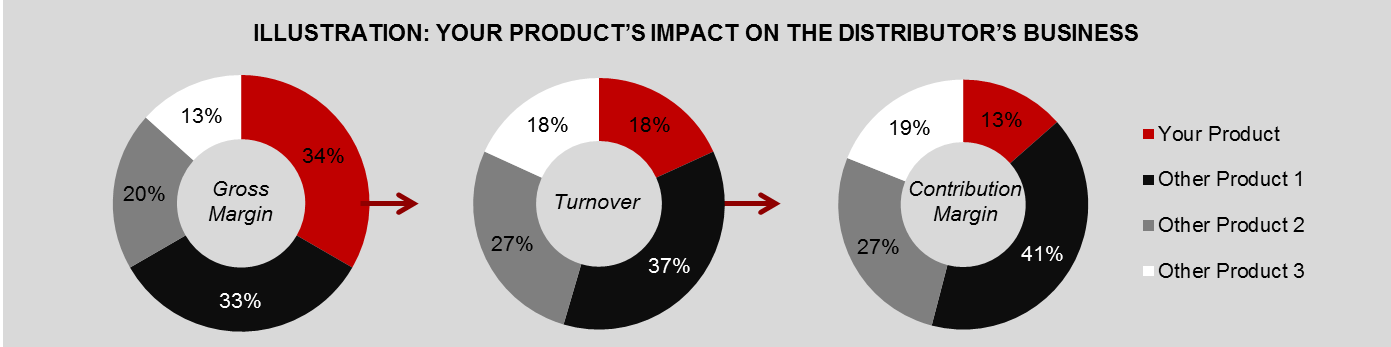
Your Product's Impact on the Distributor's BusinessWhat is happening: In the illustration above, your product provides the highest gross margin (34%) to your distributor’s business, but it has a relatively lower inventory turnover (sells slower) and provides the lowest actual contribution (impact on the bottom line) to their business compared to products 1, 2, and 3

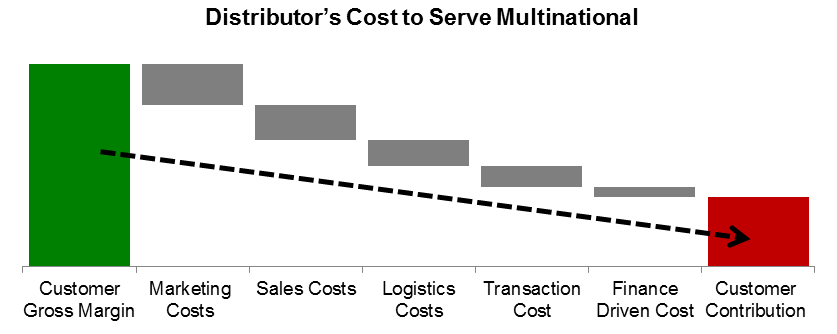
Distributor's Cost to Serve MultinationalWhy is this the case: The distributor has to incur several variable costs in order to sell your product; thus your actual contribution value to their business can differ. The illustration on the right explains some of these costs that to serve your business


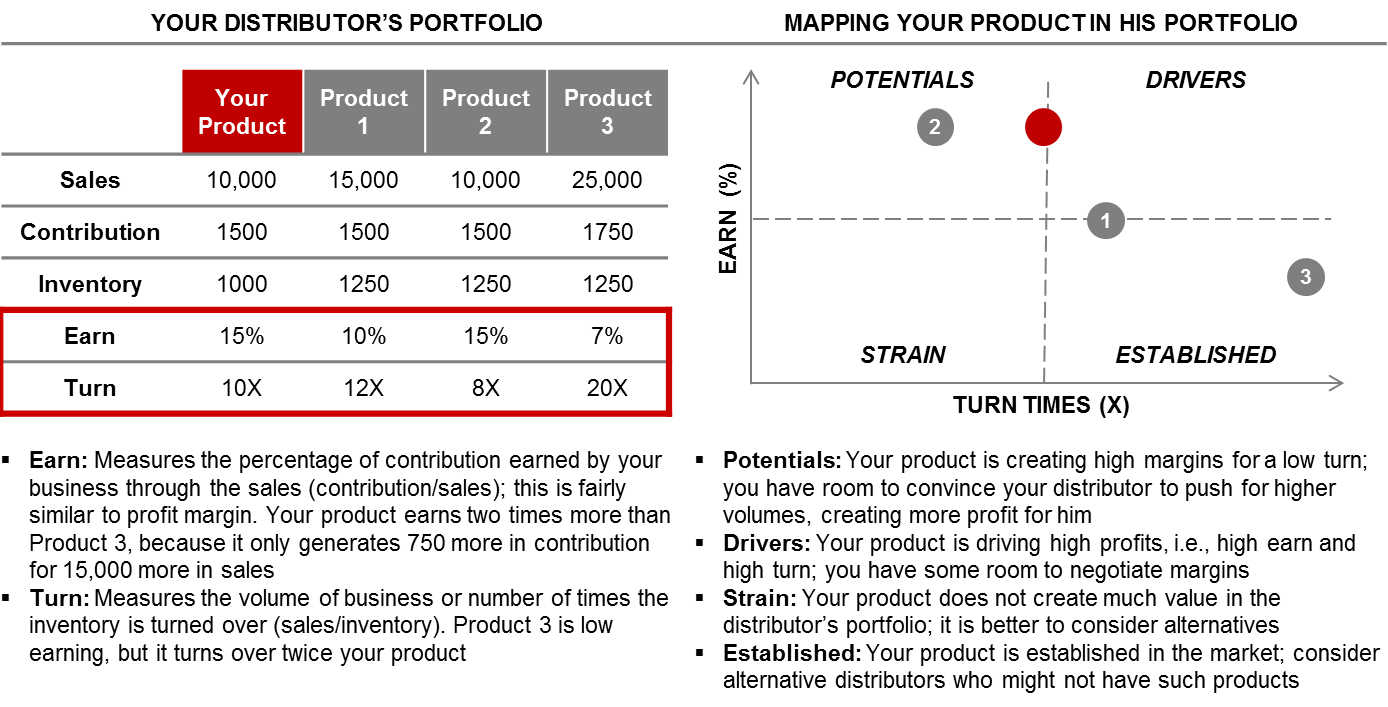
Choosing the Right Partner by Learning the Distributor’s “Earns” and “Turns”

Right Partner: Detailed knowledge of how your business contributes to the bottom line of the distributor can help you chose the most suitable partner—one whose current product portfolio complements the attributes of your product

Right Fit: Distributors who can attain higher “earn” and “turn” are likely to be much more aggressive about pushing your product


Distributor Portfolio

Distributors Are the Way to Go: Indirect Channels Highly Dominant in the ASEAN-5

Why Is It Paramount to Understand The Optimal Management of Distributors in ASEAN?ASEAN-5 Benchmarking

As in most emerging market regions, multinational corporations (MNCs) operating in the ASEAN-5 are heavily dependent on distributors, making optimal management of these partners key to survival and growth in these highly dynamic markets.

A combination of the three factors below makes it imperative for regional heads to concentrate on improving internal capabilities to complement the unsophisticated nature of the market:

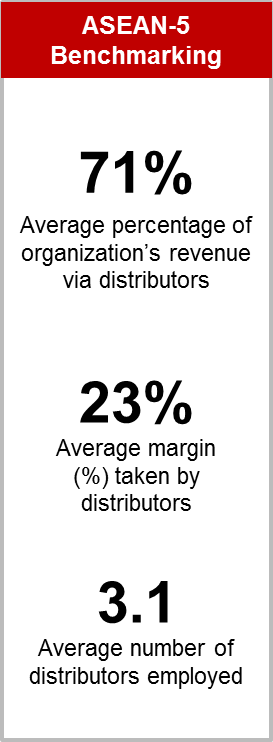
  1. Dominance of Distributors: Most MNCs will be using distributors for their sales in the ASEAN markets, with the indirect channels bringing in 71% of revenues, as compared to 65% in the APAC region overall. Companies will only use their own sales team for handling key clients in relatively well-established geographical locations (national capitals)
  2. Few Established Players: On average, companies tend to use 2–4 distributors but often state that they don’t have enough established partners to work with; 41% of the respondents (based on FSG’s survey) found scarcity of finding alternative distributors to be a key issue
  3. Hands-On Approach Critical: Given that there aren’t many established partners, companies have to find local entrepreneurs with potential and grow them into successful businesses by training and supporting their activities


Distribution in the ASEAN-5: Fairly Similar Model Across the Region

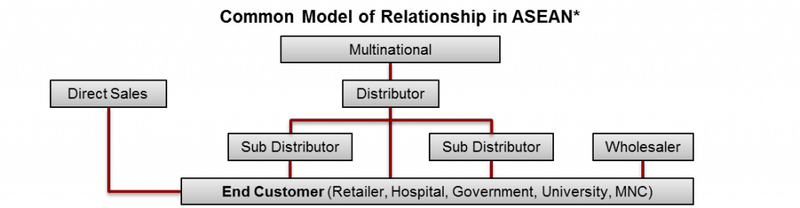
When comparing the same industry in the majority of the ASEAN markets, the go-to-market strategy should be fairly similar. However, on-the-ground tactics can differ based on the needs of the individual market and company.

  • Example: In Indonesia, if the firm’s goal is to achieve geographical expansion, then having a few sets of distributors becomes important in order to have some to manage Jakarta, and others to manage outside of Jakarta (Java), where credit management tactics can differ vastly

Common Model of Relationship in ASEAN


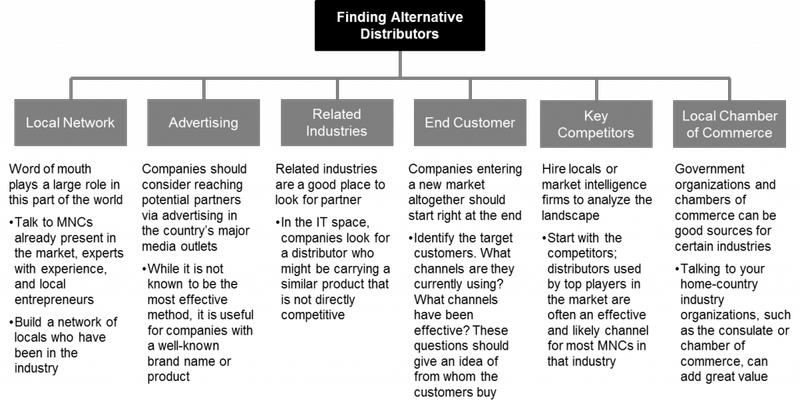
Using Local Sources Effectively Can Go a Long Way in Helping You Find Distributors

Selecting the right local partner can be the difference between success and failure for most companies expanding within the ASEAN region. Following an analysis of the distribution landscape, companies can identify potential partners through some of the following sources:

Finding Alternative Distributors


Multinationals Continue to See Long-Term Potential In India Despite Current Volatility

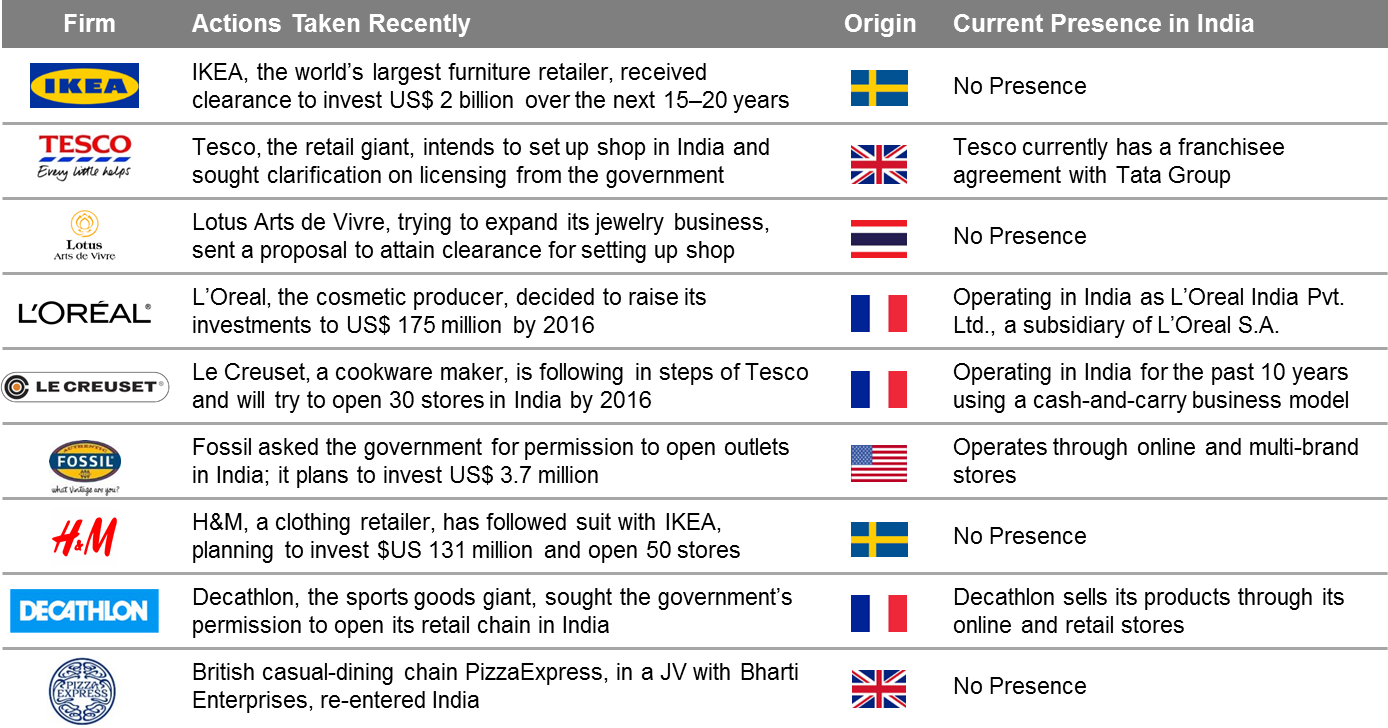
Many multinationals believe in India’s longer-term consumption growth, reflecting sustained interest

Unilever’s announcement to purchase an additional 22.5% stake in its Indian subsidiary for US$ 5.4 billion is indicative of the faith that many MNCs have in India’s longer-term growth potential (see list below for other such investments)

  • We are going to be continuing to export more and more vehicles from India because India is so competitive and the vehicles here are so representative of the vehicles that people want around the world.
    -Ford Chief Executive, Alan Mulally
  • “India is growing like most other developing countries where there are a lot of opportunities in consumer electronics and appliances. Our philosophy has been to not simply import products from other countries, because items should be specially customized for Indian consumers, keeping local needs in mind.”
    -Panasonic President, Kazuhiro Tsuga

Consumer and Retail Industry

The majority of interest from MNCs in India has been in sectors that are associated with private consumption, which accounts for about 60% of GDP, as this segment is expected to grow strongly with the rise of the middle class and growing labor force

Consumer and Retail Industry


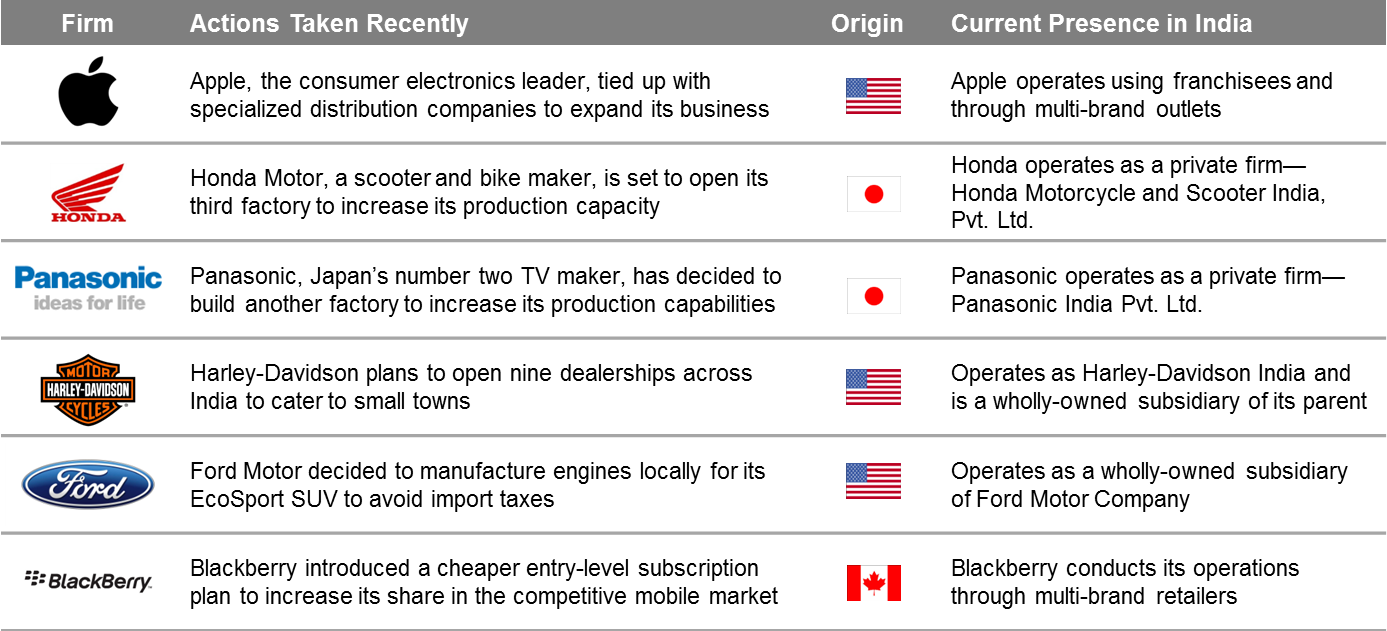
Automobile and Electronics

Several firms in the automobile and electronics sectors have invested in increasing their capacity despite experiencing a slowdown in sales, demonstrating their belief that the current conditions are unlikely to persist much longer

Automobile and Electronics


India: Interconnectedness of Issues Makes Scenario Planning Critical

Growth is likely to bottom out as a few positive trends are emerging that are likely to create near-term gains

  • Cost of Borrowing: Reserve Bank of India, India’s central bank, cut the key lending rate, bringing down the total cost of borrowing by 75 basis points during 2013, in order to promote growth in investments and consumption
  • Price of Goods: India’s stubborn inflation has also fallen to a 41-month low of 4.89%, into the central bank’s comfort zone of 4–5%, as food and fuel prices have fallen significantly over the past few months
  • General Demand: Industrial production growth has also exceeded market expectation, growing at 2.5% during March. It benefited from the positive expansion in manufacturing output and capital goods production, highlighting slow but sustained demand
  • Rural Demand: Private-consumption demand from more than half of India’s total workforce from the agriculture sector is set to increase, because meteorologists expect normal monsoon rains this year after parts of the country suffered from drought last year

However, interconnectedness of issues makes scenario planning critical in the medium to short run in India

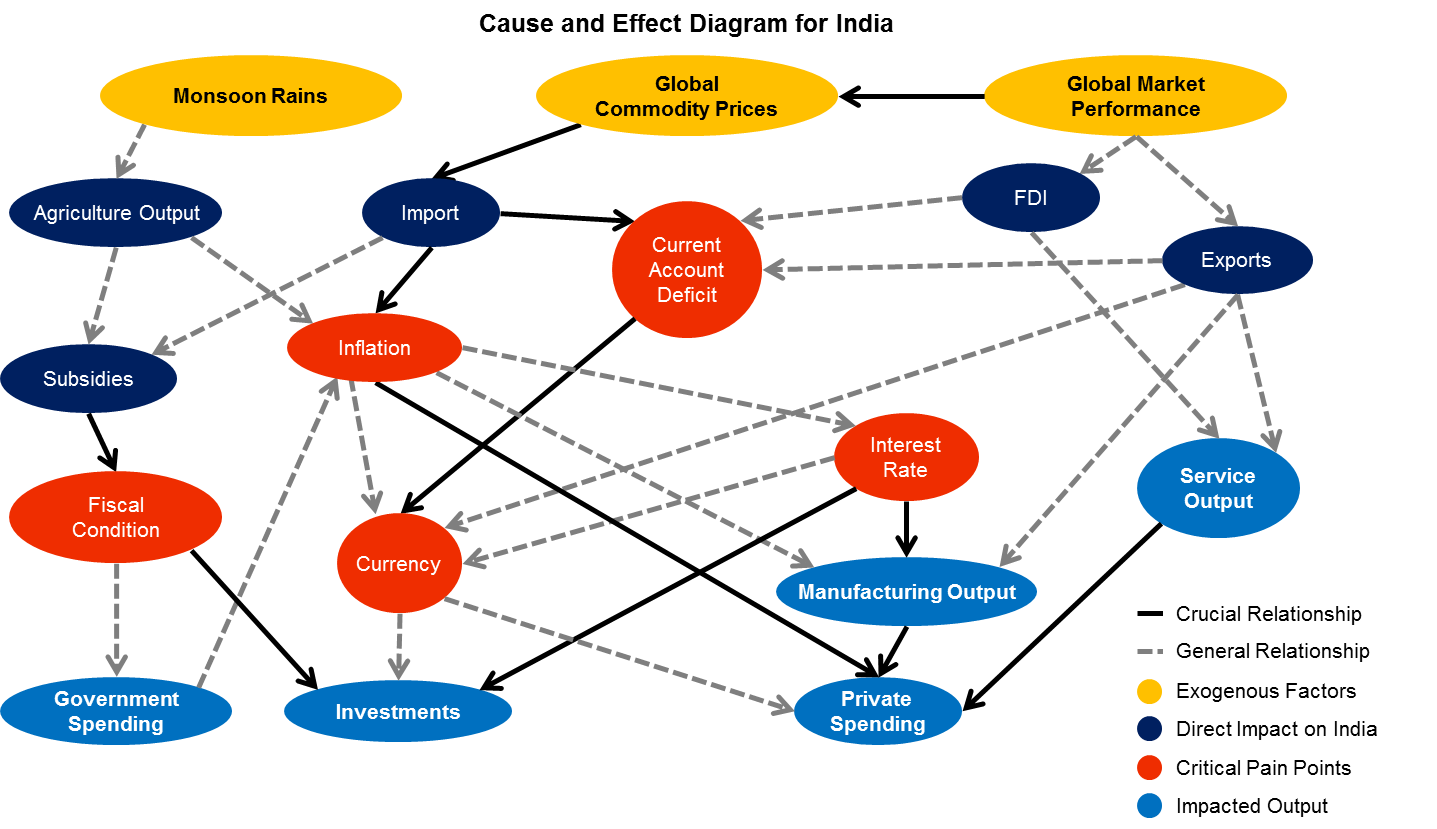
A bullish view on India’s long-term potential is justified, but it should not overshadow the need for careful planning in the short-to-medium term as several fundamental issues remain unresolved and in a precarious situation. The causes of some of India’s critical pain points are factors beyond the control of most MNCs can impact their businesses (see diagram below):

Cause and effect diagram for India


Global price impact: Fragile current account deficit can benefit from global decline in commodity prices

(a) What is the status of the current account deficit (CAD)?

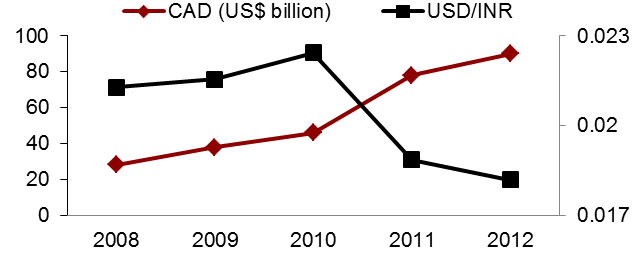
  • India’s current account deficit has grown more than five times (in USD) over the past six years, driven by the country’s insatiable demand for oil and gold imports. The overall CAD is estimated to be at around 5% of GDP, which is twice the sustainable level

(b) Why is this important?

  • The trade imbalance, caused by subdued exports demand, and terrific import growth has led to a high CAD, which in turn has caused a major devaluation of the rupee
  • Such volatility affects a MNC’s ability to import goods in a price-sensitive market, hurts the bottom line when repatriating income, and increases the USD import bill for the country

CAD v USD/INR


(c) What is likely to change moving forward?

  • The global prices of gold and oil have decreased this year, directly reducing pressure on the CAD. Moreover, the government has introduced a US$ 550 million stimulus package to incentivize export growth while increasing the import duty on gold
  • The government also slashed the tax rate levied on the interest that foreign investors earn on their investments in local bonds from 20% to 5%, encouraging more capital inflows in the debt markets

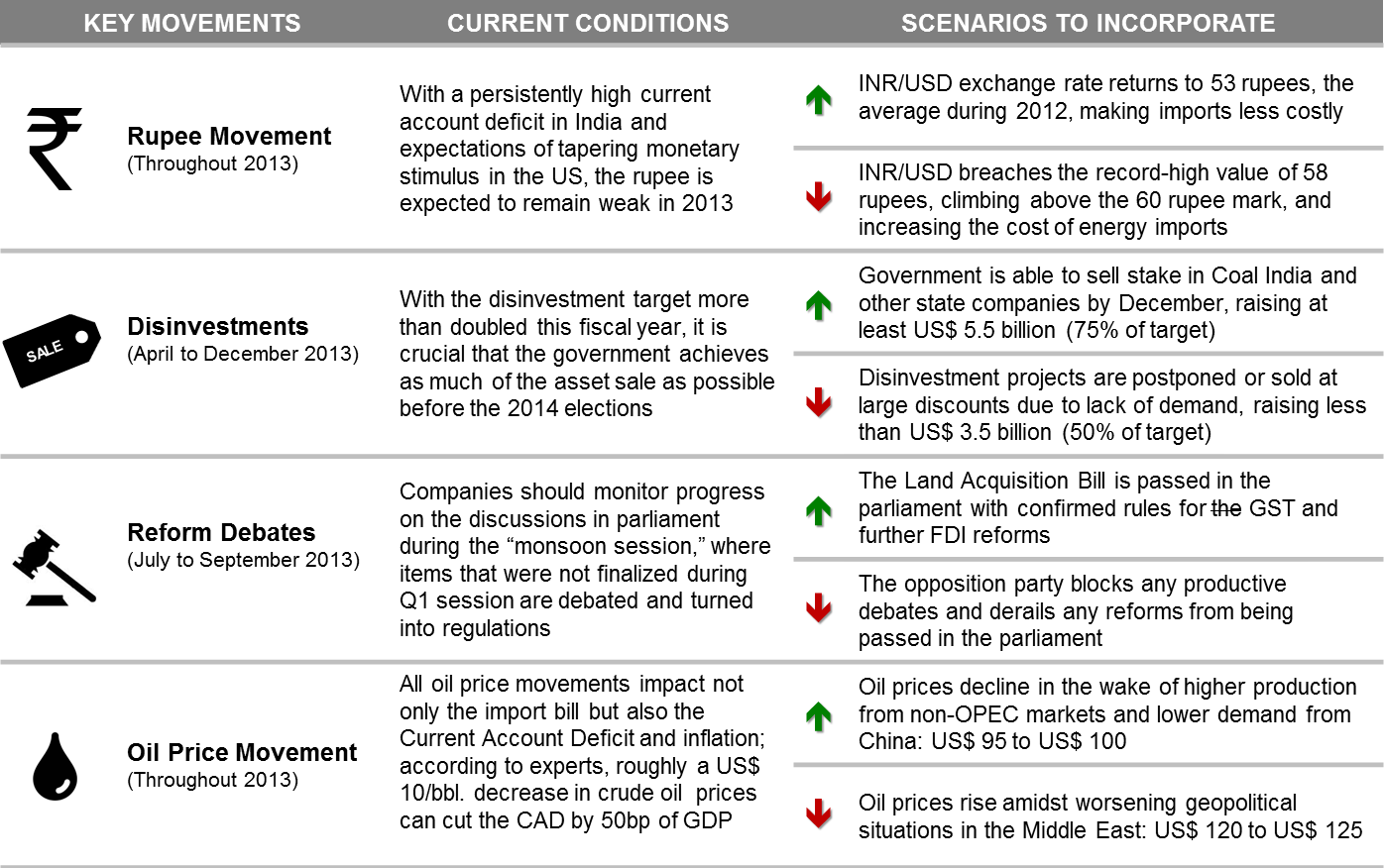
Companies’ short-term (12 month) scenario analysis should incorporate these key trigger points:

Key movements diagram


Truly Understanding ASEAN: Country-Level Analysis Not Enough

Continuing the discussion from my previous post on ASEAN strategy, here are some additional points to consider:

1. Country-Level Analysis Not Enough:

a. As the region matures and companies increase their focus on it, executives need to conduct in-depth provincial analysis in order to understand where the specific demand-side opportunities lie and where there is the ideal supply-side support

b. In a market where affordability is a key challenge faced by all MNCs, executives ought to conduct their opportunity analysis on a provincial basis, to focus their investments towards the top choices

c. While provincial data is not available for many indicators, companies can begin with macroeconomic analysis by looking at gross domestic product, per capita wealth, population, and some expenditure patterns


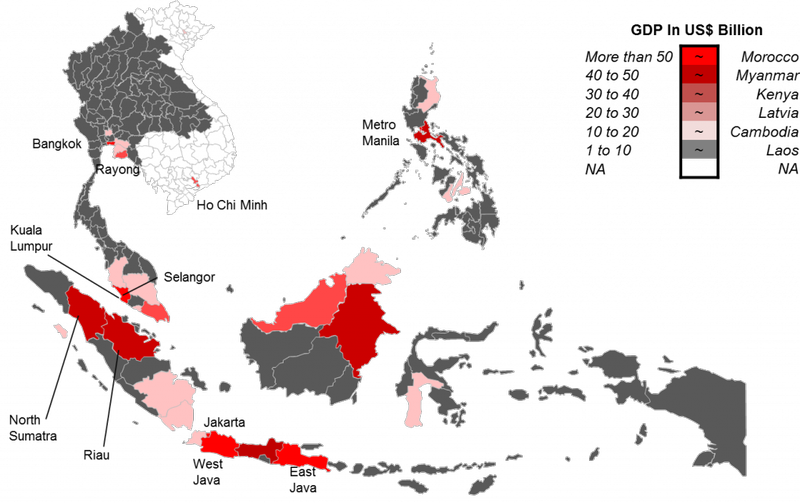
2. Keep Your Focus on the Hot Spots: 25% of the Provinces Hold 75% of the Wealth

a. Wealth in Southeast Asia remains highly concentrated thus companies looking to expand in the region should focus their efforts on the top-tier provinces, which make-up for more than 75% of the GDP of the entire region

b. Depending on the specific province, companies will have to adopt different tactics in order to access end customers, who are likely to have varying consumption patterns as a function of their location and source of wealth

c. Companies could also conduct consumption pattern studies to get a better idea of their expenditure habits (use expenditure or food vs. non-food figures)

Wealth in Southeast Asia

*Source: Frontier Strategy Group Analysis; Individual Government Statistical Publications


Adopt a Regional Mindset with a Country-Level Focus for ASEAN Strategy

The rise of the Southeast Asian (SEA) region is unquestionable, with the majority of the regional executives increasing their focus towards the region, not only due to the robust increase in demand but also its attractiveness as a potential manufacturing hub for all of APAC. However, discussions with corporate headquarters still remain highly country-focused, requiring regional executives to proactively “make the case” to move towards creating a medium-to long-term regional strategy for SEA.

1. Regional Mindset With A Country Specific Focus

a. Appreciate National Differences: Companies should not expect to have similar experiences across this region; each individual country will require in-depth analysis due to its varying economic maturity and wealth

b. Adopt A Scalable Regional Strategy: Executives should adopt a regional mindset, developing a long-term expansion strategy that accounts for the country-level differences but simultaneously leverages upon synergies and creates scale

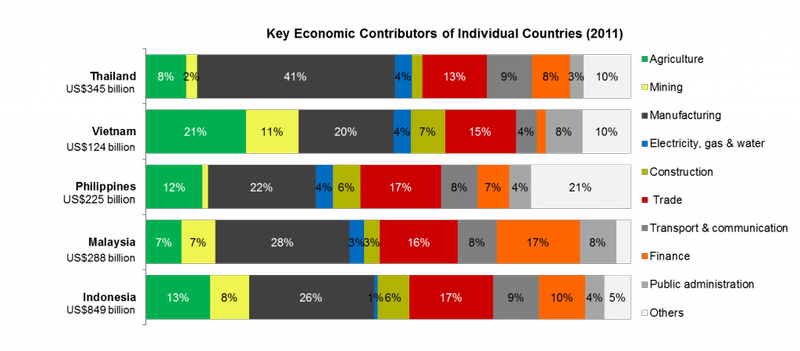
Understanding country-level differences is paramount to forming a regional strategy when the same region has the world’s largest producer of rice, largest call-center outsourcing provider, largest producer of hard-drives, and largest coal exporter. See graph below to see the variations in the key economic contributors for the major ASEAN countries (as of 2011):

Key Economic Contributors of Individual Countries (2011)

2. Communicate Strengths of the Region Back to Corporate

a. Region Provides for an Attractive Investment Climate - Many SEA countries are very MNC friendly and aggressively promote this feeling by providing long-term investment incentives to stimulate strategically important industries. Highly attractive investment incentives programs such as the Economic Transformation Program by Malaysia, MP3EI by Indonesia, Public-Private Partnership by the Philippines, and Zone-Based Investment Incentives by Thailand have become a popular tool to attract FDI dollars into the region

b. Easier to Manage than India - In terms of demand, the ASEAN region and its member countries share similar characteristics with India. However, doing business in SEA is widely agreed to be easier than doing business in India, which features: unpredictable policy making, high levels of bureaucracy, increasing corruption, differing tax regulations, and an acute lack of infrastructure improvements

c. Profitability Game - Not Just a Top Line Growth Story - Companies have found SEA to not only have strong growth potential, but also the potential for higher margins compared to India and China.

i. SEA is still relatively less crowded in terms of competition, both from MNCs and local companies. Relative cost of inputs remains lower in the region, especially for medium-to low-end manufacturing facilities.

ii. The region’s strong consumption appetite, both from its growing middle class and the government, makes its growth somewhat resilient.

iii. The region offers dual advantages for MNCs; it functions not only as a source of domestic consumption demand, but also as a production hub for exporting to the immediate region and beyond.

Executives needs to quickly adopt a regional-mindset, setting for themselves a clear vision for growth in the ASEAN region and planning for a future where the region not only functions as a leader for APAC but maybe for a scale which would allow for global leadership. Many large MNCs have already begun their quest for building businesses that have a common vision and strategy across the region.


India’s Crucial New Budget: Congress Party to Overpromise and Under-Deliver Again?

India’s budget does not propose any grand plans or major reforms, disappointing several groups that expected the finance minister to combat decade-low growth with a radical plan. However, multinationals have welcomed the realistic and well-balanced strategy

FSG View:

Relatively Neutral Budget:

  • Given the historical trend of overpromising and under-delivering, India’s newly appointed Finance Minister P. Chidambaram has set the budget for a relatively neutral course with no radical proposals, focused around increasing the planned spending, cutting down on subsidies, and encouraging investment

Increase in Planned Spending:

  • Companies should be encouraged by the government’s plan to increase the size of their overall expenditure by 16.4%, the majority of which will come from an increase in planned outlay, while reducing non-planned spending, which entails interest payments, subsidies, and defense

Decrease in Subsidies Bill Difficult:

  • Subsidy cuts during a pre-election year are going to be difficult, but the government expects cuts in its petroleum expenditure. Last year, the government’s subsidy target was 1.9% of GDP but the revised estimates are over 2.5%

Historical Trend:

Overpromising and Under-delivering:

  • The Congress Party Government has consistently set unrealistic targets in a bid to keep voter confidence high; a maneuver that was not given much importance during the days of high-growth, but one which could backfire given the current slowdown
  • With the general elections coming-up in 2014, the government’s actions and performance are likely to receive closer scrutiny from both voters and the private sector

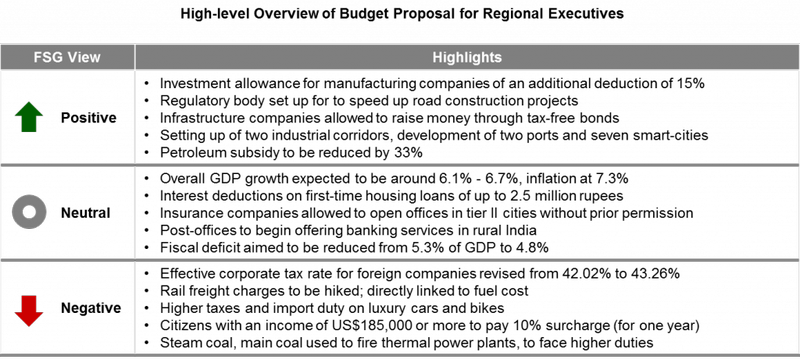
High-level Overview of Budget Proposal for Regional Executives


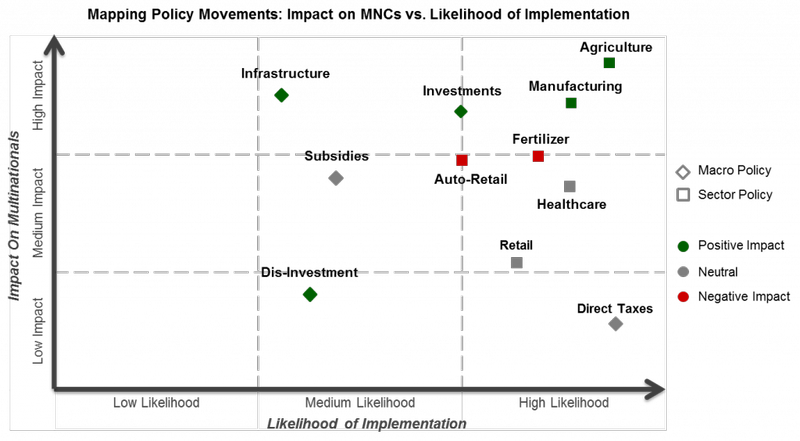
Mapping Policy Movements: Impact on MNCs vs. Likelihood of Implementation