About Shijie Chen

Shijie Chen is Director for Asia Pacific Research based in Frontier Strategy Group’s Singapore office. He has rich experience in industry research and consulting in various sectors. Shijie has advised both multinational firms and local Asian companies on strategic issues such as market entry strategy, new product development and market opportunity assessment. Prior to Frontier Strategy Group, Shijie worked for Frost & Sullivan where he co-led the enterprise communication research team in Asia Pacific. Shijie holds a B.S. in Computer Engineering from National University of Singapore and an MBA from London Business School. Shijie is a native of Shanghai and speaks English, Mandarin and Shanghainese.

Find more about me on:

Recent Posts

China | Industry Analysis by Province

Continuing the topic of Provincial Opportunities in China, urbanization will become a major growth driver for China as 250 million farmers will enter cites in coming decade. However, the trajectory of this—the largest urbanization program in human history—is not certain; policymakers and academics are still debating the pros and cons of different urbanization scenarios. The path China eventually takes will have a huge impact on its economic future and wealth distribution, creating both threats and opportunities for multinationals. China’s urbanization plan will create growth opportunities for companies targeting private consumption, infrastructure investment, and productivity gain (see info-graph below)
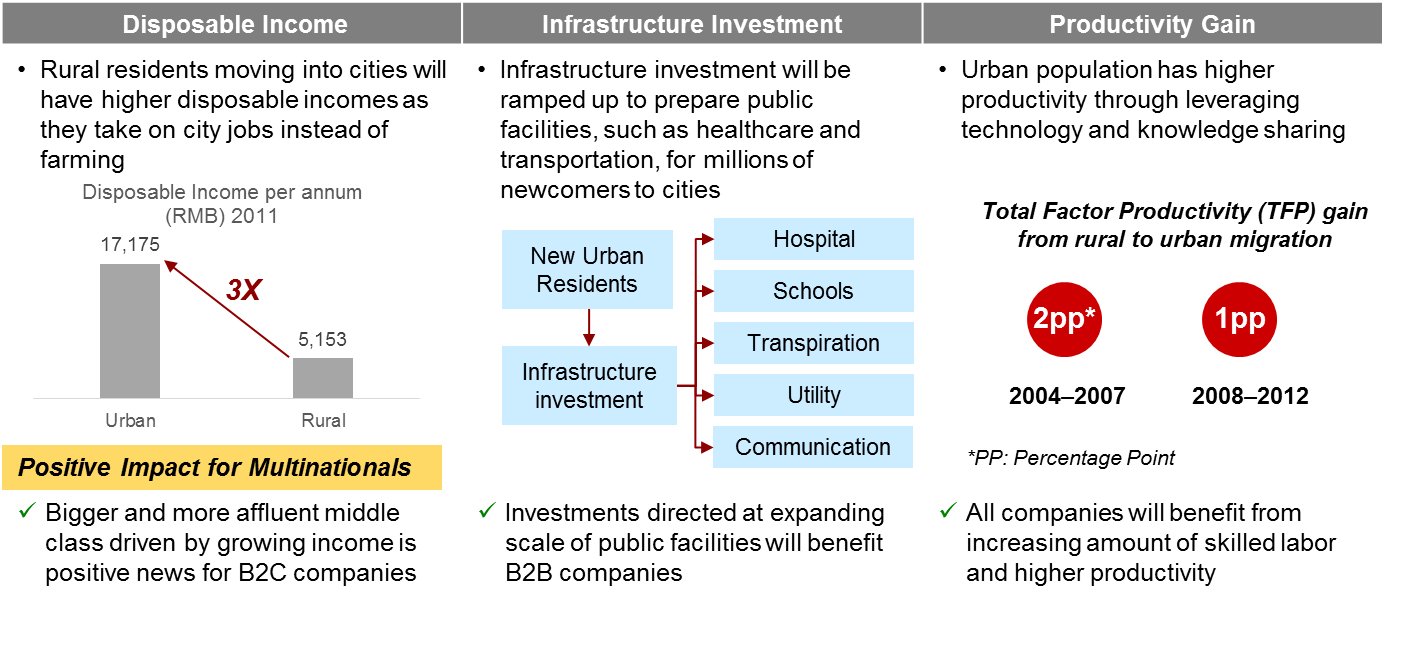
Consumption, infrastructure investment, and productivity gain in ChinaProvincial governments in China have great power in designing industry polices and approving investment projects. 95% of FDI projects were approved by provincial governments and only 5% by the central government. Therefore, it is critical for multinationals to understand the government’s policy orientation at a provincial level and identify attractive provinces in each industry based on investment level and incentive structure.

FSG has analyzed the growth opportunity provinces’ competitiveness in nine key industries. Manufacturing and real estate are not ranked, because all provinces invest heavily in those two, which represent about 60% of total investment in aggregate. Other 7 provinces are ranked based on investment level in that particular industry - you may click the image below to enlarge the chart:
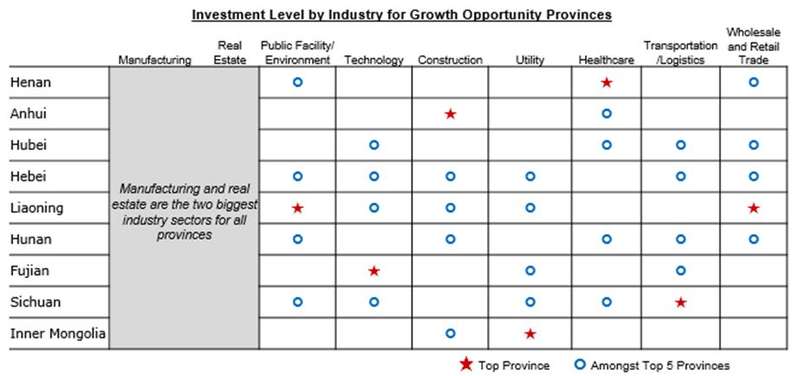
Investment Level by Industry for Growth Opportunity Provinces

Identifying Top Provincial Opportunites in China

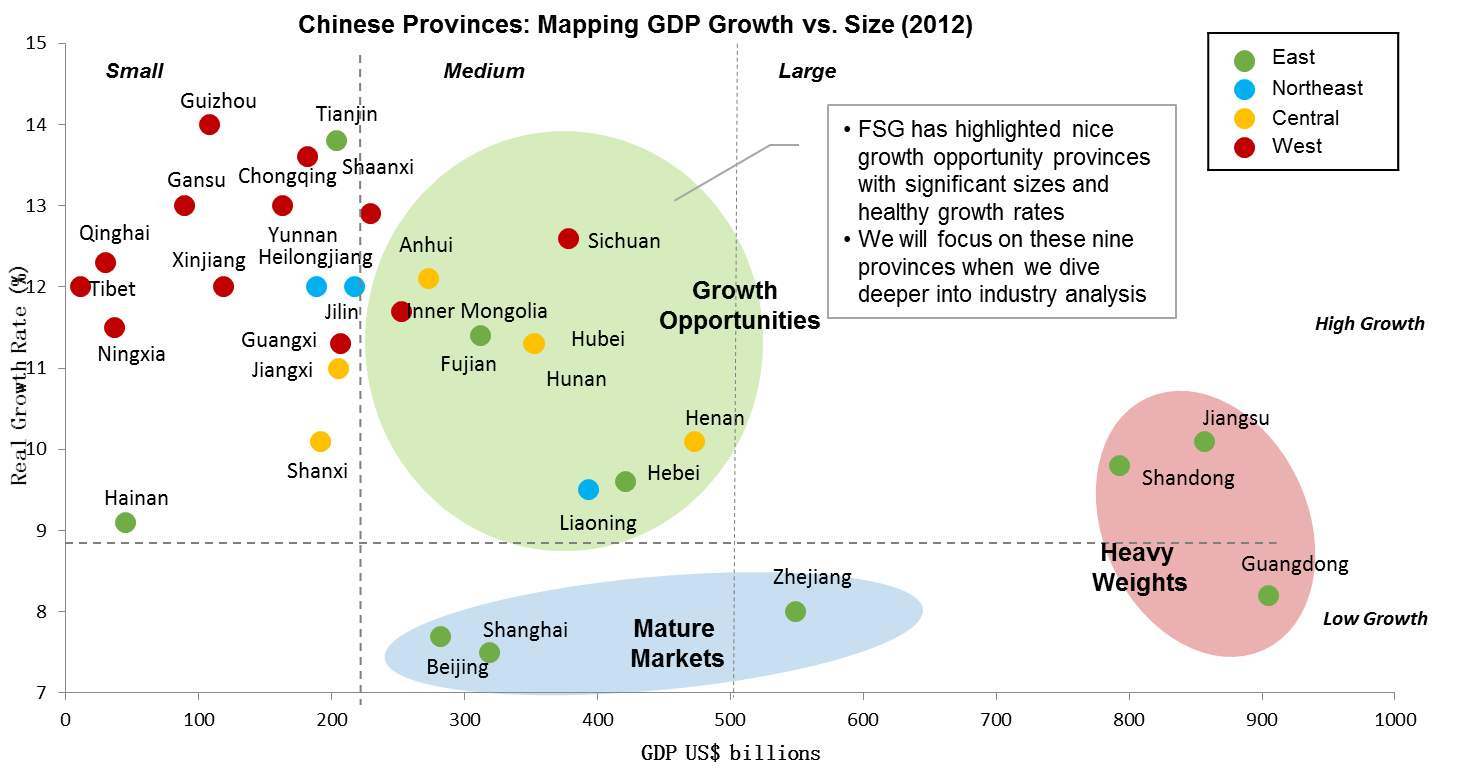
Companies are expanding beyond coastal provinces into inland central and west provinces to leverage low manufacturing costs and capture growing domestic markets. To be successful in geographical expansion, multinationals need to foresee the growth trajectory of provinces and regions in China to understand from where future growth will come. FSG has identified nine provinces of growth opportunity, which multinationals should focus on to maximize ROI in geographical expansion - refer to the green circle in the chart below (click image to enlarge):

Chinese Provinces Mapping GDP Growth vs. Size 2012

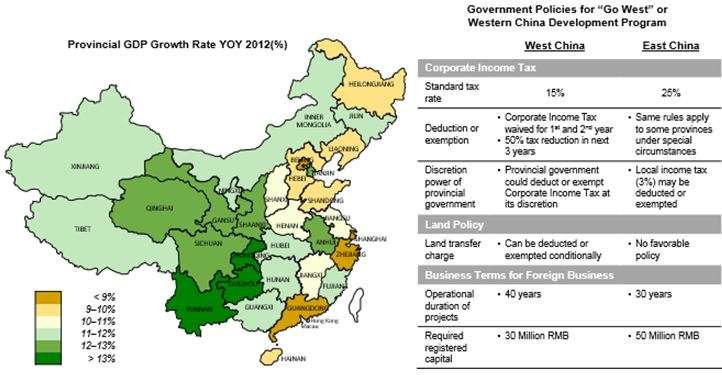
As indicated in the image below (click image to enlarge) strong economic growth in western China can be attributed to organic growth from the provinces’ low base and favorable government polices launched in 2010 to bridge the gap between eastern and western China.

Provincial GDP Growth Rate YOYI will have a subsequent post to continue the conversation of provincial expansion in China. Check back later for a look at China’s potential urbanization and a closer analysis of nine key industries in the region.

Be Aware of the Risk of Sudden Deceleration in China

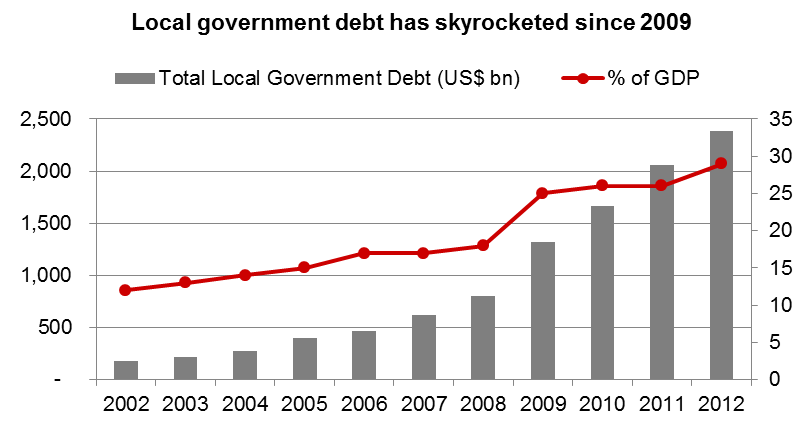
FSG expects China’s GDP growth rate to be worse than the consensus forecast of 8.1% in 2013. Weaker-than-expected data in Q1 suggests the state of the Chinese economy is even weaker than the official number suggested, prompting concern of a sudden deceleration of the Chinese economy. One of the red flags is local government debt (see chart below), a problem just started to manifest when some city governments, such as Dongguan’s, cut back on public spending. Free bus service in Dongguan was canceled in April.

Local Government debt has skyrocketed since 2009

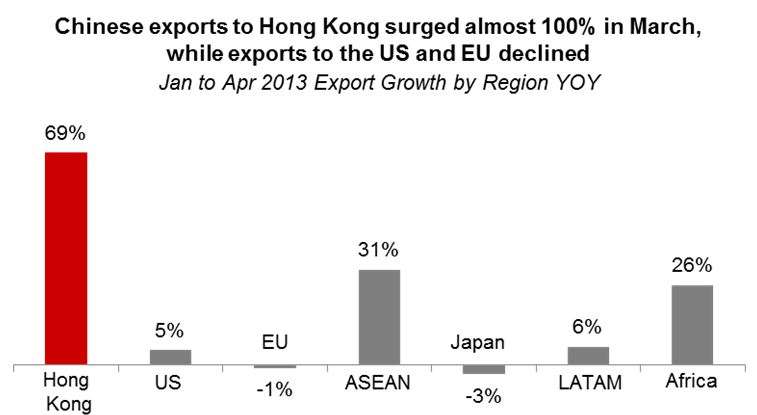
Another red flag will be exports. China’s export numbers in the first four months of 2013 have come under scrutiny as concerns have been raised about their accuracy. China’s export growth to developed markets—the US, EU and Japan—remains lukewarm (see graph below).

Chinese exports to Hong Kong surged almost 100 percent in March, while exports to the US and EU declined.png


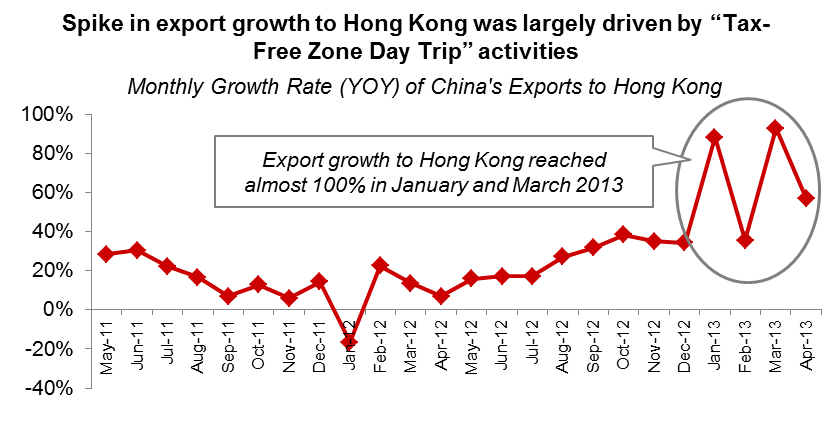
Export growth to developing markets in ASEAN and Africa are strong but start from a lower base. Questions have been raised in particular about the extraordinary growth of China’s export to Hong Kong, which stands at 69% in the first four months based on official numbers indicated in the graph here:

    Spike in export growth to Hong Kong was largely driven by Tax-Free Zone Day Trip activities

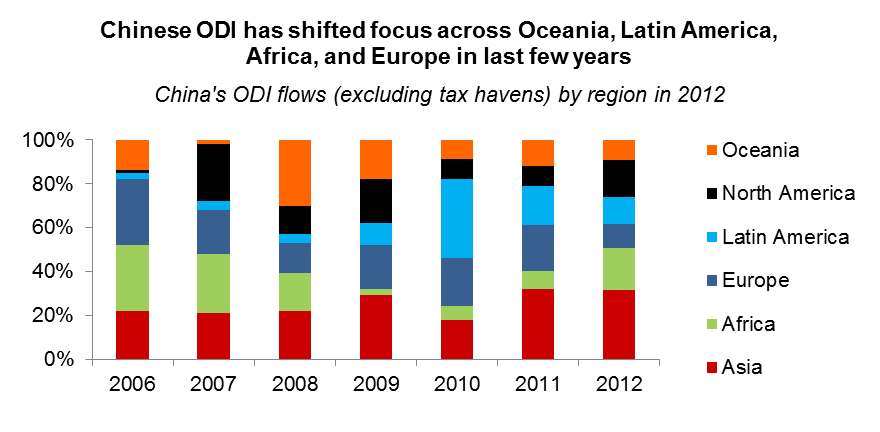
    We also believe slower growth at home will drive more Chinese investment overseas. Traditionally, Chinese outward FDI is state-led and resource driven. If we look at the geographical distribution of Chinese FDI overseas in last few years, they were focused on resource rich regions like Africa, Latin America, Oceania and some Asian countries like Indonesia. But with the economy slowing, we see that trend changing. We expect more participation of private Chinese companies who are investing for pure business purposes rather than national strategic reasons. And these private companies have the potential to pose a real challenge to multinationals, starting in the Chinese market, but increasingly in markets outside of China as well.

    Chinese ODI has shifted focus across Oceania, Latin America, African, and Europe in the last few years

    Riding the Social Media Boom in China

    I’ve been hearing about the challenges my APAC executives face while drafting their go-to-market plan using social media as a medium to target the Chinese consumer. I recently spent around 10 days in China which gave me an opportunity to discuss this with them in detail, and also convey our strong opinion on the matter. I managed to consolidate both FSG’s opinions and our clients’ pain points to provide some frameworks to help companies finalize their social media plan for China.

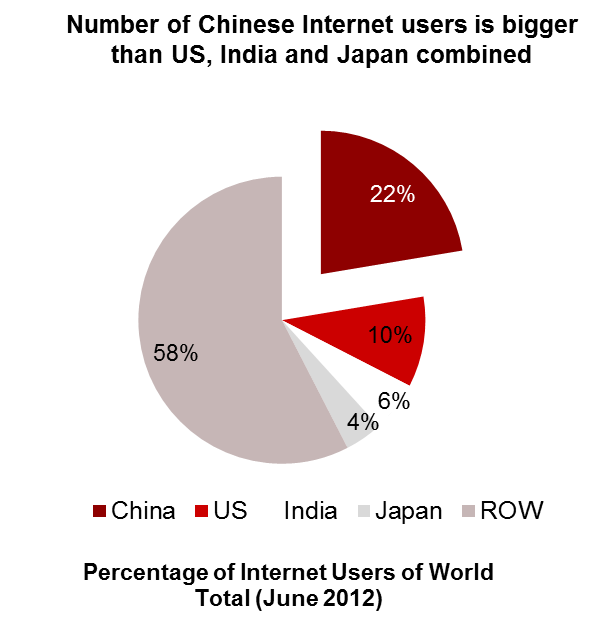
    I recently noticed that a number of big department stores have been closed or scaled down, primarily due to the increased competition coming from the Internet (as compared to the number of stores which I observed several years ago). Social media is expanding its penetration of Chinese Internet, which is already the largest in the world. Many companies have started thinking about how to build social media into their business strategies, similar to what many MNCs did for the Internet 10 to 15 years ago.

    Number of Chinese Internet users is bigger than US, India and Japan combined

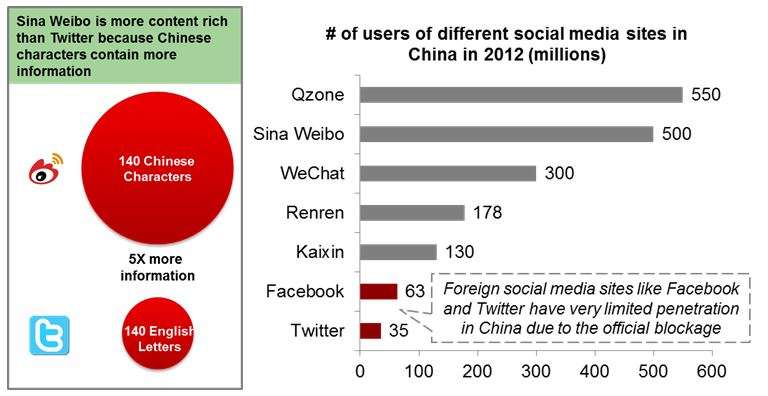
    Chinese social media platforms are generally more interactive and users can share content in a greater variety of formats to a wider audience, therefore drawing more user contributions. Sina Weibo, a Chinese mircroblogging platform, is more user friendly and contains more features than Twitter to attract new users, retain elite users, and encourage all users to contribute more content, leading the platform to be more interactive.

    Number of Chinese Internet users is bigger than US, India and Japan combined

    Home grown platforms like Sina Weibo, Wechat, Qzone, Renren and Kaixin have dominated the social media space in China. Most were started as imitations of similar platforms in the West but over time have evolved into something quite different with unique product and service offerings specific for Chinese users.

    A company’s social media strategy could be rendered obsolete very quickly as the market is ever-changing, with new companies, business models, and user features continuously mushrooming . FSG has built a simple 5-step process for B2C companies to build an effective social media communication plan. Social media is also not exclusive to B2C companies. B2B companies can leverage social media in an indirect way to build positive brand image, enhance internal communication, and even drive recruitment efforts. This is definitely a space where the marketing heads need to zoom-in on now to ensure they capitalize on the opportunity.

    Strengthen Your Leadership Bench in China

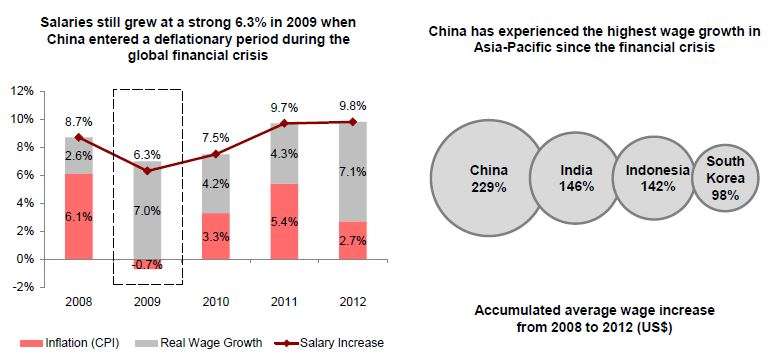
    Leadership constraint has been constantly identified as a top business challenge multinationals face in China. Rapid growth over the last twenty years has created a huge imbalance in demand and supply of experienced managers and leaders. Shortage of managerial talent has fueled wage inflation in China, and compensation for senior executives has skyrocketed as many companies compete for a small pool of managerial talent (see charts below).

    Wage Inflation in China*Source: Frontier Strategy Group Analysis, Mercer China Monitor Report, EIU

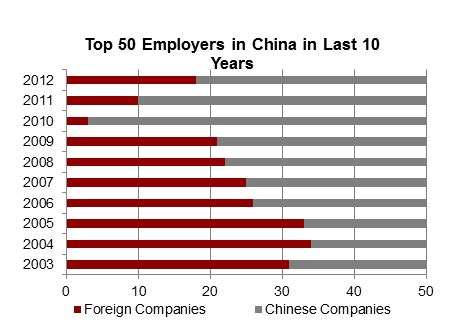
    To make it worse, multinationals are facing increasing competition from local Chinese companies, which offer attractive financial packages and perceived better career development opportunities to attract seasoned Chinese executives working for multinationals. However, many Chinese executives who have built their careers working for multinationals often found it was difficult to adjust to a local company’s culture and experienced “reverse culture shock.”

    Top 50 Employers in China in Last 10 Years

    *Source: Frontier Strategy Group analysis, 中华英才网 (ChinaHR.com)

    Most leadership challenges in China can be attributed to either a capability gap or talent shortage, or sometimes a combination of both. FSG recently created a comprehensive framework to identify key leadership challenges and develop best practices to strengthen the leadership bench through retaining key individuals, leveraging global scales, strengthening the fundamentals, and adjusting to a new reality.

    Senior Chinese managers are motivated more by symbolic recognition such as enhanced decision making power, rather than material recognition such as financial compensation. So it is important for multinationals to realize that seasoned Chinese leaders want to achieve “self-actualization” by creating a vision for the business and having an impact on other people.

    Local Chinese managers are already commanding an equal if not higher compensation than their peers in developed markets, and yet they are subject to higher attrition risk due to strong demand. One solution is to tap into experienced managers in talent surplus areas, such as Western Europe, who are more willing to relocate to high growth regions like China for an “expat light” package.

    Is China Losing its Competitive Edge?

    This blog entry is the first of a six-part series on China which will cover China’s productivity growth, portfolio management, geographical coverage models, talent management, post-merger integration and sales force effectiveness.

    Is China Losing its Competitive Edge?

    Many multinational companies are re-assessing China’s competitive advantage as a manufacturing base since labor arbitrage is becoming less compelling. Although China’s productivity gains (as measured by TFP growth) outpaced other major economies in the first decade of the 2000s, this rapid growth was interrupted by the financial crisis in 2008 and has been slowing ever since. This is largely due to overcapacity and a “crowding out effect” caused by the massive fiscal package that Beijing put in place to offset the effects of the global financial crisis.

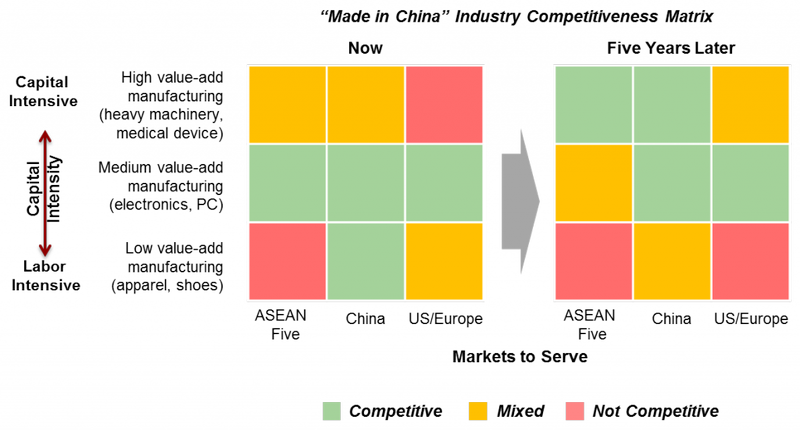
    "Made in China" Industry Competitiveness Matrix


    We believe that China is gaining momentum in higher value-added industries such as heavy machinery, information technology, and medical devices, but losing competitiveness in low value-added manufacturing to other low-cost Asian countries, even when it comes to serving the domestic market. In a workshop that I have run recently, we discussed the possibility that “Made in Bangladesh” apparel will begin to flood the Chinese market in a few years.

    As China continues climbing up the value chain, more and more of its companies are expanding abroad to other emerging markets. This leads to interesting dynamics on talent requirements, intellectual property, and portfolio management.


    How to Most Effectively Influence Government Policy-Making in Asia?

    Effective Channel Management

    Frontier Strategy Group’s research has found that Multinational companies across Asia use a wide variety of channels to influence government policy as differing political systems and cultural norms demand unique strategies to manage domestic government engagement.

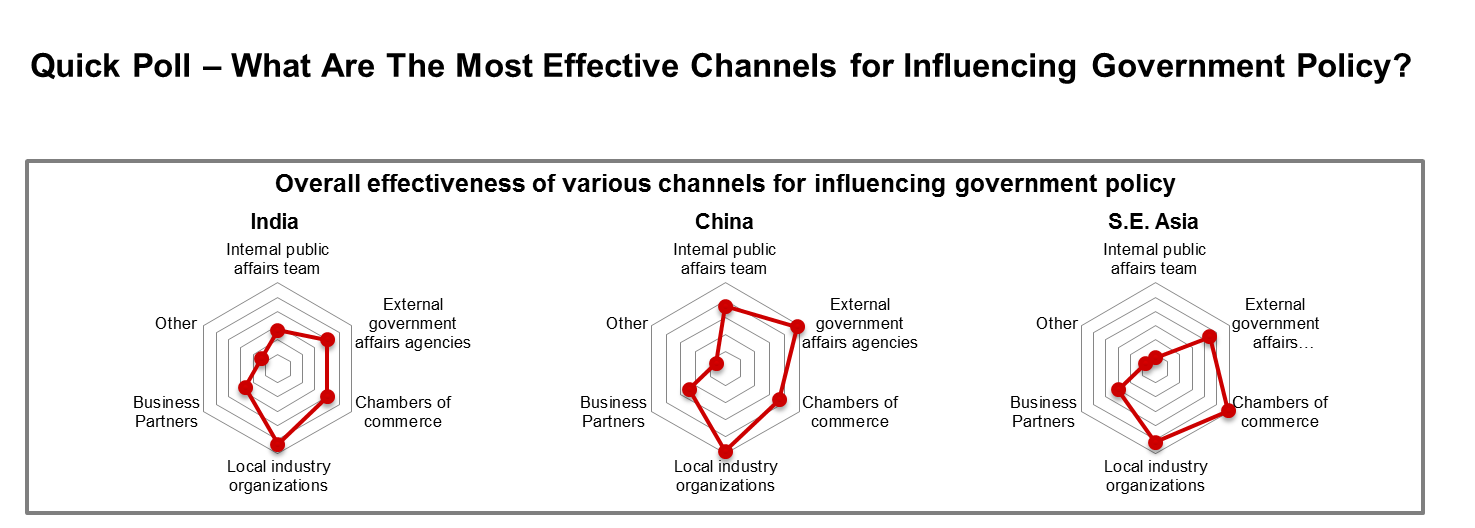
    1. Effective Channels For Influencing Government Policy

    Companies across China, India, and S.E. Asia find local industry organizations, chambers of commerce, and external government affairs agencies to be the three most effective channels for influencing government policy

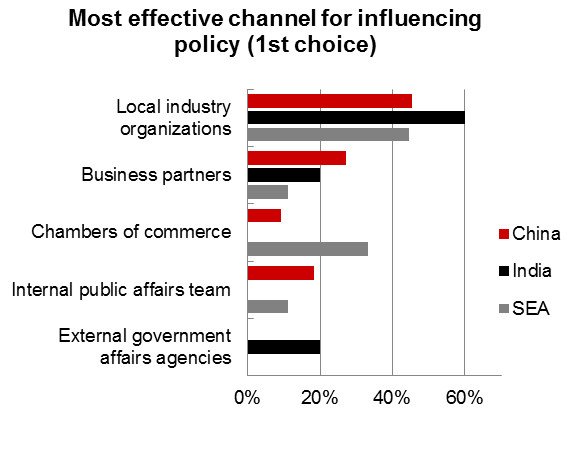
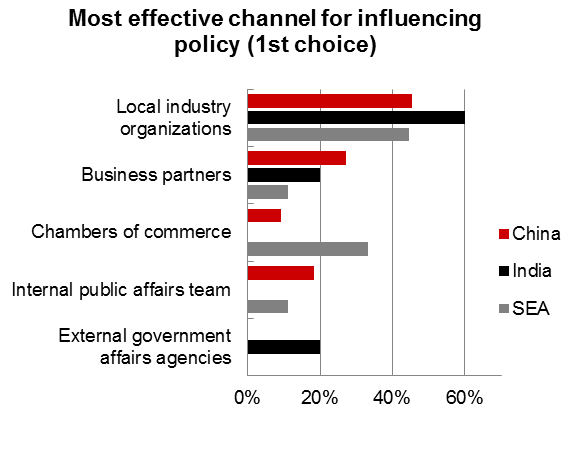
    2. Top Choice For Influencing Government Policy

    Government Engagement Graph Local industry organizations are also the first choice for more than 40% of the respondents for influencing government policy across all regions

    Interestingly, India is the only region in which engaging external government affairs agencies is a top choice for influencing public policy. Handling India’s political complexities and unreceptive government officials requires strong local connections that government affairs agencies are able to manage effectively

    In China, engaging business partners to influence public policy is considered highly effective due to the strong relationship between the government and the private sector. This is not surprising because “guan xi” (relationship ties) play a very important role in gaining access to policy makers thus influencing their decisions


    *Shishir Sinha contributed to this post

    China’s GDP Target: “Under Promising, Over Delivering”

    China has revised its GDP growth target down to 7.5%, deviating from government’s insistence on 8% growth during economic crisis. However, China has a track record of “under promising and over delivering.” It has consistently delivered over 10% growth before 2008 when the official target was only 8-9%. We have strong reasons to believe that China is going to achieve an above 8% GDP growth rate in 2012.

    • China has plenty of room in both fiscal and monetary policies to stimulate growth if the economic engine stalls
    • Policy makers in China has been very responsive to changes in the macroeconomic environment, demonstrated by recent monetary loosening (though minor) measures
    • Last but not least, 2012 is the year of leadership transition. So China will do whatever it takes to ensure stability and avoid a hard landing scenario which will cause increasing social unrest


    Industrials Companies are Affected by Lower Capital Goods Investment in China

    China industrials

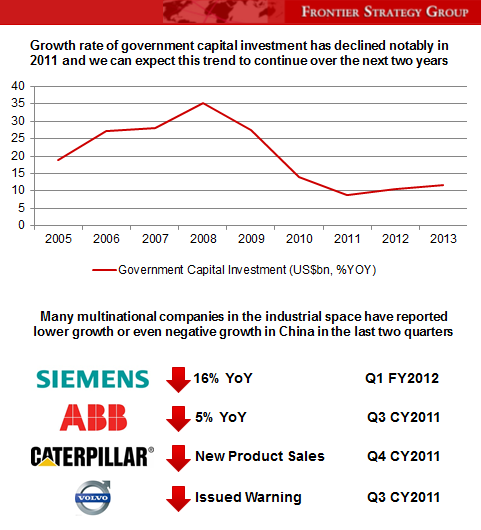
    Industrial companies are feeling the slowdown of investment acutely. Siemens has reported a 16% YoY decline in revenue from China in Q1 FY 2012

    Other industrial giants such as Caterpillar and ABB have also experienced minor declines in sales in the most recent quarter, the first such decline for many companies since they entered China

    Companies tied to the real estate market and infrastructure investment have been hit particularly hard. Elevator maker Otis has seen its YoY revenue growth rate slow to 7% in Q4 2011 against an average of 20% throughout the year

    Frontier Strategy Group View

    China is making small steps to loosen monetary policy, but the actual extent of loosening is going to be smaller and slower than many international investors expect

    As a result, industrial companies are going to experience moderate to negative growth, depending on how dependent they are on infrastructure investment, real estate, and heavy industrial production

    The super high growth rates of 2009 and 2010 are not likely to be seen again anytime soon
    as demand falls back to a more sustainable growth rate


    Asian Countries See Growth Deteriorating in Q1

    Asia Macro Overview

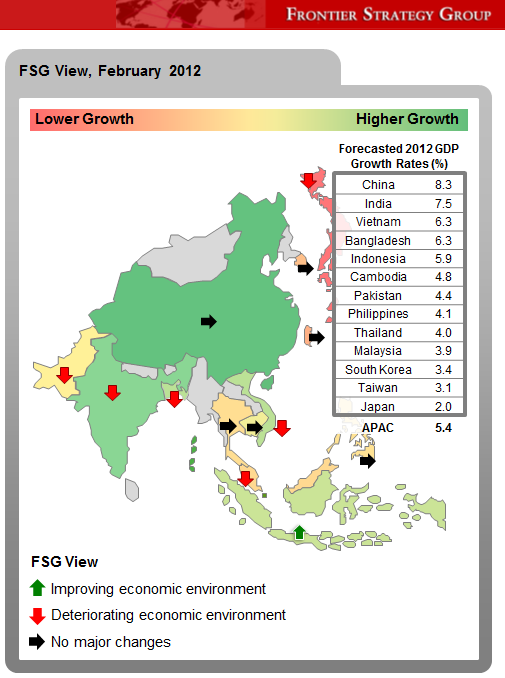
    Countries across Asia are beginning to see their growth deteriorate as ongoing problems in the eurozone, persistent malaise in the US, and a government-engineered slowdown in China undermine the region’s prospects. Several ASEAN countries have already begun cutting interest rates to spur growth; however, it is unlikely that their efforts will be sufficient to halt the regional slowdown

    • Bangladesh: Bangladesh is not likely to be able to sustain strong economic growth due to its weak fundamentals as well as the global slowdown
    • Cambodia: Cambodia’s GDP growth in the new year will likely be hit by the devastating floods and global economic slowdown
    • China: Scarce labor and rising wages are problems no longer limited to producers operating in coastal China
    • India: Companies should begin making contingency plans for a stagflation scenario in 2012
    • Indonesia: A new land acquisition bill will help accelerate Indonesia’s infrastructure development and ease bottlenecks in the economy
    • Japan: Companies should make contingency plans for significant power shortages in Japan this summer
    • Malaysia: Rising global volatility and a broad slowdown in Asia are undermining the confidence of Malaysia’s businesses and consumers
    • Pakistan: Companies should make contingency plans to deal with a weaker rupee as Pakistan’s currency may depreciate over the coming months
    • Philippines: Although Manila has begun taking steps to protect the Philippines’ growth, the country remains relatively exposed to a global slowdown
    • South Korea: A new FTA with the US will have a dramatic effect on the competitive landscape of several major industries across Korea
    • Taiwan: Growth is strong based on regional demand; however, caution is needed as trade might falter with global economic uncertainty
    • Thailand: A newly-announced flood defense plan along with recent monetary easing should help spur Thailand’s slowing growth
    • Vietnam: Companies should make plans to deal with striking workers as the labor unrest that is rocking Vietnam is unlikely to subside in H1 2012