Distributors Are the Way to Go: Indirect Channels Highly Dominant in the ASEAN-5

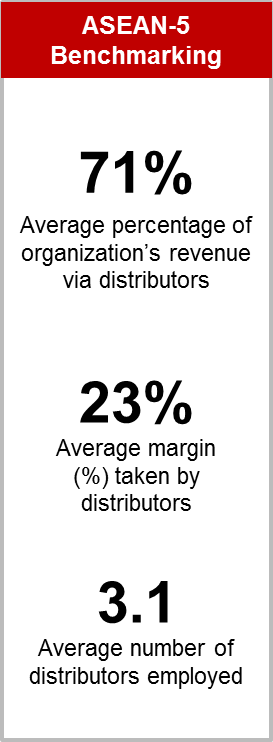
Why Is It Paramount to Understand The Optimal Management of Distributors in ASEAN?ASEAN-5 Benchmarking
As in most emerging market regions, multinational corporations (MNCs) operating in the ASEAN-5 are heavily dependent on distributors, making optimal management of these partners key to survival and growth in these highly dynamic markets.

A combination of the three factors below makes it imperative for regional heads to concentrate on improving internal capabilities to complement the unsophisticated nature of the market:

  1. Dominance of Distributors: Most MNCs will be using distributors for their sales in the ASEAN markets, with the indirect channels bringing in 71% of revenues, as compared to 65% in the APAC region overall. Companies will only use their own sales team for handling key clients in relatively well-established geographical locations (national capitals)
  2. Few Established Players: On average, companies tend to use 2–4 distributors but often state that they don’t have enough established partners to work with; 41% of the respondents (based on FSG’s survey) found scarcity of finding alternative distributors to be a key issue
  3. Hands-On Approach Critical: Given that there aren’t many established partners, companies have to find local entrepreneurs with potential and grow them into successful businesses by training and supporting their activities


Distribution in the ASEAN-5: Fairly Similar Model Across the Region

When comparing the same industry in the majority of the ASEAN markets, the go-to-market strategy should be fairly similar. However, on-the-ground tactics can differ based on the needs of the individual market and company.

  • Example: In Indonesia, if the firm’s goal is to achieve geographical expansion, then having a few sets of distributors becomes important in order to have some to manage Jakarta, and others to manage outside of Jakarta (Java), where credit management tactics can differ vastly
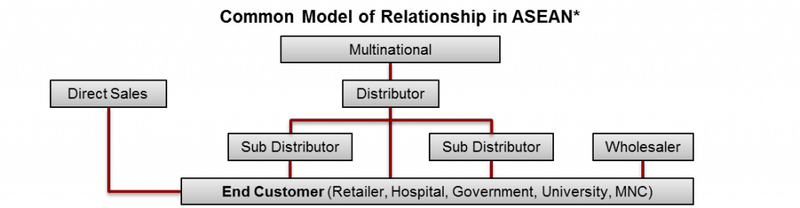
Common Model of Relationship in ASEAN


Using Local Sources Effectively Can Go a Long Way in Helping You Find Distributors

Selecting the right local partner can be the difference between success and failure for most companies expanding within the ASEAN region. Following an analysis of the distribution landscape, companies can identify potential partners through some of the following sources:
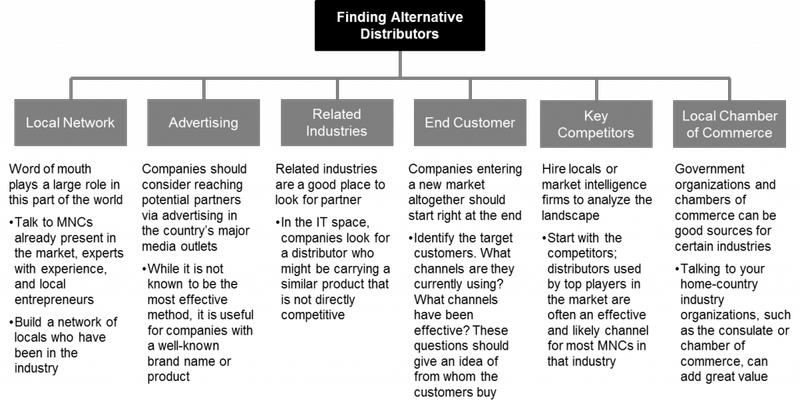
Finding Alternative Distributors


Multinationals Continue to See Long-Term Potential In India Despite Current Volatility

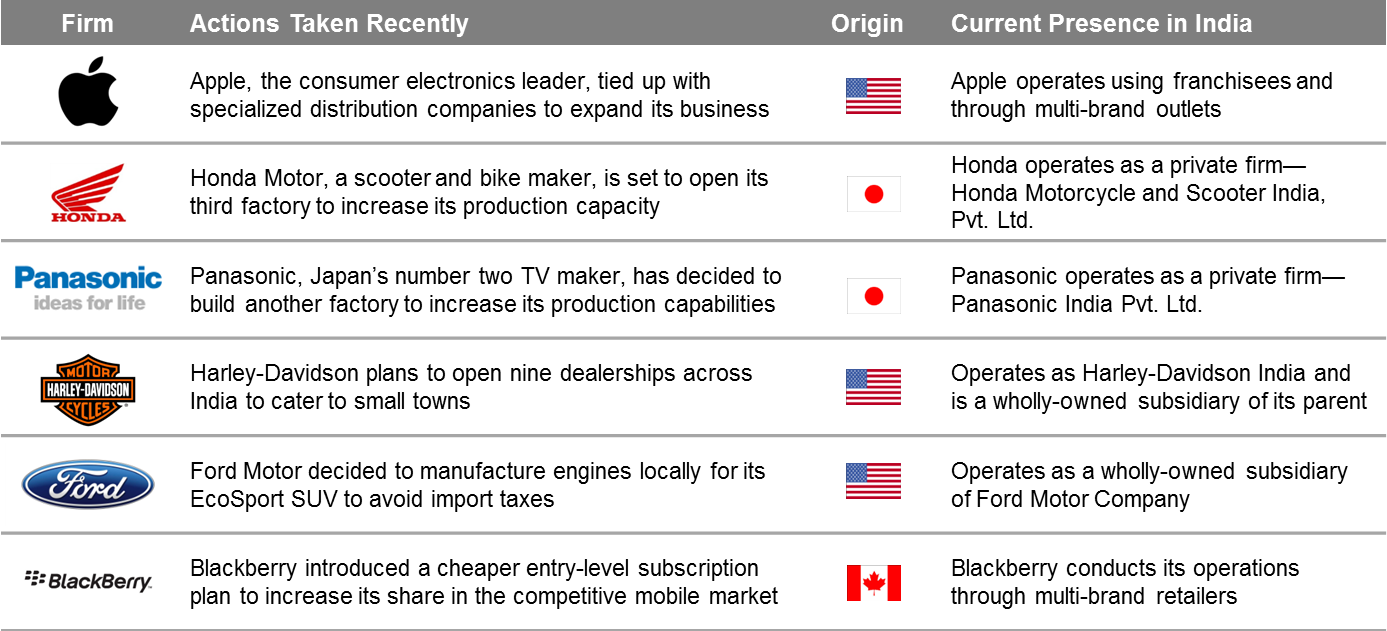
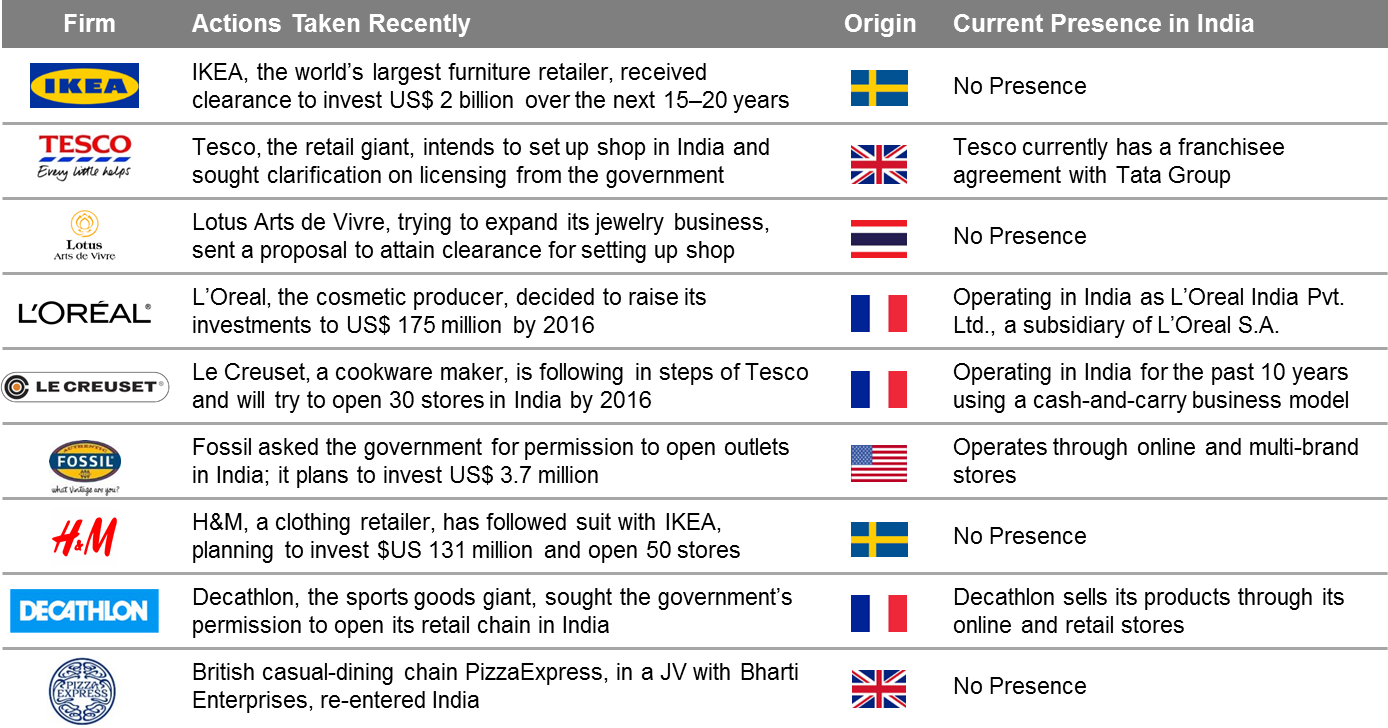
Many multinationals believe in India’s longer-term consumption growth, reflecting sustained interest

Unilever’s announcement to purchase an additional 22.5% stake in its Indian subsidiary for US$ 5.4 billion is indicative of the faith that many MNCs have in India’s longer-term growth potential (see list below for other such investments)

  • We are going to be continuing to export more and more vehicles from India because India is so competitive and the vehicles here are so representative of the vehicles that people want around the world.
    -Ford Chief Executive, Alan Mulally
  • “India is growing like most other developing countries where there are a lot of opportunities in consumer electronics and appliances. Our philosophy has been to not simply import products from other countries, because items should be specially customized for Indian consumers, keeping local needs in mind.”
    -Panasonic President, Kazuhiro Tsuga

Consumer and Retail Industry

The majority of interest from MNCs in India has been in sectors that are associated with private consumption, which accounts for about 60% of GDP, as this segment is expected to grow strongly with the rise of the middle class and growing labor force

Consumer and Retail Industry


Automobile and Electronics

Several firms in the automobile and electronics sectors have invested in increasing their capacity despite experiencing a slowdown in sales, demonstrating their belief that the current conditions are unlikely to persist much longer

Automobile and Electronics


India: Interconnectedness of Issues Makes Scenario Planning Critical

Growth is likely to bottom out as a few positive trends are emerging that are likely to create near-term gains

  • Cost of Borrowing: Reserve Bank of India, India’s central bank, cut the key lending rate, bringing down the total cost of borrowing by 75 basis points during 2013, in order to promote growth in investments and consumption
  • Price of Goods: India’s stubborn inflation has also fallen to a 41-month low of 4.89%, into the central bank’s comfort zone of 4–5%, as food and fuel prices have fallen significantly over the past few months
  • General Demand: Industrial production growth has also exceeded market expectation, growing at 2.5% during March. It benefited from the positive expansion in manufacturing output and capital goods production, highlighting slow but sustained demand
  • Rural Demand: Private-consumption demand from more than half of India’s total workforce from the agriculture sector is set to increase, because meteorologists expect normal monsoon rains this year after parts of the country suffered from drought last year

However, interconnectedness of issues makes scenario planning critical in the medium to short run in India

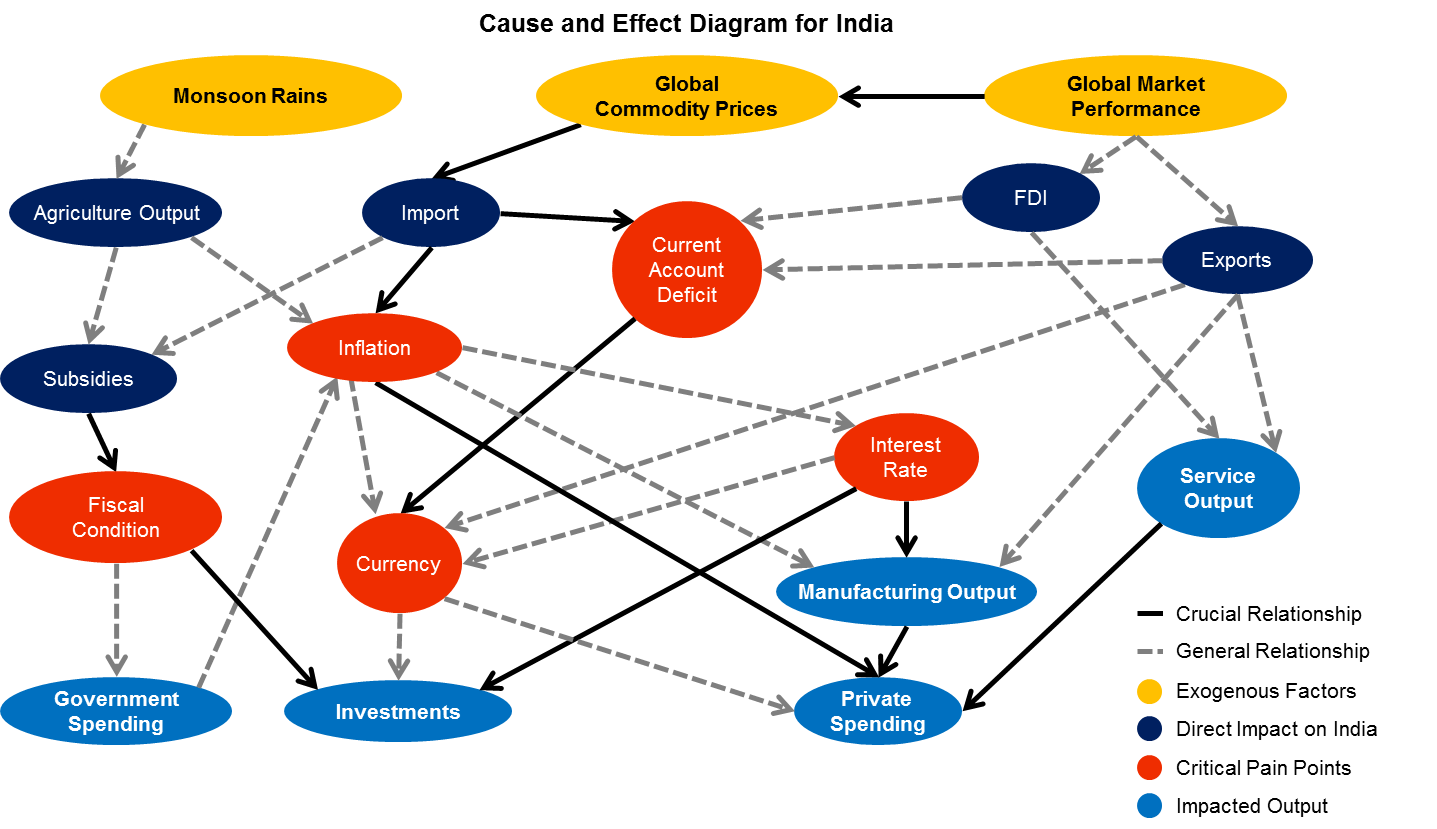
A bullish view on India’s long-term potential is justified, but it should not overshadow the need for careful planning in the short-to-medium term as several fundamental issues remain unresolved and in a precarious situation. The causes of some of India’s critical pain points are factors beyond the control of most MNCs can impact their businesses (see diagram below):

Cause and effect diagram for India


Global price impact: Fragile current account deficit can benefit from global decline in commodity prices

(a) What is the status of the current account deficit (CAD)?

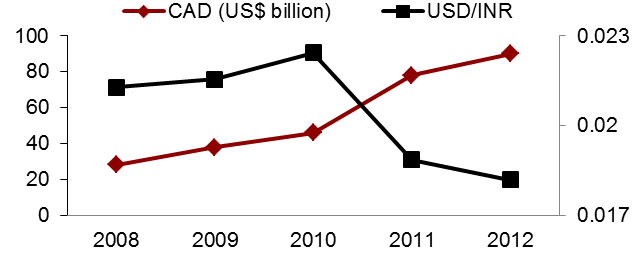
  • India’s current account deficit has grown more than five times (in USD) over the past six years, driven by the country’s insatiable demand for oil and gold imports. The overall CAD is estimated to be at around 5% of GDP, which is twice the sustainable level

(b) Why is this important?

  • The trade imbalance, caused by subdued exports demand, and terrific import growth has led to a high CAD, which in turn has caused a major devaluation of the rupee
  • Such volatility affects a MNC’s ability to import goods in a price-sensitive market, hurts the bottom line when repatriating income, and increases the USD import bill for the country

CAD v USD/INR


(c) What is likely to change moving forward?

  • The global prices of gold and oil have decreased this year, directly reducing pressure on the CAD. Moreover, the government has introduced a US$ 550 million stimulus package to incentivize export growth while increasing the import duty on gold
  • The government also slashed the tax rate levied on the interest that foreign investors earn on their investments in local bonds from 20% to 5%, encouraging more capital inflows in the debt markets

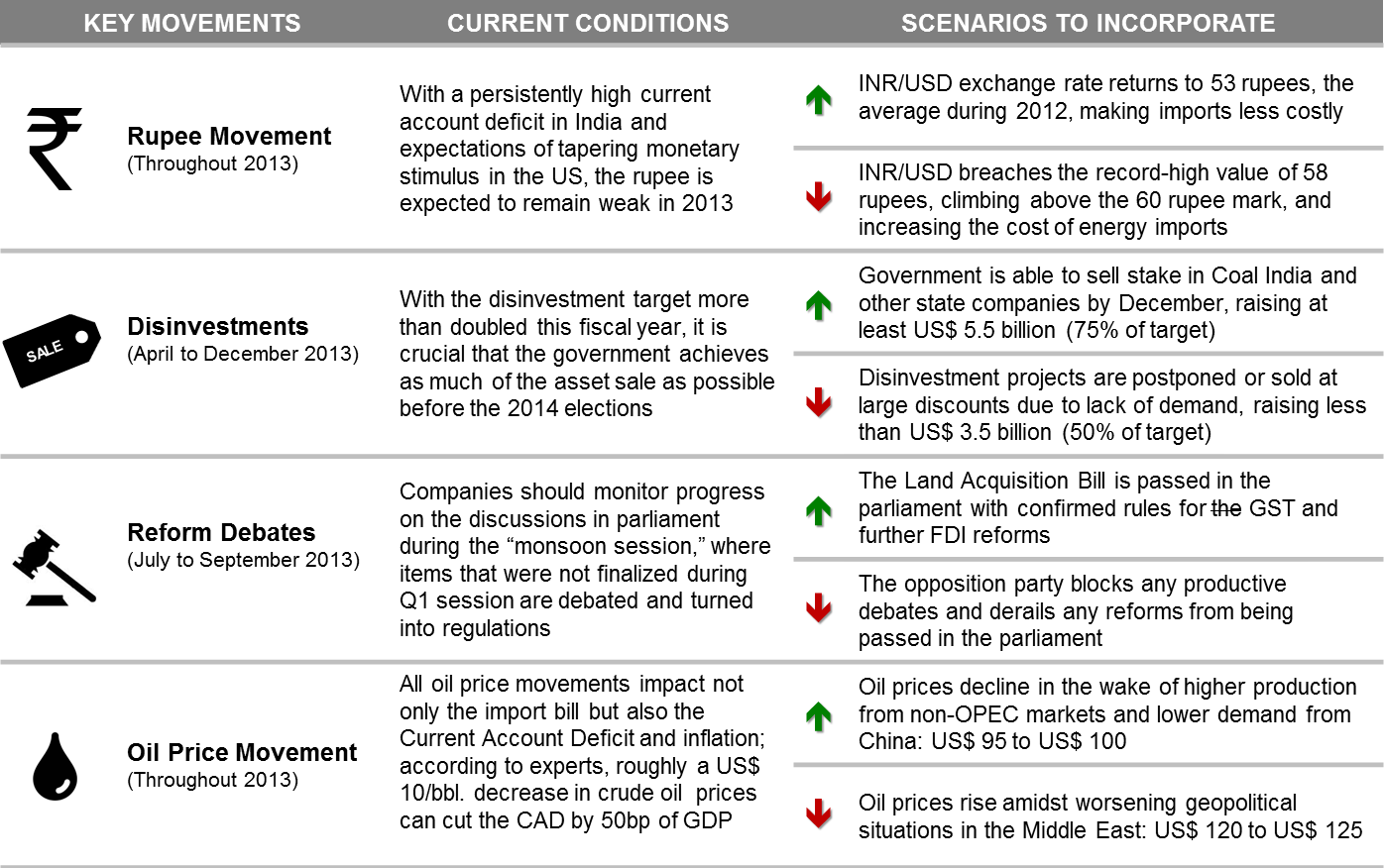
Companies’ short-term (12 month) scenario analysis should incorporate these key trigger points:

Key movements diagram


Truly Understanding ASEAN: Country-Level Analysis Not Enough

Continuing the discussion from my previous post on ASEAN strategy, here are some additional points to consider:

1. Country-Level Analysis Not Enough:

a. As the region matures and companies increase their focus on it, executives need to conduct in-depth provincial analysis in order to understand where the specific demand-side opportunities lie and where there is the ideal supply-side support

b. In a market where affordability is a key challenge faced by all MNCs, executives ought to conduct their opportunity analysis on a provincial basis, to focus their investments towards the top choices

c. While provincial data is not available for many indicators, companies can begin with macroeconomic analysis by looking at gross domestic product, per capita wealth, population, and some expenditure patterns


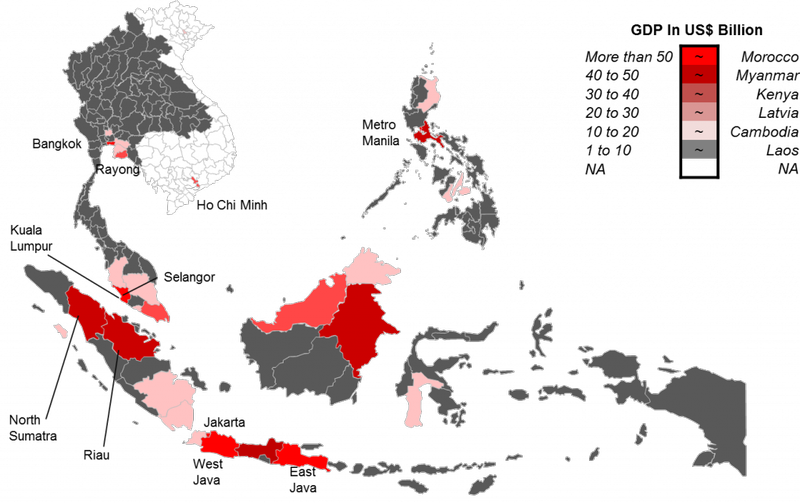
2. Keep Your Focus on the Hot Spots: 25% of the Provinces Hold 75% of the Wealth

a. Wealth in Southeast Asia remains highly concentrated thus companies looking to expand in the region should focus their efforts on the top-tier provinces, which make-up for more than 75% of the GDP of the entire region

b. Depending on the specific province, companies will have to adopt different tactics in order to access end customers, who are likely to have varying consumption patterns as a function of their location and source of wealth

c. Companies could also conduct consumption pattern studies to get a better idea of their expenditure habits (use expenditure or food vs. non-food figures)

Wealth in Southeast Asia

*Source: Frontier Strategy Group Analysis; Individual Government Statistical Publications


Adopt a Regional Mindset with a Country-Level Focus for ASEAN Strategy

The rise of the Southeast Asian (SEA) region is unquestionable, with the majority of the regional executives increasing their focus towards the region, not only due to the robust increase in demand but also its attractiveness as a potential manufacturing hub for all of APAC. However, discussions with corporate headquarters still remain highly country-focused, requiring regional executives to proactively “make the case” to move towards creating a medium-to long-term regional strategy for SEA.

1. Regional Mindset With A Country Specific Focus

a. Appreciate National Differences: Companies should not expect to have similar experiences across this region; each individual country will require in-depth analysis due to its varying economic maturity and wealth

b. Adopt A Scalable Regional Strategy: Executives should adopt a regional mindset, developing a long-term expansion strategy that accounts for the country-level differences but simultaneously leverages upon synergies and creates scale

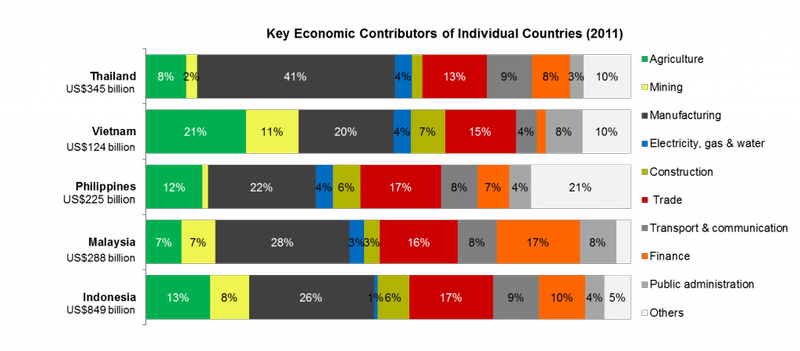
Understanding country-level differences is paramount to forming a regional strategy when the same region has the world’s largest producer of rice, largest call-center outsourcing provider, largest producer of hard-drives, and largest coal exporter. See graph below to see the variations in the key economic contributors for the major ASEAN countries (as of 2011):

Key Economic Contributors of Individual Countries (2011)

2. Communicate Strengths of the Region Back to Corporate

a. Region Provides for an Attractive Investment Climate - Many SEA countries are very MNC friendly and aggressively promote this feeling by providing long-term investment incentives to stimulate strategically important industries. Highly attractive investment incentives programs such as the Economic Transformation Program by Malaysia, MP3EI by Indonesia, Public-Private Partnership by the Philippines, and Zone-Based Investment Incentives by Thailand have become a popular tool to attract FDI dollars into the region

b. Easier to Manage than India - In terms of demand, the ASEAN region and its member countries share similar characteristics with India. However, doing business in SEA is widely agreed to be easier than doing business in India, which features: unpredictable policy making, high levels of bureaucracy, increasing corruption, differing tax regulations, and an acute lack of infrastructure improvements

c. Profitability Game - Not Just a Top Line Growth Story - Companies have found SEA to not only have strong growth potential, but also the potential for higher margins compared to India and China.

i. SEA is still relatively less crowded in terms of competition, both from MNCs and local companies. Relative cost of inputs remains lower in the region, especially for medium-to low-end manufacturing facilities.

ii. The region’s strong consumption appetite, both from its growing middle class and the government, makes its growth somewhat resilient.

iii. The region offers dual advantages for MNCs; it functions not only as a source of domestic consumption demand, but also as a production hub for exporting to the immediate region and beyond.

Executives needs to quickly adopt a regional-mindset, setting for themselves a clear vision for growth in the ASEAN region and planning for a future where the region not only functions as a leader for APAC but maybe for a scale which would allow for global leadership. Many large MNCs have already begun their quest for building businesses that have a common vision and strategy across the region.


India’s Crucial New Budget: Congress Party to Overpromise and Under-Deliver Again?

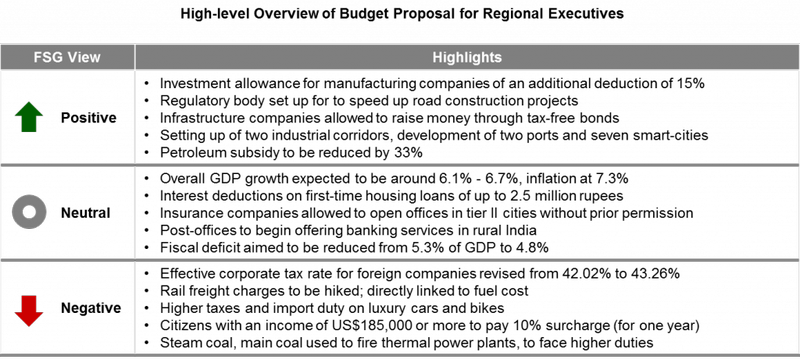
India’s budget does not propose any grand plans or major reforms, disappointing several groups that expected the finance minister to combat decade-low growth with a radical plan. However, multinationals have welcomed the realistic and well-balanced strategy

FSG View:

Relatively Neutral Budget:

  • Given the historical trend of overpromising and under-delivering, India’s newly appointed Finance Minister P. Chidambaram has set the budget for a relatively neutral course with no radical proposals, focused around increasing the planned spending, cutting down on subsidies, and encouraging investment

Increase in Planned Spending:

  • Companies should be encouraged by the government’s plan to increase the size of their overall expenditure by 16.4%, the majority of which will come from an increase in planned outlay, while reducing non-planned spending, which entails interest payments, subsidies, and defense

Decrease in Subsidies Bill Difficult:

  • Subsidy cuts during a pre-election year are going to be difficult, but the government expects cuts in its petroleum expenditure. Last year, the government’s subsidy target was 1.9% of GDP but the revised estimates are over 2.5%

Historical Trend:

Overpromising and Under-delivering:

  • The Congress Party Government has consistently set unrealistic targets in a bid to keep voter confidence high; a maneuver that was not given much importance during the days of high-growth, but one which could backfire given the current slowdown
  • With the general elections coming-up in 2014, the government’s actions and performance are likely to receive closer scrutiny from both voters and the private sector

High-level Overview of Budget Proposal for Regional Executives


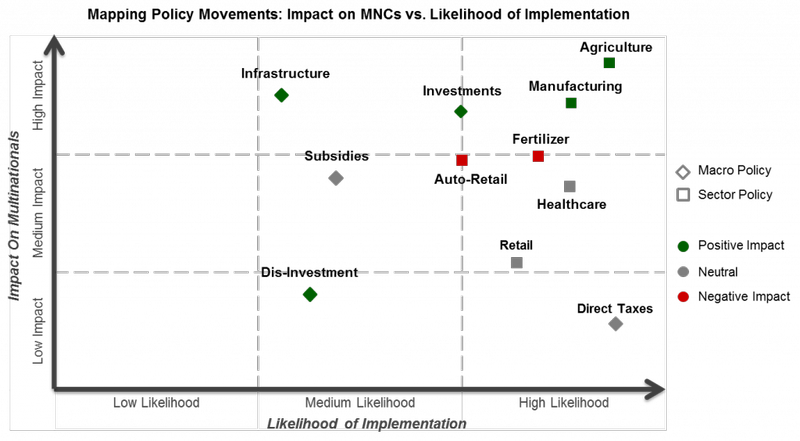
Mapping Policy Movements: Impact on MNCs vs. Likelihood of Implementation

Recognizing the Impact of the ASEAN Economic Community

This blog entry is the second of a two-part series. Part one can be read here: Understanding the ASEAN Economic Community.

8 Key Changes All Executives Should Prepare For

  1. All member states will gain economically from the AEC with real income expected to increase significantly
  2. Overall exports will outpace imports in the manufacturing sector, easing integration into global supply chains
  3. MNCs can find themselves in a more competitive position against local players in terms of pricing as production and transport costs are reduced
  4. ASEAN + 1 FTA’s with East Asian neighbors (China, Japan, South Korea) will have notable impacts on the region
  5. AEC is not just about lowering tariffs; infrastructure improvements, better intellectual property rights protection, harmonized investment laws, and easier movement of capital and skilled labor are part of the agenda
  6. Overall trade in services will increase with imports of services likely to outgrow exports (in most sectors)
  7. Growth is likely to be inequitable among member countries, thus companies should conduct in-depth studies in order to understand individual market dynamics
  8. FDI should witness a surge as both inter-ASEAN and external foreign investments pour into the region

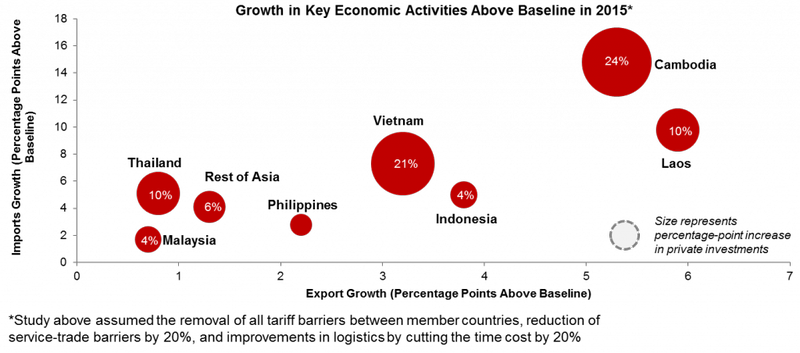
See graph below for results from a study by Ken Itakura on the impact of AEC on the exports and imports of the individual countries. Take all projections with a pinch of salt; they are a result of a simulation analysis that makes assumptions that might remain unmet

Growth in Key Economic Activities Above Baseline in 2015


Understanding the ASEAN Economic Community

What is The ASEAN Economic Community (AEC)?

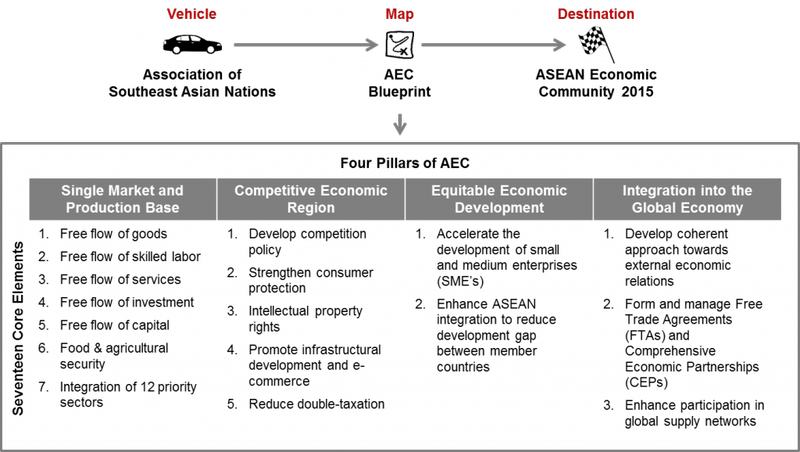
Contrary to common belief, the goal of The ASEAN Economic Community is not just to form a free-trade area, but to create a highly integrated economic community by 2015, that focuses on four pillars, majority of which will impact multinational companies. See the graphic below for a simple analogy explaining the relationship of the ASEAN to the ASEAN Economic Community:


Four pillars of The ASEAN Economic Community

What is FSG’s View on the ASEAN Economic Community?

  1. Multinationals across the board stand to gain from the AEC, either by directly participating in the growth story through their industry specific strategies or indirectly through the spillover effects of increased economic activity
  2. The AEC is more than just a free-trade agreement; MNCs should soon begin to experience other benefits as the region begins to improve its infrastructure, have better intellectual property rights protection regulation and harmonized investment laws, and allow for easier movement of capital and skilled labor
  3. Foreign direct investment should witness a surge as both inter-ASEAN and external foreign investments pour into the region to benefit from the access to the larger market, lower trade barriers, and increasing ease of doing business
  4. It is unlikely that ASEAN can achieve its target of completely building the AEC by 2015. However, the deadline of December 31, 2015 does not indicate a magical date when the economic community suddenly ‘turns on’; it is already happening and therefore companies can benefit from the changes taking place right now