This blog entry is the second of a two-part series. Part one can be read here: Understanding the ASEAN Economic Community.
8 Key Changes All Executives Should Prepare For
- All member states will gain economically from the AEC with real income expected to increase significantly
- Overall exports will outpace imports in the manufacturing sector, easing integration into global supply chains
- MNCs can find themselves in a more competitive position against local players in terms of pricing as production and transport costs are reduced
- ASEAN + 1 FTA’s with East Asian neighbors (China, Japan, South Korea) will have notable impacts on the region
- AEC is not just about lowering tariffs; infrastructure improvements, better intellectual property rights protection, harmonized investment laws, and easier movement of capital and skilled labor are part of the agenda
- Overall trade in services will increase with imports of services likely to outgrow exports (in most sectors)
- Growth is likely to be inequitable among member countries, thus companies should conduct in-depth studies in order to understand individual market dynamics
- FDI should witness a surge as both inter-ASEAN and external foreign investments pour into the region
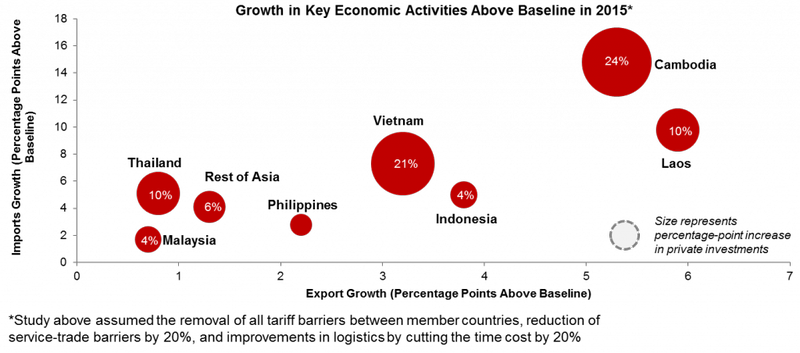
See graph below for results from a study by Ken Itakura on the impact of AEC on the exports and imports of the individual countries. Take all projections with a pinch of salt; they are a result of a simulation analysis that makes assumptions that might remain unmet



Speak Your Mind