
 LinkedIn
 There is no silver bullet to address growing Chinese competition; western executives already perceive Chinese companies as current and potential threats to their business in China. However, it is high time that multinationals are urged to build industry specific plans based on the strengths of Chinese competitors. FSG has developed a competitive framework with tailored tactics and strategies at different maturity levels to help multinationals cope with increasingly sophisticated Chinese competition.
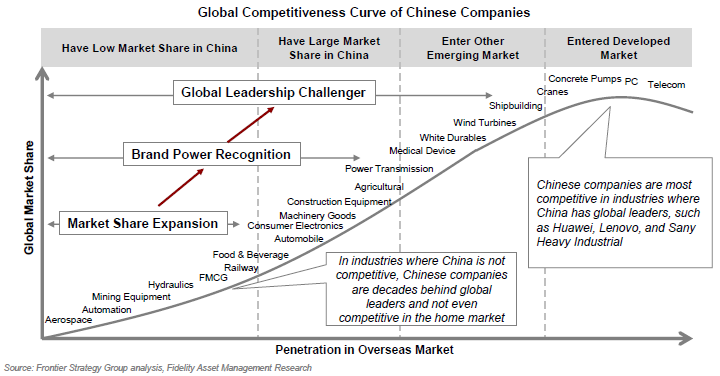
Multinationals’ journey in China typically starts with a strong market position in terms of product quality and brand image, relative to less sophisticated Chinese competitors. This “honeymoon” phase doesn’t last long as nimble Chinese companies quickly absorb advanced technologies from multinationals, leveraging bold innovation and deep understanding of the local market. This is a common result of the Chinese phenomenon called Shan Zhai 山寨, or ‘knock off’ in English. Shan Zhai companies typically start by producing low-end product and eventually evolve into highly competent businesses, thus becoming formidable market disrupters or even market leaders; the latter being dangerous to multinationals looking to legally build brand and IP ownership in China.
To learn more about the next stage of Chinese competitors, check back next week for Part 2 as I continue the discussion on how to best handle local competition in China.


