
This post is part two of a two-part series on India’s city prioritization framework. To read part one, please click here. These posts have been developed carefully based on FSG’s numerous interactions with clients and experts, and will have significant value for senior executives of western multinational companies operating in India.
India’s cities are growing rapidly. This pace is expected to accelerate in coming years due to government support and is likely to have implications for all multinational companies operating in the country.
India’s ‘Smart Cities’:
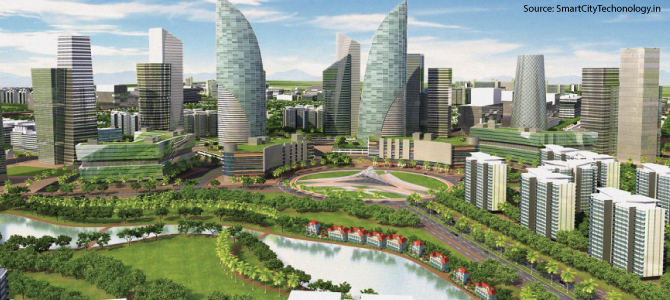
The government of India is encouraging rapid urbanization through the ‘Smart Cities’ initiative. The country aims to develop 100 ‘Smart Cities’ that have strong infrastructure, modern networks and a high quality of life for citizens.
98 of the 100 cities have been shortlisted and are currently in the process of submitting proposals to obtain government funding. There is a fair amount of interest in the project, with state governments and local re-development authorities partnering with international architectural firms and consultancies to ensure creative yet feasible proposals.
Opportunities for multinational companies in India:
This urbanization drive holds immense opportunity for multinationals in India. Companies can partner with local governments or bid for tenders in the development of physical infrastructure. These modern cities require creative digital solutions, meaning that technology companies can work closely to develop these cities. ‘Smart’ healthcare solutions are also encouraged, so companies in the healthcare space must closely study changes in the sector.
Urbanization in general also has long-term implications. Better customer infrastructure, lower logistics, improving last mile connectivity and rising incomes are likely to increase the consumer’s spending power and improve profitability.
The future of India’s super clusters:
The ranking of India’s super clusters is expected to remain the same in 2020, with the Mumbai and Delhi clusters taking the lead. Despite anchor cities contributing the maximum share to each cluster, support cities are likely to grow rapidly and become attractive individual markets in 2020.
A comparison of China’s emerging clusters with India’s super clusters:
As resource allocation decisions will be a priority for senior executives, we conducted a comparison of India’s super clusters with China’s emerging clusters in 2020 (see chart below). The size of China’s largest cluster in 2020 will be approximately four times India’s largest (the Mumbai cluster), and the majority of China’s clusters will continue to substantially outpace India’s clusters.
The Mumbai cluster will be slightly larger than the Guanzhong cluster (and roughly comparable with the Central Plains), but the rest of India’s super clusters lag behind China’s emerging clusters in size.
On just an absolute size comparison, China’s emerging clusters do seem more appealing than Indian super clusters. When we examine the growth rates, however, we find that India’s super clusters are growing at a faster rate on average than China’s emerging clusters. The Yangtze Mid-River cluster will be China’s fastest growing emerging cluster with a CAGR of 10 percent between 2013 and 2020, while India’s Mumbai cluster is expected to grow at the fastest pace of 14 percent.
There are, of course, other variables to consider when comparing India’s super clusters with China’s emerging clusters such as internal strategic objectives, diversifying the risk of over-exposure to a single market, costs, and current and future market opportunity. Still, examining the growth rate of a country’s clusters may be a crucial first step in decisions of resource allocation.
For an in-depth analysis of this topic, FSG clients can access the full report on the client portal. Not a client? Contact us to learn more.