
This post is part two of a 3-part blog series. To read part one of this series, click here.
Our latest Senior Executive Roundtable in London revealed three key challenges that heads of EMEA at large multinational companies will face in 2016. In our first post from this three-part series about the event’s key takeaways, we discussed how multinationals are compelled to re-prioritize their regional market portfolios to concentrate only on the top opportunities while optimizing their presence in the rest.
Here, we focus on a second challenge multinationals are facing – the need to re-think their product positioning in markets that are slowing and experiencing substantial volatility.
Priority #2: Re-shape the value proposition
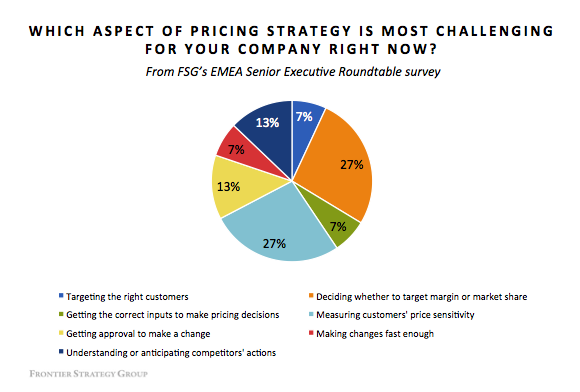
Multinationals have been struggling with what looks like a tactical question: How do we get our pricing right when currencies are fluctuating wildly and depreciating rapidly, especially against the USD? This question is only a symptom of a much bigger challenge facing multinationals, which is the changing attractiveness of their products in emerging markets.
In an environment where competition in emerging markets is intense, consumers and governments are reducing spending, and currency depreciations can make expensive imported products unaffordable, multinationals are forced to re-think which customers they can effectively target and adjust their value proposition accordingly. Companies whose assumptions are based on inaccurate or outdated information are not only risking missing targets; they could be playing in the wrong field altogether.
In response, multinational executives are reassessing several elements of their emerging market strategies. The basic question they are looking to answer is, Who is our customer and what do we need to offer to capture their demand in the current circumstances?
- How do our potential customers segment given macroeconomic dynamics in this country? Are there customer groups that are not our traditional targets, but could provide an opportunity for us? Are the customers that we assume are our target market actually able to afford and willing to buy our products?
- What is the right product mix for the customer segments we believe we should target? Do we require tailoring or localization of our product to capture demand? Are there older models of our products, or models from other emerging markets, that could be a good fit for this customer?
- At what price is our product competitive? If we cannot make our product affordable for our desired customer group, do we lower the cost of the product or do we focus on a different customer segment instead?
- Is the value proposition of our product aligned with its marketing positioning? Do we need to change how we market our product to shift who and how buys it?
- To be competitive not only on quality, but also on price, do we ultimately need to produce locally?
These are, of course, fundamental strategy questions and illustrate the need for multinationals to re-think generally established strategies for emerging markets. Acting on this requires a commitment to a long-term presence in emerging markets, as well as more resources in order to localize products, identify customer needs, and align marketing, pricing and product development accordingly. Multinationals have already been doing this in some key markets, such as China, but are now being compelled to do it for much smaller markets. This leads executives back to the question from our first post: Which markets are worth all that effort and investment in the first place?
A key element to putting this change into practice is working with the right local partners and distributors, especially when trying to lower the cost to the end-customer or identify changing customer preferences. Getting distribution right is, as a result, the third key challenge executives tackled during our event, which we’ll discuss in our next post.
To learn more about FSG’s EMEA Senior Executive Roundtable, please listen to our podcast. Not a client? Contact us to learn more.