
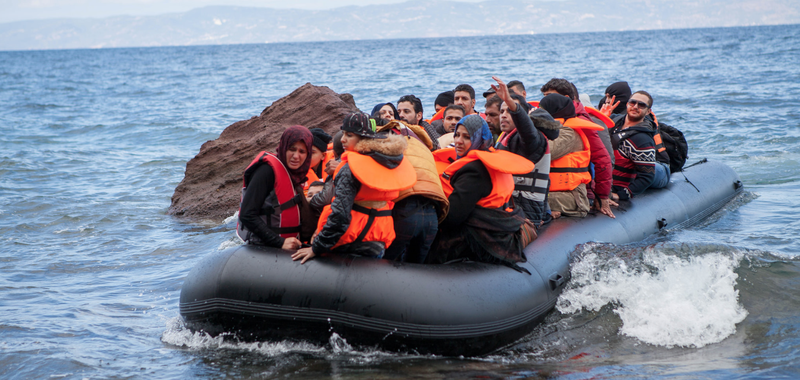
While Europe’s refugee crisis has subsided from the urgent situation of 2015 and early 2016, it will cast a long shadow over European politics. Since the continent is not yet in the clear, FSG is publishing two blog posts to cover this issue. In this first part of the series, we will discuss some brief background information on the crisis, and what to expect over the next few months. In part two of this series, we will investigate in greater depth the short- and long-term economic impacts of the crisis, and what multinationals should do in response to these events. Clients should also be aware that FSG previously covered the crisis in a blog post in 2015, available here.
What Happened
After years of grinding misery in Syria produced millions of refugees living in Turkey, Lebanon, Jordan, and elsewhere, 2015 saw a massive movement of refugees into Europe, with over 1 million people applying for asylum that year. The exodus of refugees was the largest in Europe since the immediate aftermath of WWII. While Greece and Italy have been points of entry since the war began, the increase in the number of refugees in 2015 was due to a temporary suspension of the EU’s Dublin Regulation, which meant refugees could continue on to their destinations (primarily Germany, Sweden, and Austria) and register there instead of the first EU country they reached.
The situation earlier this year
By the beginning of 2016, much of the initial goodwill towards the refugees had waned, after a major terrorist attack in Paris and a widespread series of sexual assaults in Cologne on New Year’s Eve became associated in the publics’ imagination with the influx of refugees. Countries across the European Union had suspended Schengen rules on borderless travel, and countries from Austria and Hungary down through the Balkans to Macedonia implemented border controls that succeeded in halting the flow of refugees from the Middle East into Europe. While temporarily improving the situation, this haphazard solution is not a permanent one.
EU-Turkey Deal
With the goal of finding a workable solution to the crisis, the EU concluded a deal with Turkey in which Turkey would prevent migrants from crossing into Greece, in exchange for a total of 6 billion euros (3 billion now, in addition to 3 billion pledged back in the fall of 2015) in assistance. The deal also finally granted Turkish citizens visa-free access to the European Union (as well as speeding up Turkish EU accession negotiations, which have been going on for decades), and setting up a “one-for-one” arrangement where the EU will accept one refugee from Turkey for each refugee the EU sends back from Greece. Since the deal was enacted and borders were closed through the Balkans, 90 percent fewer refugees have reached Greek shores, but whether or not this outcome is sustainable will be discussed below.
The Future
Much will depend on whether or not the EU-Turkey deal breaks down. If so, Turkey could shirk its side of the deal, and allow resumed passage into Europe – creating a further bottleneck in Greece, since the Western Balkans route remains closed. So far there have been conflicting reports about whether and when Europe will be willing to provide Turkey with visa liberalization, which the Turkish government will use as a strong bargaining chip with the threat of letting refugees pass into Europe.
Another surge this summer?
Even if the EU-Turkey deal disintegrates, Europe is unlikely to see a surge in migration at the levels witnessed in 2015. The EU still has no successful, unified policy for dealing with the crisis or apportioning migrants fairly across member states; however, the haphazard blocking of borders along the paths to countries like Germany and Austria, along with an end to a political emphasis on welcoming the refugees, should be sufficient to deter a significant number of potential migrants.
Rather, the danger is that of a localized crisis in Italy and Greece, which remain the primary points of entry for refugees from the Middle East and Africa. Entry into Italy has not been blocked, and Greece could see a wave of new arrivals if the EU deal with Turkey falls apart. Both of these countries, and Greece in particular, are ill-equipped to manage a renewed crisis on their own, unless support comes from the EU and other European countries.
Multinationals: Find the Opportunities
Increased Demand for Basic Consumer Goods
The refugee crisis provides a significant opportunity for businesses selling basic consumer staples, given the large number of lower income migrants (especially families) that will spend the limited income they have on these goods.
Hire Refugees
Finally, multinationals looking to expand should consider hiring refugees where and when possible. Governments will be looking to work with businesses to facilitate the integration of refugees into their respective labor markets. While many migrants will still require lower skilled jobs, after governments invest in language and technical skills, businesses will need to do their part by putting those skills to use. An influx of new migrants, as large countries like Germany, Sweden, and Austria have seen, is bound to cause some social tensions, but helping refugees find work is among the best ways to ensure those tensions are minimized over the long-run.
Come back next Thursday, June 23rd for part 2 of this blog series, which will discuss short- and long-term impacts of the crisis, and what multinationals should plan for as a result.
This post was written by Clay Kitchura.