






Featured Emerging Markets Insights

Central Banks Attack Economic Imbalances through the New Monetary Calculus


Malaysia surprised markets last week when it did not raise interest rates. Instead Malaysia’s central bank instituted increased reserve requirements in an effort to restrain the flow of credit and cool inflation in a hot economy.

This is the new monetary calculus in emerging markets. In a globalized world, most emerging market central banks do not have the firepower to maintain prices with monetary policy alone. Capital from slow-growth mature markets, mainly the US and Europe, is attracted to emerging market bonds because of strong growth prospects, increased stability and widening interest rate spreads. As emerging market central banks raise rates to cool their economies, more foreign capital pours in and exacerbates the currency and inflationary imbalances that the central banks are looking to control.

Malaysia’s move will not go far enough to normalize its economic imbalances, but it is an important and creative start. Companies can expect similar moves by central banks in other emerging markets. If the new calculus can turn into consistent policy, currency appreciation will slow to mirror the pace of rising standards of living rather than the more rapid and unpredictable pace of foreign capital flows. This will impact hedging strategies as corporate treasuries can more accurately anticipate currency volatility across their growing emerging markets portfolio. Inflation may also cool as bank lending becomes more stringent, increasing consumer wallet-share for discretionary goods while also relieving some pressure from rising labor costs.

Brazil employed similarly creative strategies around taxing portfolio inflows to slow currency appreciation, while also using more traditional rate hikes in a combined effort to curb inflation and currency appreciation.

The new monetary calculus is a key step for financial stability and continued economic growth in emerging markets. Markets employing these strategies are likely to outperform in an unbalanced economic environment characterized by slow growth in mature markets and rapid growth in emerging markets.


Monthly Regional Insights: Asia Pacific


Each month Frontier Strategy Group releases monthly market reports to its clients. These concise, executive-friendly reports highlight key developments and market trends in a particular region.

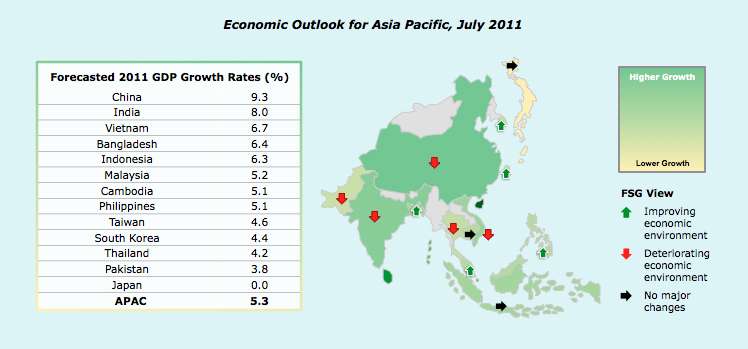
Inflation continues to be a concern in July for most countries in the Asia Pacific region, although its magnitude and impact differ across markets. In Indonesia and the Philippines, inflation seems to be under control; in India and Bangladesh, rapidly rising consumer prices threaten to accelerate; and in Vietnam, soaring inflation is eroding available income and undermining consumer spending, starting to fuel labor strikes.

Other insights from this month’s report include:

  • Bangladesh: Multinationals should monitor Bangladesh’s budgetary spending, as it will impact the country’s ability to support substantial industrial development
  • Cambodia: Shortages of skilled workers may create a drag on Cambodia’s rapid growth in the coming years
  • China: The Chinese government is becoming more assertive in promoting national interest and guiding development in key industries
  • India: Multinationals should plan for inflationary pressures in India to remain strong for at least another year
  • Indonesia: Consumer confidence will remain steady this year as long as inflation doesn’t spiral out of control
  • Japan: Funding Japan’s recovery may become increasingly difficult as future budget packages reopen political rifts within and between parties
  • Pakistan: Efforts to boost economic development in Pakistan will be marred by worsening relations with the US
  • Philippines: Recent moves by the Aquino administration suggest that it is serious about reducing waste and fighting corruption
  • Thailand: Companies that have not already done so should make contingency plans for further unrest and the possibility of a coup d’état
  • Vietnam: If Hanoi does not bring inflation under control soon, strikes will multiply, wages will rise, and FDI will drop


Three Ways High-Growth Companies are Managing Channel Partners Differently


For the vast majority of MNCs, working with third-party distributors, dealers, and other types of channel partners is a fact of life in emerging markets. These local partners bring to bear their knowledge of the local market, relationships with customers, and a range of other capabilities that MNCs hope will offer a “plug and play” solution for rapidly scaling operations. These benefits do not come without costs, however. Many of the executives that Frontier Strategy Group works with report their fair share of headaches when it comes to managing the third parties that stand between them and their end customers; whether it is an over-zealous entrepreneur that is not willing to adhere to corporate strategies and policies, or an under-performing partner that can’t or won’t make the right investments to hit aggressive targets.

To shed some light on this challenging topic, Frontier Strategy Group recently conducted a comprehensive survey of our client executives. We asked a range of questions designed to uncover how MNCs are evaluating, managing and incentivizing their channel partners. The analysis we performed is designed to help senior executives benchmark their approach to channel management against that of their industry and regional peers.

We also uncovered some thought-provoking differences between the management approach taken by high-growth companies versus average and low-growth companies that we hope will challenge the status quo:

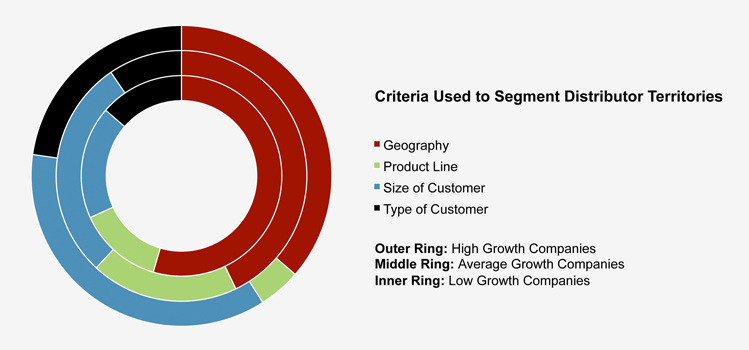
1) Do not default to geography as the criteria used to define distributors’ territories

  • Although the status quo is to segment distributors by geography (57% of all companies), high-growth companies are roughly twice as likely as low-growth companies to assign territories based on type or size of customers

2) Use non-monetary incentives to gain increased visibility into, and control over, distributors

  • 87% of companies use non-monetary incentives to reward distributor performance, but there is a stark contrast between the types of incentives used by high-growth companies (“Integrating” Incentives) and those used by average and low-growth companies (“Value Transfer” Incentives)
  • Integrating Incentives, such as providing business consulting or CRM platforms to distributors, add value for both parties and provide vendors with the ability to streamline distributor operations
  • Value Transfers, such as allowing the use of the vendor’s corporate logo, represent a one-time and one-way transfer of value from vendor to distributor, with little or no long-term ROI for the vendor

3) Invest in the best, walk away from the rest

  • High-growth companies are highly reliant on their distributors in emerging markets, sending on average more than 50% of both volumes and revenues through their distributors
  • These high-growth companies are investing significantly more resources in managing distributors – an average of 53 full-time equivalents (FTEs) per region, versus only 11 FTEs at low-growth companies
  • However, high-growth companies replace a significantly higher percentage of their distributors (on average, 17% in the past two years versus 7% at average growth companies) and report shorter average partnership lifecycles

Over the next few weeks we will explore each of these recommendations in more depth here on the blog.


Keeping an Eye on Latin America? You’re in Good Company


N = 213 multinationals

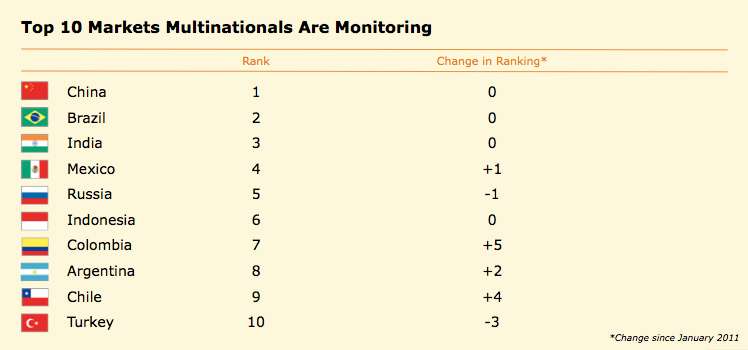
Global multinationals are increasingly interested in Latin America, according to recently released numbers from The F10, Frontier Strategy Group’s monthly survey of the top ten most tracked emerging markets. While China, Brazil, India, Russia and Mexico have remained the top five most monitored since the beginning of the year, new countries, including Colombia and Chile, have broken onto the list. These rising stars are garnering particular interest from consumer-focused multinationals. Although Vietnam and Thailand have dropped out of the top ten, strong interest remains in both from pharmaceutical and medical devices firms.


Brazilian Trade Disputes Challenging Latin America-Focused Executives


Frontier Strategy Group’s Latin American clients are reporting lost opportunities and revenue due to increasing trade restrictions on imports into Brazil. Costs and frustrations are mounting for businesses dependent upon a smooth flow of commerce across Brazil’s borders, forcing a reconsideration of previous business models due to critical vulnerabilities to import restriction.

In a recent example, Argentine auto parts piled up at customs on one side of the Argentine-Brazilian border, and on the other side, Brazilian white goods gathered dust in crates awaiting processing. Skyrocketing demand for appliances went unmet in Argentina, and automakers, already straining to meet production targets for the Brazilian market, missed critical opportunities to capitalize on the country’s boom in car ownership.

At their core, such disputes stem from the imbalances brought on by the persistent strength of the Brazilian real. The strong Brazilian currency is making imports cheaper and threatening the competitive position of Brazilian industry. As the Brazilian real has climbed in value over the last several years, import volume and value has followed, creating competitive pressure on the normally insulated Brazilian industry sector. In response, influential Brazilian industry groups are pressuring the new Dilma administration to restrict imports and protect their businesses. These pressure tactics are bearing fruit, and the government has applied a variety of non-tariff trade barriers such as denial of import licenses and postponement of customs processing.

To illustrate the strategic business implications of this situation, consider that in the first quarter of 2011, in response to the real’s appreciation, 28% of Frontier Strategy Group executive poll respondents reported shifting sourcing to cheaper markets for import of goods into Brazil. Argentina was the primary beneficiary of this business. But Argentina has emerged as the most obvious target for Brazilian import restrictions, as Argentina is also using its own import restrictions, in this case to protect currency reserves from a surge in imports brought on by an overheating economy. The result has been a series of tit-for-tat trade restrictions enacted by the neighbors, paralyzing trade in certain goods and damaging the top line for executives expected to meet meteoric targets for growth in Latin America in 2011. Additionally, it is not just imports from Argentina that are targeted for restriction: increasingly, goods from nations such as China and Mexico are subject to anti-dumping investigations and delays at the border.

In terms of practical steps, Brazil and Latin America-focused executives are advised to identify inputs and products that may be vulnerable to trade restrictions and develop backup sourcing strategies; this is particularly important for at-risk industries such as farm equipment, furniture, footwear, textiles, and auto parts and automobiles. In the meantime, companies may be forced to look at sourcing inside Brazil and compensate for the expensive real through further price increases passed on to customers, traditional financial hedging strategies, and additional resources devoted to government relations and import and export regulation compliance.


Achieving Growth in EMEA


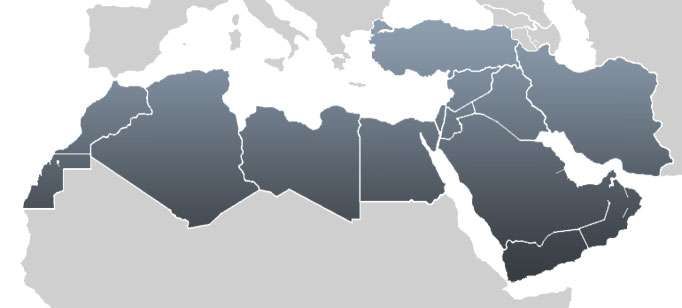
Turkey’s successfully concluded June elections and the reelection of the pro-business AKP have reaffirmed international investors’ faith in the country as an exciting growth market for both sales and manufacturing. The outlook for its neighbors, however, is far less immediately promising: to the east and north, Greece’s malaise highlights continuing macro-economic uncertainty across Europe; to the south and west (and increasingly directly across its border with refugees fleeing Syria), ferment and repression in the Middle East continue to raise questions about that region’s long-term trajectory. Meanwhile inflation — a unifying theme as well as ubiquitous menace — is placing pressures on consumers and governments’ fiscal and monetary policies across Europe, the Middle East and Africa (EMEA), from Russia to South Africa.

Check out the slides above for tips on converting volatility, sales force and talent-management challenges into opportunities in EMEA.


Sovereign Debt Crisis in Greece - What it Means for EMEA Emerging Markets


Austerity measures are not a solution to structural problems in Greece. What is at the root of the sovereign debt crisis? What are the risks? How will it impact emerging markets? Frontier Strategy Group Practice Leader, Matt Lasov answers these questions and more in an interview with EMEA analyst Martina Bozadzhieva.


Welcome to the Emerging Markets Insights Blog


Frontier Strategy Group is pleased to release the Emerging Markets Insights blog. Since Frontier Strategy Group was founded in 2005, our clients have grown to comprise more than 200 emerging markets-focused senior executives from leading companies such as The Coca-Cola Company, Johnson & Johnson, Proctor & Gamble and Microsoft. We help emerging markets executives in multinational corporations manage performance risk and execute on their growth agenda through a unique platform that combines data, research, and analytical tools.

By working with executives solely in emerging markets, we have developed an unparalleled perspective into the challenges these individuals face while operating in unpredictable geographies.

As a reader of the Emerging Markets Insights blog, you will gain exposure to the latest expert opinion, insights, and data for the Latin America, Asia Pacific, Eastern Europe, Middle East and Africa regions. You can subscribe to the blog by clicking on this link.

Welcome to the Emerging Markets Insights blog, we look forward to your readership.


Anil Prahlad is Senior Vice President and Global Head of Research at Frontier Strategy Group, overseeing research teams for all the emerging markets that FSG serves. He was formerly at the Corporate Executive Board, where he was Managing Director of Global Strategic Research in the finance practice. He has authored over 25 major publications covering supply chain, corporate finance, accounting, and corporate strategy. Mr. Prahlad has a master of business administration from the Kellogg Graduate School of Business, a masters in engineering management from the McCormick School of Engineering at Northwestern University, and a bachelors degree from the Indian Institute of Technology

« Previous Page