Asia Pacific

Watch out for these 4 red flags when doing business in Myanmar


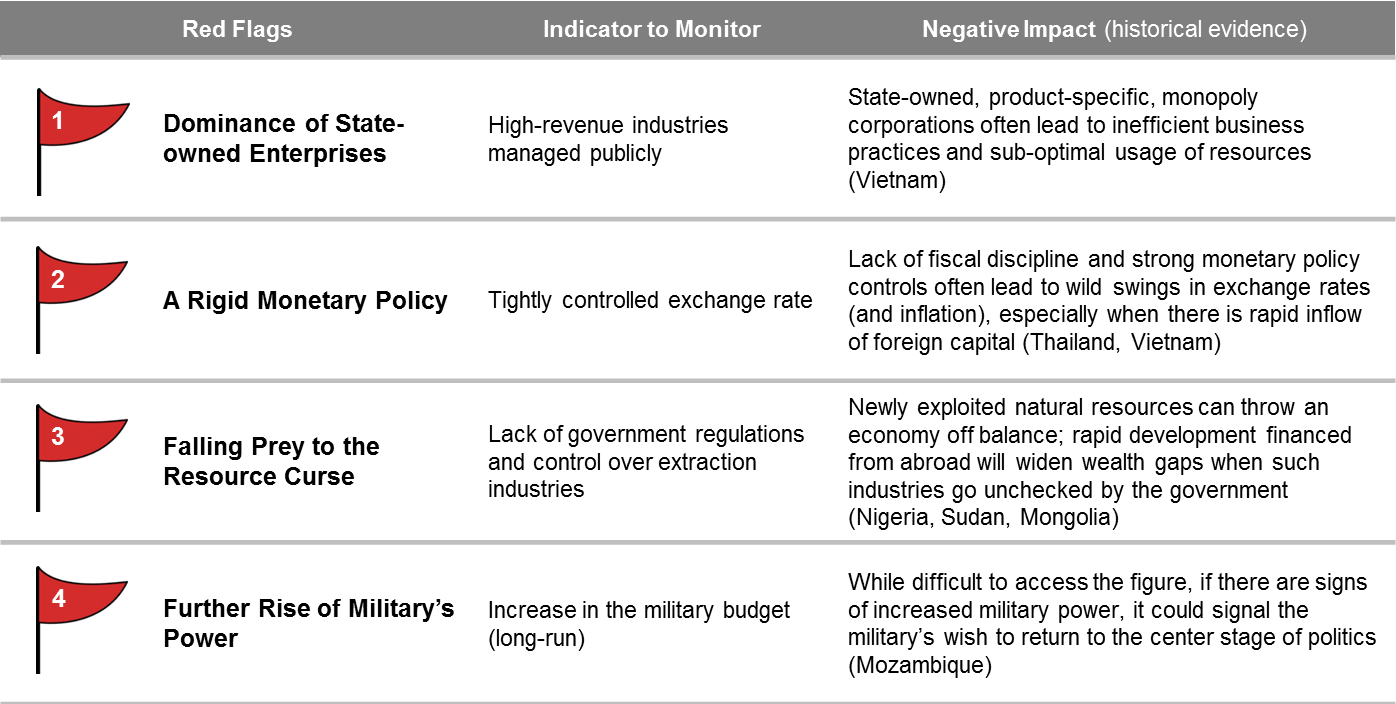
Important to remain alert: Amidst the enthusiasm, multinationals should not underestimate the fragility of Myanmar’s long path of development that can easily be derailed by misguided leadership and influential crony businessmen. Here are four red flags for you to look out for:

Myanmar

PODCAST: Three Risks Emerging Markets Face in 2013


FSG iTunes Podcast

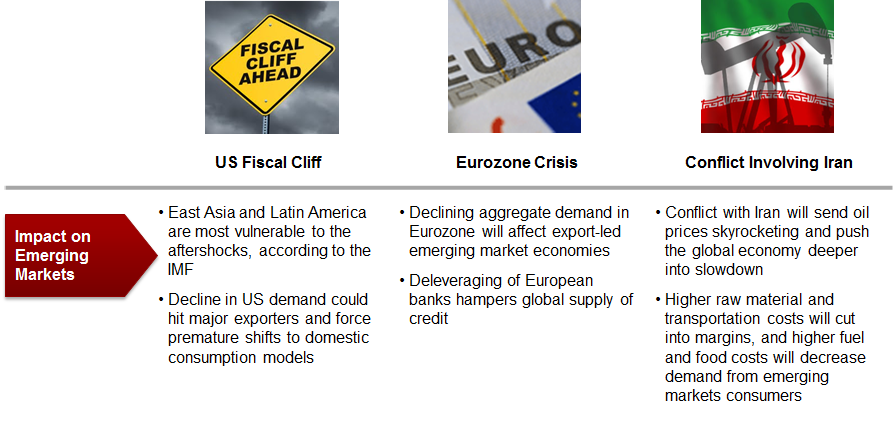
In this podcast, FSG senior analyst Sam Osborn highlights the top three global risks executives should be developing contingency plans for. These seemingly local events would have significant ripple effects across emerging markets globally: the US fiscal cliff, the eurozone crisis, and a potential conflict involving Iran. Sam shares key signposts to monitor and implications for MNCs.

To listen to or download the podcast, click on this link to access the iTunes store.

PODCAST: Tapping China’s 560 Million Netizens


Blog Podcast

In this podcast, FSG practice leader Adam Jarcyzk shares his insights into China’s booming ecommerce market. By 2014, the Chinese ecommerce market will be larger than that of the US, but the traditional strategies companies have used in the West are unlikely to succeed in China. Adam shares three recommendations for adapting your approach.

To listen to or download the podcast, click on this link to access the iTunes store.

3 Reasons Why Emerging Market Executives Need To Contingency Plan Now


Regional FDI Chart

Global uncertainty is increasing. The back-and-forth negotiations surrounding policy decisions on the US Fiscal Cliff, Eurozone crisis, and potential conflicts in the Middle East may be intriguing for political scientists, but for global business executives, they are cause for major headache. These policy decisions don’t just affect the upcoming elections; the anemic growth of the global economy is at stake. Any escalation of one of these major drivers of global risk could seriously thwart hard-earned recovery, and plunge the globe into another recession.

With that said, emerging markets continue to show promise for 2013, even in the face of increased global risk. By focusing on economies that are better positioned to withstand the major influencers of uncertainty, and mitigating exposure to economies that are highly susceptible, growth can still be achieved. For example, economies in: Asia Pacific, Sub-Saharan Africa, and parts of Latin America are relatively well insulated. In the near-term, countries such as: Indonesia, Nigeria, Philippines, and Colombia exhibit the necessary growth fundamentals to withstand some of these potential negative shocks. However, looking at the growth fundamentals alone is not enough. Let’s take a closer look at the three big reasons why emerging market executives need to prepare contingency plan as soon as possible.

1. US Fiscal Cliff – How will you plan for a sharp decline in global demand?

The primary determinant of exposure to the US Fiscal cliff is the amount of exports emerging market regions send to the US. However, the ripple-through effects of the US falling over the fiscal cliff (or probably more appropriately, sliding down the fiscal slope) are much more far-reaching. A reduction in US demand will reduce manufacturing as export-led economies rebalance to reach new market equilibriums. This decline in manufacturing will also reduce demand for the input-commodities, adding downward pressure onto commodity prices. Executives that are caught off-guard by the susceptibility of some economies in their portfolio will find themselves playing catch-up in attempting to rebalance their resource allocation.

2. Eurozone Crisis – Are you prepared for a sudden reversal of foreign direct investment flows?

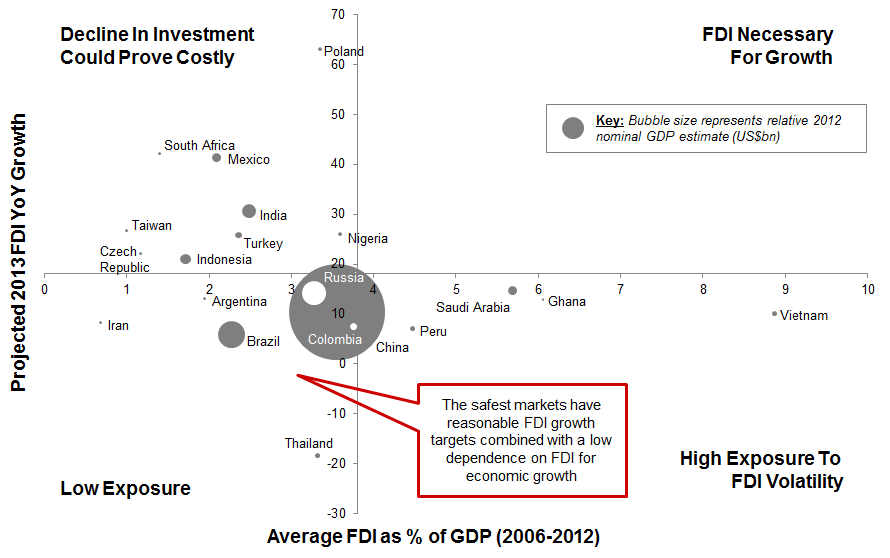
Trade and financial linkages are the fundamental transmission channels of an intensified Eurozone Crisis. A weakening Eurozone economy, combined with heightened perceptions of global risk, could undermine the foreign direct investment inflows that are currently expected to moderately increase for emerging market economies in 2013. Economies that are dependent on advanced economy capital flows for growth could see a major source of investment dry up.

3. Conflict in Middle East – What happens if there is a major oil shock?

Any conflict in the Middle East could result in a major decline in global oil supply, prompting a spike in oil prices. Higher oil prices would reduce sluggish growth and raise production costs (eroding profitability), while upward pressure on inflation could trigger a reassessment of credit supply in emerging markets. All of these factors combined could cripple indebted economies and threaten a liquidity crisis. The susceptibility and flexibility emerging markets have in dealing with this scenario depends on their adequacy of reserves, and their potential to shift production to exports to enhance their repayment capacity. For example, countries such as Ukraine and Poland are in major danger of a liquidity crisis if economic tensions rise due a reduction in global oil supply.

Only by fully understanding the implications and impacts of these events on business can companies appropriately react to the downside possibility. Executives that plan for the worst will find themselves a step-ahead of the competition if any of these risks materialize. In a highly competitive environment, that extra advantage can be the difference between exceeding and missing performance targets.

PODCAST: Integrating Acquisitions in Emerging Markets


Podcast Logo

In this podcast, Frontier Strategy Group Expert Advisor, David Hodge, shares his experiences and best practices in the realm of post-merger integration. David was a key member of the transaction team for Amcor’s 3 largest acquisitions, and has completed M&A transactions in 10 separate countries. He highlights four of the most common pitfalls to avoid, and shares a “strategic growth framework” for capturing the most value.

To listen to or download the podcast, click on this link to access the iTunes store.

Are MNCs looking to expand in the Philippines?


Senior executives are increasingly answering “yes” as they seek to diversify operations in Asia beyond Greater China.

-Its small size has kept it off the radar screen of many executives, but as corporate mandates increasingly emphasize profitability, the Philippines is a market that executives need to pay attention to

-Despite its small size relative to its regional peers, the Philippines can offer fairly high and stable returns for strategically targeted investments.

  • Its fiscal prudence has already led to a credit rating upgrade this year with another upgrade expected to bring the nation to ‘investment’ status by 2013.
  • More than 60% of the population falls between the ages of 14-65 thus providing for a large and one of the fastest growing consumer bases in the region
  • President Benigno’s government has started making slow but essential progress on anti-corruption reforms and building up infrastructure

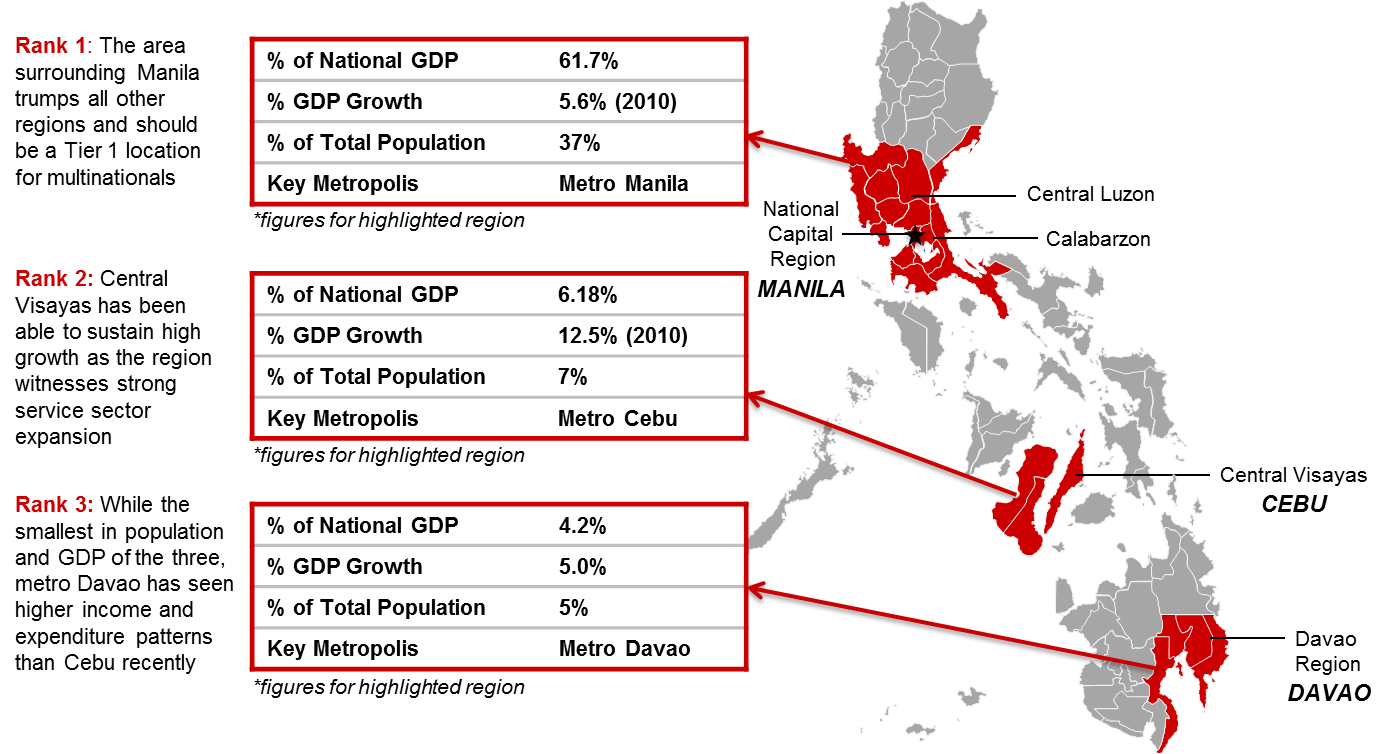
-Given the small size of opportunity, executives should focus their investment efforts into three main areas of the Philippines (see map), with the major focus on Luzon, which has the highest concentration of wealth and population. Companies looking for high-growth opportunities beyond Luzon should consider Cebu and Davao in order to keep their efforts concentrated on these more developed and business friendly metropolitan areas

Philippines

PODCAST: India’s Latest Reform Efforts Fall Short


Podcast

In this podcast, Frontier Strategy Group’s lead India analyst, Shishir Sinha, shares his view on India’s latest reform efforts. Although some progress has been made, many of the most important reforms for multinational businesses remain undone.

To listen to or download the podcast, click on this link to access the iTunes store.

Building long-term distributor relationships, one year at a time


I recently shared some insights into effectively structuring distributor contracts in China that were gleaned from the recent executive discussion hosted by FSG in Shanghai. The eight executives that FSG brought together, representing heads of China or heads of Asia for a range of technology, industrial, and healthcare companies, also spent quite a bit of time discussing two sides of the same coin: building relationships with distributors, with a long-term partnership in mind, and transitioning or ending relationships with distributors.

But, it is hard for us to discuss these two issues without coming back to contracts! The key takeaway on contracts that was discussed in my previous post was the necessity of conducting an annual review and negotiation of the contract. In addition to the benefits outlined in that post, an additional benefit of an annual discussion is the opportunity to sit down across the table from your distributor and level-set on where the relationship stands, what is going well, and what needs improvement. This guidance and feedback, shared in the context of achieving mutual benefit, is the anchor of a strong relationship. It is also the best tactic at your disposal for ensuring that distributors are not caught off guard if you decide to make a change to the relationship (either by ending it, or scaling it back).

Nobody likes surprises. But, even in the best case scenario, when bad news is being delivered to your distributors, there is a risk in the Chinese market of “losing face.” Several executives mentioned instances of terminated partnerships where the local distributor felt that he had “lost face,” and as a result, felt a personal vendetta against the vendor. This could be manifested in the disgruntled former distributor establishing a relationship with a competitor (and taking key accounts along), sharing trade secrets, or poisoning your company’s reputation in the market.

One way to minimize the damage of a perceived loss of face is to ensure that when territories are transitioned, it is from a small distributor to a larger distributor (and not vice versa). A large distributor will have greater power in the marketplace to minimize the damage that could be caused by a disgruntled former small distributor. But, if you switch from a large distributor to a small distributor, the disgruntled former large distributor has an increased ability to harm your business and impair the operations of your new, smaller distributor.

As the discussion turned to the challenge of transitioning from indirect to direct in China, the key takeaway was to expect the unexpected. Your distributors may well be telling the truth when seemingly making excuses for underperformance, so do not be too hasty to make such a transition, or in his words, “wait until the pain is unbearable.”
Finally, it is important to bear in mind that investing in developing the capabilities of distributors does not and should not be conflated with retaining distributors. Taking a “tough love” approach has proven to be a trend among the highest growth companies. Investing in distributors to develop the capabilities you require should not prevent you from terminating relationships with distributors that are not meeting expectations, and a track record of doing so instills current and future partners with a higher expectation of accountability.

A structured, annual contract negotiation process builds a natural inflection point into the vendor/distributor relationship, which offers an opportunity to proactively evolve the relationship over time, or to bring the relationship to its conclusion with minimal loss of face.

Emerging Markets Are Clouded By Increasing Global Uncertainty


Global Mosaic

Uncertainty in the global economy, primarily a result of questions surrounding policy decisions in the Eurozone and United States as well as the potential for conflict in Iran, is affecting global economic growth prospects. Growth projections for 2013 continue to fall as worries over fiscal consolidation, financial weakness, and high levels of public indebtedness in advanced economies put downward pressure on global growth. In emerging markets, activity has been slowed by weaker demand from advanced economies, policy tightening in response to capacity constraints, and country specific factors. However, emerging markets are now better positioned to be resilient in the face of crisis compared with 2008, due to policy improvements in the fiscal and monetary space.

As financial markets continue to react to the re-election of Barack Obama, emerging markets globally have a keen eye on the developments surrounding the upcoming US Fiscal Cliff. The impacts of automatic spending cuts and tax increases would be seen worldwide, as declining US demand would affect export-dependent economies across the globe. Lower aggregate demand would also yield downward pressure on commodity prices as global manufacturing decelerates, further damaging economies that are dependent on commodity exports. FSG predicts that emerging market oil exporters could witness drastic reductions in real GDP growth, as much as a .8% decline in 2013.

Even with all of the uncertainty in the global economy, FSG has identified a number of emerging markets countries that nonetheless are expected to exhibit strong growth in 2013. These markets tend to fall into one or more of the following buckets:

Improved political stability

  • E.g. Vietnam, Thailand

Ample fiscal cushion

  • E.g. Angola, Qatar

Relatively insulated from the Eurozone

  • E.g. Philippines, Malaysia

Large domestic populations with a booming middle class

  • E.g. China, India, Indonesia

In my next post, I’ll discuss some of the implications of the Eurozone debt crisis and a potential conflict involving Iran on emerging markets growth prospects for 2013.

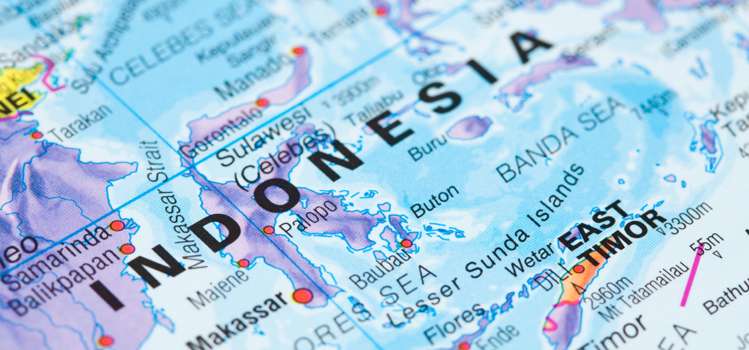
Distribution Channels in Indonesia: Current Trends and Enduring Difficulties


Indonesia

I wrote in this post that for many global businesses operating in emerging markets, the most common sales channel is to operate through distributors. In Indonesia, one of the truly hot frontier markets in the Asia-Pacific region, this is especially true and a key success factor for MNCs. Geographically fragmented across many large and small islands, the country has a growing consumer base but is difficult to navigate. Even foreign companies FSG supports that have been there for over a decade continue to have an indirect or hybrid channel presence, not a pure direct sales force.

I recently spoke with one of FSG’s expert advisors in Indonesia, Ignatius “Iggi” Khomasurya, about the distribution environment there. He had three basic messages for companies looking to enter or expand operations in Indonesia. First, there are some interesting trends underway that are expanding opportunity for multinationals and worth a careful look. Second, though it is a challenging business environment (beyond the geography), it is navigable with proper planning. Third, there are some big mistakes he has seen other companies make, that you don’t have to.

Trends

The more things change… Cold chain is starting to expand in Indonesia. This means distributors increasingly deploy refrigerated trucks across the country, which is great news for many businesses, especially those involving food and pharmaceutical products.

A second trend is that the rise of cloud computing is increasing local business interest in deploying enterprise technology and software for sales force automation. Previously, setup, maintenance and connectivity concerns were prohibitive, but in the cloud, those costs are greatly reduced. So you can start to expect your distribution partner to report “real time” daily sales figures by area, salesman, store type and SKU. On the cutting edge, a local FMCG has deployed 1,000 iPads to its sales force. If you want your distributors to track pipeline inventory in real time, it might not happen tomorrow, but it is no longer a hope that is worlds away.

The more they stay the same… The average consumer in Indonesia does not yet trust e-commerce, and many do not yet have a credit card. In fact, Iggi said, there are 27 issuers and only around 20 million credit cards in Indonesia, out of a population of 240 million (and many people who do have cards hold two). This means people (and businesses) use cash and are very tight on cash flow. As a result, middle and low income Indonesians often prefer to buy a SKU with a small “cash ring” on a daily basis (say a 10 ml shampoo sachet) rather than bulkier packages (a 100 ml shampoo bottle), even if that means forgoing a bulk discount and convenience.

A fourth and final trend is that unlike most other Southeast Asian countries, Indonesia is still dominated by traditional rather than modern retail, and that is changing very slowly. There are around 2 million outlets in Indonesia selling goods that needs to be replenished regularly. The supermarket presence in Indonesia is growing, but volume sold through convenience stores is growing faster. Even so, the government is concerned that mom and pop stores will be killed off by modern retail, so it is intervening. Recently a rule passed to cap the number of stores owned by a single company, such that expansion beyond a certain number can only be done through a franchise model. This rule aims to facilitate the conversion and revitalization of fading mom and pop stores in a way that still encourages small local business ownership to professionalize and survive.

Difficulties

One of the largest difficulties for MNC’s operating in Indonesia is that local distributors are biased towards believing that foreign companies are trying to take advantage of them. They are especially concerned that MNC’s will use them to blaze a distribution trail and then take over with their own sales force, offering poor compensation for their initial efforts. Indonesians are often not confrontational, but Iggi says there are some “bad apples” that can become very antagonistic when an MNC attempts to exit a distribution arrangement with them. Antagonism is a particularly likely outcome when a distributor feels humiliated and is sensitive to losing face. Retaliation can be directed at your individual manager, or at your company. In both cases, distributors can lean on and attempt to mobilize official powers on their behalf.

Threats against individuals can include action in the realm of immigration (instant deportation), taxation or in extreme cases police or military action. Iggi knows of a local lawyer whose advice to a distributor was to have an expatriate general manager arrested and put in jail to force more favorable negotiation terms. Some well-known MNCs have had their expatriate staff jailed or passports taken away in the midst of negotiations. This is scary stuff, but real.

Threats to companies usually involve lawsuits. Iggi tells about a company sued by a distributor that “lost face” when the MNC exited to set up its own sales and distribution unit. The courts tied up the company’s plans for the next three years, prohibiting appointment of a new distributor or a sales team. The company went from 70% market share in Indonesia to around 30% by the time the ordeal was resolved.

The majority of distributors are not this uppity. The ones to watch out for are those with owners with both sensitive personalities, and the resources to retaliate when displeased. These difficult distributors often have a reputation and can be identified ahead of time by checking in with MNCs and local businesses operating in the community, whether in Jakarta or in the outlying provinces.

Advice

Fortunately, Iggi did not leave us feeling down on Indonesia. By keeping a few lessons in mind, it is possible to capture Indonesia’s opportunities without incurring the wrath of distributors against the individual manager or company.

First, spend the time to find a good distributor. There are many good ones in Indonesia. Again, ask other MNCs or the people on the ground for character references, and conduct a professional background check if your budget allows. One word of caution when selecting distributors: screen for motivation, not just ability. One channel manager at a fast moving consumer goods company in Indonesia recently told Iggi they look for five things in a distributor: 1. Strong financials and good connections; 2. Distribution permits set up and ability to expand distribution; 3. Ability to hire and develop salesmen; 4, Ability to handle collections; 5. Ability to manage in-store merchandising and promoter personnel. At first glance this appears to be a pretty robust list. But something important is missing. That manager is just looking for ability, the elements of which are usually external and visible. But he is not paying enough attention to a core question: who are these people, what motivates them, and are our objectives really aligned? Because it can be complicated to exit a relationship in Indonesia, you want to be as sure as possible that you are entering a durable relationship.

Second, hire a good local lawyer. Not when you’re in trouble, but just as a part of your local overhead. Your general counsel from corporate center is probably an excellent lawyer, but they do not know how to help you structure contracts in Indonesia such that both you and the distributor both agree on what the contract really says. A good local legal counsel can also help tackle the challenging situations above and draw both parties towards quick, amicable resolution.

Third, when you exit a distributor, understand that it expects to be paid “fairly” in exchange for going away quietly. It is not unusual for a distributor to expect a significant severance package – on top of the expectation that you will buy out any remaining inventory that they are holding and on occasion help pay the cost of personnel redundancy. One way to potentially avoid such a payout is to put the distributor on the defensive a few months before you broach the subject of terminating your relationship. You can put them on the defensive by setting clear measurable expectations that they are not meeting, and by writing official letters pointing to breach of contract.

Fourth, when switching distributors, get involved in the details on both the outgoing and the incoming end. Make sure you map out the client base the first distributor was reaching, and ensure that the new distributor guarantees to reach the same outlets and more. Some companies have left a distributor that promised coverage of 60,000 outlets to gain a distributor that promised to reach 75,000 – only to find out after the transition was nearly complete that the second distributor did not have strong links to most of the original 60,000 outlets which were larger accounts and had been loyal customers.

Finally, if you decide to transition to a direct sales force, remember it is tricky to build one from the ground up in Indonesia. Your best bet is to “hijack” the sales force that was already working for you, but was employed by your distributor. To ensure this is possible, it is important to structure the initial distribution arrangement so that you have dedicated sales personnel working for you within the distributor, which you help train. This is not uncommon, and if it is so arranged, these sales personnel will often gladly work for you later. If negotiated smoothly, the distributor is content to see this happen rather than simply laying off a bunch of employees and creating a labor or morale problem on top of its lost business.

In conclusion, Indonesia is stable and growing, but it is still in some ways the Wild East, especially when it comes to channel management. As the world’s fourth most populous country it should receive serious attention by any APAC regional executive when conducting market prioritization exercises. FSG believes that the size of opportunity in Indonesia is actually head and shoulders above the other individual members of the ASEAN pack over the next several years. We do not discourage operating there, but you’ll want to stay extra alert, and get plenty of local advice. And of course you will benefit from staying connected to the collective wisdom of other MNCs operating in the country, which is one of FSG’s sweet spots. Good luck, and let us know if we can help.


Next Page »