


Europe, Middle East & Africa

The Russia Plan EMEA Executives Should be Writing Now


Israel’s surprise election results indicate that the population is much more interested in the immediate need to stabilize the economy than in the country’s ongoing problems with Iran. This decreases the risk of an Israeli attack on Iran in 2013, and increases the risk facing Russia’s economy. The connection between the two? Predictably, oil prices, which are artificially high due to a political risk premium related to a potential Israeli attack on Iran.

For Russia, reduced oil prices mean significant economic as well as political risk. Sources as diverse as ratings agency Standard&Poor’s and the Russian Ministry of Economics point out that at US$80/bbl Russia’s economy will, at best, slow to a shallow recession. This will be accompanied with rapid and deep currency depreciation, rising inflation, and plummeting consumer spending and business investment. Frontier Strategy Group estimates that there is a 25% chance that this scenario could play out as early as this year, particularly after the Israeli election results.

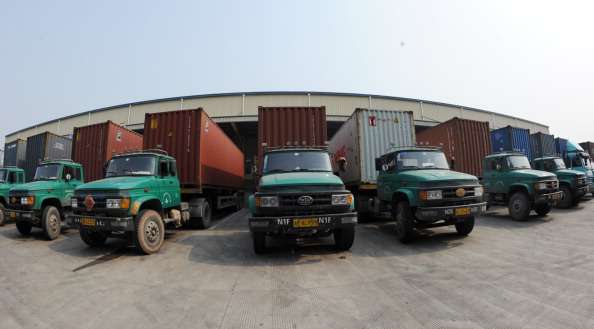
Surprisingly, few multinationals operating in Russia have plans in place to respond to this scenario. Executives responsible for Russia are, of course, aware of the theoretical possibility of an oil price crash and its potential impact on the economy, but, as with any long-standing risk, they can become gradually de-sensitized to it, focusing instead on more short-term priorities such as growing their business’ presence in Russia’s regions, setting up local manufacturing, or forging new local partnerships. This approach, however, increases their business’ exposure to the market and their potential losses when a macroeconomic shock does materialize. Even if executives get everything right in their business strategy in Russia, an economic crisis could obliterate their success and throw off the most carefully-constructed plans. At the same time, an economic crisis could create unique opportunities to pursue M&A, capture talent, and take market share away from struggling competitors. Companies that are caught by surprise by a sudden change in the economic environment will struggle to both mitigate the risks and take advantage of opportunities created.

This context calls for careful contingency planning. However, contingency planning is frequently done on the corporate level and building a contingency plan for just one, often non-core, market, like Russia, is rarely a corporate priority. The organizations with the biggest stake in preparing such a plan – an EMEA or CEE division, and the local Russia team, frequently lack the resources and the expertise to build a sophisticated contingency plan. More often than not, bridging this gap requires regional organizations to reach out to corporate for support and guidance and to then take the initiative to build the plan in collaboration with their Russian team.

Not only does this process create an “insurance” for the organization when the risk of an oil price decrease does eventually materialize, but the planning process itself frequently yields actions that can be taken now, outside of the context of a crisis, to strengthen the company’s competitive position in the market.

*Listen to our latest podcast on the Russian business landscape on iTunes.

FT beyondbrics Feature - EM distribution: try DIY?


FT Original Image

Frontier Strategy Group’s latest research on channel management in emerging markets was featured on the Financial Times’ beyondbrics blog on January 23, 2013. Please find the article below:

With major EM economies slowing in 2012, regional heads of multinational companies are increasingly having to focus on their margins. As new research from the Frontier Strategy Group shows, many are considering boosting them by running some of their own distribution operations.

In a survey of 136 executives from 82 multinationals operating across emerging markets, FSG found their respondents to be none too happy with their distributors. On average, EM distributors take a 25 per cent cut of revenue, and nearly two thirds of respondents said they were planning to work towards a better deal.

Joel Whitaker, head of global research at FSG tells beyondbrics that MNCs moving into emerging markets have conventionally “focused on capturing opportunities as broadly as possible as quickly as possible, leading them to rush into relationships which give considerable power to local distributors.”

You might think that with an in-demand product and a good brand, an MNC should hold the whip hand. However, due largely to their lack of local knowledge, 94 per cent of companies surveyed used indirect distribution channels, so switching between channels is not always easy.

Healthcare, for example, says Dan Kornfield, FSG’s director of strategic research, is “usually defined by a set of big distributors with relations with government. This creates an odd balance of power, where the middle man may be more picky than the supplier.” In more high tech enterprises, such as chemical engineering, the time taken to train distributors can be an additional bind.

Russia stands out in the survey as a particularly hard place to manage distribution. Of the four Brics it stands out as having the lowest average number of distributors per company at just five, compared with 174 in China, 39 in Brazil and 70 in India. It also has the largest average cut taken by distributors at 31 per cent – compared with 25 per cent in China and Brazil and 19 per cent in India – and the highest levels of dissatisfaction with distributor transparency, at 80 per cent.

Russia is defined, says Martina Bozadzhieva, a CEE researcher at FSG, “by a lot of small distributors with great local knowledge but insufficient resources to cover large distances, and a few very large distributors which can”.

The latter companies will often be handling goods from competitors too and consequently, Bozadzhieva says, “are touchy partners to work with. They give you fast geographic access, but they are hard to incentivise, and would not mind if you dropped out.”

Overcoming this could entail DIY distribution: 43 per cent of survey respondents said they were planing to move into direct distribution in at least one of their market segments, and 18 per cent said they were planning to acquire at least one of their distributors.

Alcoholic beverage companies in Latin America, FSG say, have demonstrated how it can be done successfully. “They have mapped out the networks, they know the logistics, they know what it takes to hire the right people – they have realised they can cut out the middle man,” says Kornfield. This comes not only with extensive experience of the local market, he says, but with a strong brand to wield.

When this experience is lacking, though, high risks are involved. Where choice of distributors is limited, causing offence can be costly, and what causes offence can vary from place to place.

“There is huge variation geographically around how easy it is to disengage with distributors”, Whitaker says. “Business in India tends to be more transactional, and that is very familiar to companies from western markets, a lot of their toolkit works well there.

“But a company in Indonesia that tries to rip up a distribution relationship is going to find it much more difficult. The consequences can be quite severe as it’s seen as a more personal relationship.”

And then of course, it might be all too easy to look enviously at the cut being taken by distributors and assume it would be easy to replicate.

“We had a client in consumer goods in Nigeria who was dissatisfied with its distributors. Getting the goods into market was very slow and costly, and because they had the resources they thought they’d go direct”, Bozadzhieva says. “They found it was very challenging, the cost increased, their competitive position deteriorated, and eventually they had to re-enter from scratch with a new distributor.”

Surprise Israeli election results: It’s the economy, stupid


Israel

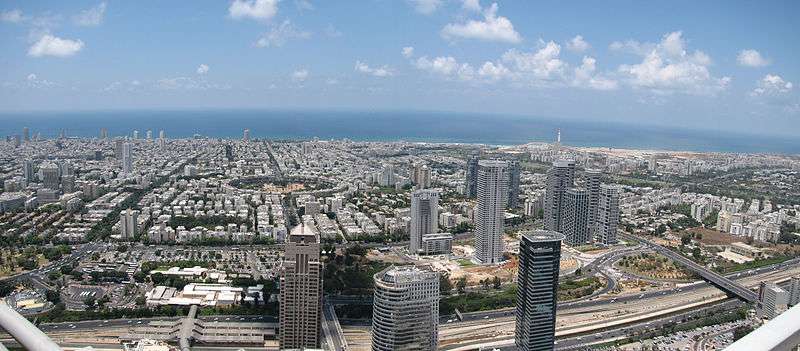
Israel’s surprising 2013 general election results weaken Prime Minister Benjamin Netanyahu’s political power, which has wider ramifications on the economic and political landscapes in Israel, the region, and beyond. The election results reduce the likelihood of an Israeli strike on Iranian nuclear facilities, assuming the governing coalition moves toward the center. This could lead to lower global oil prices, because it would help reduce a key risk to MENA regional stability in the short term.

A pre-election poll by Ha’aretz Daily explains some of the underlying factors that influenced the surprise gains for leftist and centrist parties. Only 10% of Israeli voters ranked Iran’s nuclear program as the most important issue that they were considering, while nearly 50% cited socioeconomic issues as their top concern. Security issues remain important, but companies should expect the next government to prioritize addressing economic issues like high cost of living, income inequality, the budget deficit, and social benefits for ultra-religious groups.

Netanyahu and the Knesset will be under pressure to rebalance the Israeli economy, while following through on campaign promises to not raise taxes. One consequence could be tax hikes on large companies rather than Israeli citizens to raise government revenue. To address a widening budget deficit, Israel’s central bank is calling for tax hikes and significant cuts to the state budget for education, healthcare, infrastructure, and defense. The central bank governor also warned that failing to raise taxes and cut the budget will result in significantly higher budget deficits for several years.


Austerity, The “Death Tax”, And How US Debt Ceiling Negotiators Could Learn From Europe


Austerity

The United States media has an interesting relationship with the word “austerity”. Apparently for the US media, austerity measures are a hot-topic in Europe. US publications such as The Wall Street Journal and New York Times have published articles analyzing the austerity measures implemented in regard to budgetary issues in the PIIGS (Portugal, Ireland, Italy, Germany and Spain). Economists from Paul Krugman to Mario Draghi have debated the effectiveness and scope of austerity measures in the processes of fiscal reconsolidation and deficit-cutting. The most recent IMF World Economic Outlook also offers a more quantitative econometric approach on assessing the effects of fiscal consolidation (their opinion was that estimated fiscal multipliers have been systemically too low, essentially saying that the negative short-term effects of fiscal cutbacks have been larger than expected).

Sentiment from FSG executives continues to reaffirm this growing aversion to the word “austerity”, and what it implies. Cost-cutting as the primary strategy for balancing budgets discounts the obvious economic advantages of pursuing a more equalized approach. In some emerging markets that exhibit tremendous growth potential, regional executives are worried that corporate budget-tightening and a laser-like emphasis on profitability is yielding the same short-term negative multiplier effect that the Eurozone just experienced. Harsh austerity to budgets is leaving regional executives with little room for flexibility, and with top-line revenue growth readily available, emerging markets could easily reap huge rewards for executives that are determined to not implement standardized austerity across the board. While spending clearly needs to be reined in, a bit of leeway should be extended in emerging markets where this “multiplier” could provide the biggest benefit to the company as a whole.

Along similar lines, Ernst and Young published a report estimating that banks will need to write down another $175 billion, as bad loans are forecasted to increase to 7.6% in 2013 from 6.8% in 2012. In FSG’s view, the austerity cycle creates deeper recession, weakening the banks further, and propagating this vicious cycle.

However, multinational corporations are not the only entity failing to grasp the insight here. The US Democratic Party is missing a big opportunity to leverage these recent developments in their favor. Many citizens remember the proliferation and media scrutiny of the so-called “Death Tax” before the 2008 general elections, made famous by Frank Luntz. The seemingly innocuous estate (or inheritance in UK) tax was successfully morphed into a diabolical government plot by Republican political strategists. Instead of an accepted status-quo, the estate-tax was used as a political rallying cry. As if this strategy needed further validation, Luntz’s best-selling book is actually titled, “Words That Work: It’s Not What You Say, It’s What People Hear”.

In the United States media, debt-ceiling negotiations have rarely been covered at their most fundamental level, which is the question of “Austerity or Stimulus?” As I have just covered, the word austerity and negative connotations associated with it are capable of triggering powerful images in the mind of the public (Greek protests and rioting anyone?). If democratic strategists begin to pivot their tactics to emphasize the ramifications of austerity, as opposed to spending their time defending the benefits of entitlement programs, then maybe, just maybe…we won’t end up like Greece after all.


PODCAST: Data Reveals Significant Room to Improve Distributor Performance


Podcast

Frontier Strategy Group recently surveyed 136 executives from 82 unique multinational companies (average global revenue, $18.1 billion) on their channel management strategy in emerging markets. The data shows significant room for improvement in distribution performance in 2013. The data also reveals the need to handle channel transitions with rigor and care, yet not shy away from them. A 2-page executive summary of the report can be found here. Dan Kornfield, FSG’s Director of Strategic Research recently discussed key findings from the survey on an exclusive Emerging Market Insights Podcast.

To listen to or download the podcast, click on this link to access the iTunes store.

Analyst Insight: Greek Unrest Hinders CEE Growth


From Matt Lasov, Head of EMEA Research:

“Unfortunately, some bad news out of Greece to start the new year. Things are deteriorating and it’s more important than ever to monitor events there.

In Athens, shots were fired into the offices of the ruling party including the Prime Minister’s office. Nobody was hurt but this represents an escalation in social tension. The trend is worrying as bombs were also detonated at other government offices, the homes of journalists and banks during the last week.

The economy is still shrinking under austerity and voters will ask for change one way or another. Banks are still bust and more people are losing their jobs.

Making things worse socially, the Greek government is clawing back some austerity measures for the rich and well-connected, property taxes for example, and arresting reporters who published names of those who evade taxes. The country is ripe for real social unrest. Syriza, the anti-Europe opposition, was ahead in opinion polls until the government secured the most recent round of bailout funding. When that round begins to dry up, Syriza’s case will be even stronger. Ultimately, default is a political decision.

Meanwhile, in Germany, the economy contracted more than expected, 0.5%, in the fourth quarter. With a contracting economy and an upcoming election, it’s hard to imagine that meaningful external support is on the way.

If the eurozone moves back to the brink of breakup, emerging markets that share trade and financial links, particularly in Central and Eastern Europe, will be impacted.

Building Brand Equity in Ethiopia: Getting in on the Ground Floor


Ethiopia

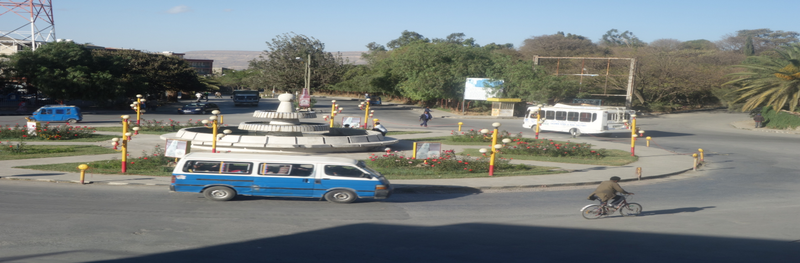
From Addis Ababa to Mekele, my latest trip to Ethiopia provided insights for the improving investment climate, in particular for consumer goods companies. Despite the absence of international food chains, American and European personal care and household products fill the shelves of small stores in the capital and other parts of the country. Johnnie Walker brand of Scotch Whiskey is seemingly ubiquitous in bars across the country. Diageo’s other important presence in the country, the recently acquired Meta Abo brand, competes with local beers that are supported by foreign companies like St. George’s (France-based BGI Group) and Dashen (British equity firm Duet Group). This is an important trend, because foreign interest in local breweries has acted as a leading indicator of foreign investment in other African countries.

Isuzu trucks and Volkswagen Beetles are among the cars of choice on Ethiopian roads, which is partly due to the wide availability of spare parts for both vehicles. A slowly improving roadway infrastructure connecting rural areas should be a welcome sign for the future investment opportunities. Foreign investment from big players, such as mining companies and the Chinese government, is already contributing to transportation upgrades in the northeast part of Ethiopia. Anecdotally, Caterpillar tractors played a prominent role in many of these road construction projects. The northern historical circuit, which is a prominent tourist route, should benefit from increasing popularity during the next several years.

Foreign multinational companies are already lining up to support the Ethiopian government’s ambitious initiatives to improve the agricultural sector, which accounts for 85% of employment. Public spending plans are focused on improving crop yields for small farmers. Despite investor interest in supporting these projects, the government has so far prioritized partnerships with multilaterals and NGOs rather than foreign companies. While not currently viewed as major partners, foreign companies are seen as current and future customers.

Overcoming famine in the mid-1980s and significant political transformation, Ethiopia is positioning to emerge as a critical destination for doing business in Africa during the next decade. The country’s population of 85 million people is second only to Nigeria’s among African countries. Foreign investment will be critical to help the government keep pace with population growth and to upgrade infrastructure in important sectors like agriculture, healthcare, tourism, and transportation.

Historically, doing business in Ethiopia has been heavily reliant on relationships with influential politicians and those well-connected to officials. A transition to a more liberal and open business climate will be a slow process (see After Prime Minister Meles Zenawi’s Death – What’s Next for Business in Ethiopia?). In the meantime, foreign companies should continue to seek ways to enter and expand to capitalize on opportunities despite lingering operational challenges. Perhaps senior executives could start by grabbing a stool at one of the Hilton or Sheraton hotel bars, where they will find many of Addis’ business elite relaxing and drinking a Johnnie Walker scotch or a St. George beer.

Introducing the New FrontierStrategyGroup.com


FSG.com

Visit the new Frontier Strategy Group homepage to learn more about our current offering, in addition to the latest insight from our emerging market community.

PODCAST: Innovation in Emerging Markets - Expert Interview


Podcast Blog

In this podcast, Frontier Strategy Group Expert Adviser Brandi Moore shares her expertise on building a strong culture of innovation in emerging markets. In the business press, stories of successful emerging markets-led innovation from companies like GE and Unilever dominate headlines, but most companies struggle to achieve similar results. Brandi shares her view on why, and offers practical solutions.

To listen to or download the podcast, click on this link to access the iTunes store.

————————————————————————————————————————————————————

Bradi MooreiBrandi Moore has been solving challenging business problems in India since 2004. She has worked in India with Wipro, Infosys and other top outsourcers building processes to span learning gaps between Indian concepts and Western business models. She has extensive experience developing methodologies for US executives managing Indian employees, leading India-based projects and negotiating with Indian executives.

Brandi has negotiated with foreign governments, large corporations and inside India with stakes as high as $200 million. She is trained in the 5-D Hofstede model and executes negotiations based on culture as well as formal negotiation strategy.

The Key Trends that will shape Nigeria in 2013


Nigeria in 2013 will provide a mixed picture for investors. While the government’s 2013 budget promises to open new investment opportunities, challenges lie ahead. Renewed fuel subsidy reductions will impact consumer purchasing power while the security situation in Nigeria’s hot spot regions is likely to deteriorate.

Trend #1: The Proposed 2013 Budget Creates Investment Opportunities
The Federal Government submitted the budget proposal to the National Assembly for approval. An increase in spending means opportunities in sectors that have received budget allocations or investment incentives. Focus areas for the economy in 2013 are security, education, infrastructure and healthcare. The 2013 budget aims to create long-term macroeconomic stability through continued investment in capital expenditures, deficit reduction, and the development of non-oil revenue sources.

Trend#2: New Fuel Subsidy Reductions will Impact Consumer Purchasing Power
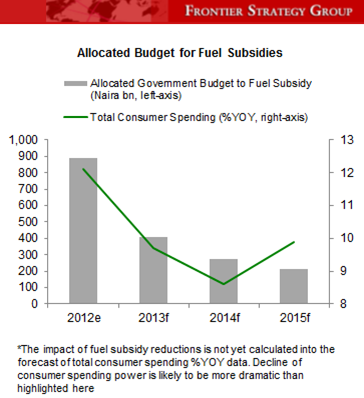
The government launched a new campaign to remove the fuel subsidy in the medium-term, a year after the attempted removal caused widespread protests. New plans will see the fuel subsidy gradually reduced through 2015. Consumers will be hit hardest by the fuel subsidy reduction as purchasing power for non-essential goods is likely to decrease. This comes after consumers were strained in 2012 when fuel subsidies were reduced for the first time. The initial impact of the subsidy reduction will be felt in early 2013. As a result, renewed protests are likely to hit the country once the new reductions are announced. Companies have to reach new customers to compensate for any potential decrease in consumer purchasing power.

Nigeria

Trend #3: The Security Situation is Likely to Worsen
The government allocated the lion’s share of the budget (668.51 billion Naira) to security, indicating that tackling Nigeria’s many security challenges is a key priority. However, companies should prepare for increasing insecurity in hot spot regions as violence is likely to increase if the budget is spent on recruiting more personnel into badly managed security forces that crack down brutally on dissent rather than on investing in better management and training.

Nigeria’s security challenges include bombings by Boko Haram and ethno-religious clashes in the northern and central areas, kidnapping, oil theft and piracy in the Niger Delta, and kidnappings in the Southeast. But the violence is about Nigeria’s acute social disadvantages and widening wealth gap.

  • Boko Haram: The group’s frequent attacks cannot simply be attributed to Islamist militancy, but rather longstanding socio-economic grievances and skyrocketing unemployment. The group is fighting the government which it blames for the precarious economic situation. As a result, the group wants to install Sharia law because it believes secular law is too corrupt and only religious law can establish order. The security forces’ vehement crackdowns and resulting civilian casualties contribute to an expanding base for recruitment.
  • Niger Delta: Similar to the situation with Boko Haram, unemployment and poverty is driving crime in Nigeria’s main oil producing region. In 2009 the government issued an amnesty to all militants with the failed promise to create employment. Instead, criminal activity has increased, specializing in oil theft (150,000 b/d, worth US$7bn annually) and kidnappings.

Having a contingency plan allows companies operating in these regions to manage risks and seize opportunities as they materialize.

*Editors Note: Don’t miss Anna Rosenberg’s latest article on managing distributors in sub-Saharan Africa

Next Page »