Emerging Markets Opportunity Not Over

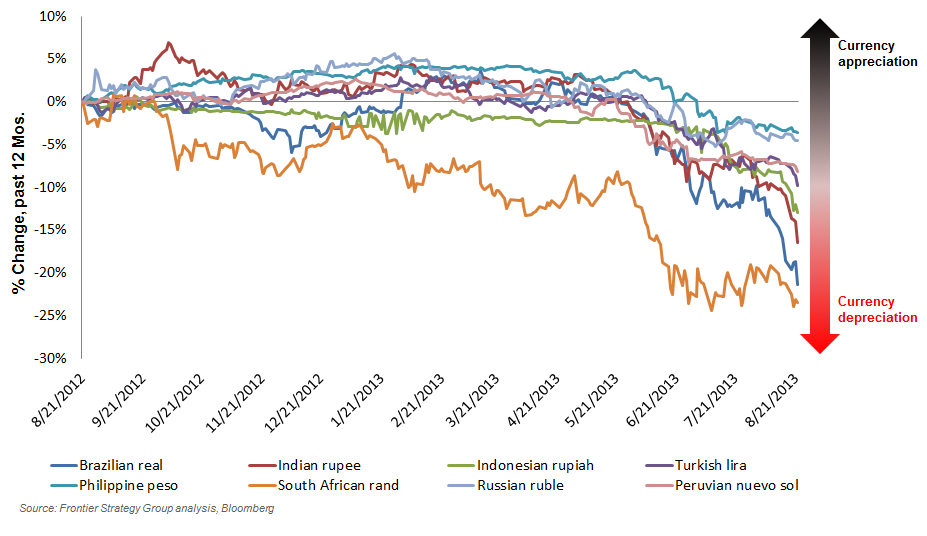
Currency-Volatility-Global-Performance-DriversRecent reversals in capital flows caused large and sudden currency devaluations, faster than many emerging markets expected or could manage. As a result, many market commentators have called this end of the emerging markets opportunity. That statement couldn’t be further from the truth. While companies should always expect challenges in emerging markets, the changing environment will also create a new set of opportunities.

FSG identified four ways companies can capture growth in this shifting environment:

  1. Leverage home-currency strength to win share back from emerging markets–based competition
  2. Double down on local production to reduce production costs
  3. Use balance sheet strength to earn financing margins
  4. Reassess customer segmentation to identify local customer “winners”

FSG looks at these strategies and the drivers of the changing global environment in our 2014 Global Performance Drivers report, now available for FSG clients.

What happened?

Capital flows reversed because of push and pull factors. As the US economy continues to improve, the Federal Reserve is expected to reduce bond purchases, changing the risk-return payoff for portfolio investors, “pulling” capital out of emerging markets. We also see slowing growth in emerging markets “pushing” capital to developed markets. The outflow of capital is more concerning for countries like Turkey, Poland, and Ukraine, which have high levels of short-term external debt. Countries fitting this profile may run into short-term funding challenges that could drive up local interest rates, or in the worst case cause temporary liquidity problems. Other countries like India and Indonesia may now struggle with inflation as currencies decrease faster than is manageable, driving up costs for consumers.

Paying for Flexibility: An Expert’s Take on Mitigating Currency Volatility

U.S.-based multinational corporations lost an estimated $50 billion as a result of currency volatility in 2012. As I referenced in my previous post, FSG projects currency volatility to increase in 2013. No longer can executives only rely on corporate treasury to manage these risks as the potential impacts on profitability and performance are too great.

To better understand some of the operational strategies that executives can use to reduce currency risks, FSG turned to one of our expert advisors, Professor Gordon Bodnar:

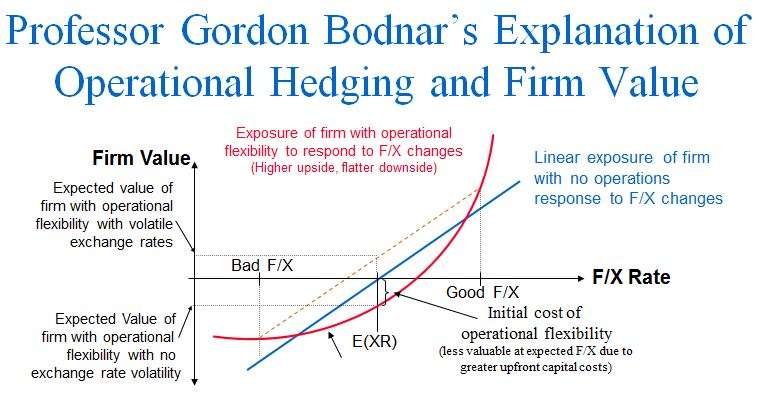
  • GB: “I encourage companies to think about structuring their operations as much as possible to have flexibility to respond to unexpected currency movement. If currency moves in our favor, can you take advantage of not just increasing dollar price and dollar revenue stream by providing additional service? Same thing for operations on the downside, how are operations structured so that over the short-term you can make adjustments to the pricing or costs structure such that you see a devalued currency by 10% your costs rise by less than 10%”

Professor Bodnar's Explanation of Operational Hedging and Firm Value

  • GB: “In markets with high volatility, the goal is an options type payoff. Companies often don’t want to do this, as anytime you are creating an option there is an upfront cost. However, the point is that the payment of the premium is necessary to get the payoffs you want…you have the ability to absorb and move across the profitability curve, leading to a higher expected payout”

Larger initial local investments give executives the flexibility to respond to FX volatility with operational rather than financial strategies.

This is obviously a more risky strategy, and Professor Bodnar was kind enough to share a wide array of less risky strategies that I’ll cover in future posts.

___________________________________________________________________________________________

Gordon Bodnar, Ph.D.

Gordon Bodnar is the Morris W. Offit Professor of International Finance and Director of the International Economics program at The Paul H. Nitze School of Advanced International Studies. He is presently a research associate of the Weiss Center for International Finance and also teaches in the Wharton Executive MBA program at the Wharton School at the University of Pennsylvania. Dr. Bodnar is also the associate editor of European Financial Management, Journal of Asian Economics, and Journal of International Financial Markets, Institutions and Money. He has held appointments as a Research Fellow at the National Bureau of Economic Research and the IMF. He received his Ph.D. in Economics from Princeton University.

As an FSG Expert Advisor, Professor Bodnar is available to FSG clients for consultation on many business issues with key areas of expertise including corporate and risk management. Please contact your account manager for further information or contact us at sales@frontierstrategygroup.com.