Featured Emerging Markets Insights

Monthly Regional Insights - August 2011 Asia Pacific


Regulatory changes in several countries are impacting the investment environment. In China, new policies may give foreign companies greater access to a US$1 trillion market. In Indonesia and Malaysia, regulatory changes will improve the business environment across several sectors. In Thailand, the government is pursuing policies that may unleash consumer spending along with inflation

  • Bangladesh: Multinationals should monitor Bangladesh’s budgetary spending as it will impact the country’s ability to support industrial development
  • Cambodia: Shortages of skilled workers may create a drag on Cambodia’s rapid growth in the coming years
  • China: Recent changes to Beijing’s “indigenous innovation” rules may allow greater access to China’s enormous government procurement market
  • India: New Delhi is poised to give multinationals greater access to an untapped portion of India’s massive retail market
  • Indonesia: A new “tax holiday” policy will stimulate investment in several industries and lower the cost of expanding into Indonesia’s rural areas
  • Japan: Power shortages currently plaguing Japan will become more severe in the coming months as the country continues to shut down reactors
  • Malaysia: A new initiative to remove foreign equity restrictions in certain sectors has the potential to dramatically improve Malaysia’s business environment
  • Pakistan: Efforts to boost economic development in Pakistan will be marred by worsening relations with the US
  • Philippines: Manila’s new export development plan may create investment opportunities for companies in the IT, electronics, and agribusiness industries
  • South Korea: High levels of household debt and rising interest rates will undermine South Korea’s consumer demand growth for the next 12-18 months
  • Taiwan: Taiwan will face increasing competition in Europe, its fourth largest export market, as a result of a new FTA between the EU and South Korea
  • Thailand: Companies should monitor government announcements about a variety of new policies that will impact Thailand’s investment environment
  • Vietnam: If Hanoi continues to dither on raising interest rates, inflation may exceed the government’s new target, setting the stage for lower growth


Myths and Realities of the African Middle Class


(Luanda, Angola: behind the tattered façade, a new middle class is emerging - author’s photograph)

In March 2007, long-serving Angolan President Jose Eduardo dos Santos formally opened a perfect metaphor for Africa’s changing consumer market profile. Located in the Talatona suburb of the country’s malarial and overcrowded capital city Luanda – perhaps best known for its pock-marked buildings, and the orphaned street children - the Belas shopping center is one of the most modern facilities of its type anywhere in Africa. The complex includes restaurants, banks, a planetarium and a multiplex cinema; high-end consumer brands with retail outlets in the center include Swatch (wristwatches) and Samsung (electronic goods); reflecting a growing local appetite for luxury items of which it is the perfect embodiment, the center also organizes Belas Fashion, showcasing the season’s latest apparel styles and designs.

The African middle-class: who (and where) are these guys?

Anyone who has taken a commercial flight into Africa from London, Paris, Brussels or Johannesburg will have seen members of the African consumer population with their own eyes: individuals and families with the disposable incomes not only to travel abroad but to bring back (often large quantities of) Western consumer goods home with them. Given both data absences and disputes over definitions, accurately scaling the size of this population is challenging. A recent report by the African Development Bank attempted to do exactly that; its headline finding was that estimated that Africa’s middle class has expanded to over 300m people. Equivalent to roughly a third of the continent’s total residents, this places Africa’s middle class close to the same size as both India’s and China’s.

The study’s definition of individuals with annual income exceeding $3,900 in purchasing power parity (PPP) terms as ‘middle-class’ is problematic; clearly, between US$2-$20 per day in available income is not a definition of middle-class that many in the West would recognize. The proportion of these people at risk of dropping back into poverty if food prices continue to rise much higher, for example, is also significant. Regardless of some of its limitations, however, the message of such data is that this emerging population is demographically significant – and therefore that the growing business opportunity it presents is compelling.

Sale of the (twenty-first) century

The pre-existing awareness of and appetite for Western brands amongst consumers in Africa is considerable– as the ubiquitous, proudly-worn English Premier League soccer jerseys and hand-drawn Nike logos that adorn the sides of minibus taxis the length and breadth of the continent illustrate. In many ways, the region is highly conducive to retail growth: its mostly wide-open and rapidly expanding multi-media channels for advertising, large diaspora populations in the West, comprehensive traditional and growing modern retail networks and the comparatively smaller and less sophisticated counterfeiting problem than Asia presents all work in the continent’s favor.

Recognizing the increasingly widely-quoted aphorism that Africa’s consumer market is ‘where China was twenty years ago, where India was ten years ago’, growing numbers of companies are planning to exploit this last great untapped (and still relatively uncluttered and uncompetitive) market, using footholds in upscale parts of the biggest cities and locally-tailored packaging and pricing solutions just as similarly foresighted pioneers were doing in those Asian markets years earlier. Recent store openings in West African cities such as Lagos and Abidjan include franchise outlets selling Mercedes Benz motor vehicles and European giant Mango’s clothing lines.

A powerful model for the rest of Africa is South Africa, where the emergent middle-class within the county’s majority ethnic group even has its own nickname – the ‘black diamonds’ – as well as a wealth of retail analysis, events and marketing targeted specifically at its growing numbers, influence and spending power. This group is estimated to comprise around one-tenth of the 22m adult black South Africans, and account for up to 40% of that population’s overall spending. Identifying and accessing similar cohorts in other populous African counties will represent a holy grail for businesses seeking to find new customers in the years ahead.

Buy one (benefit), get two free

The emergence of a growing and increasingly affluent African middle-class should have additional ‘virtuous circle’-style benefits above beyond the pure (and considerable) new business opportunity it represents:

  • Itself often a beneficiary of more democratic, peaceful and liberalized political systems, Africa’s growing and ever better-informed middle-class population should also be an increasingly vociferous source of demands for ever better governance, public service provision and transparency / accountability from its governments and public servants
  • Perhaps recipients of overseas or newly universal primary school education, the determination and spending ability of new generations of middle-class African parents to secure the best possible local education for their own offspring in turn will in the medium-term be a critical factor in closing Africa’s often acute talent deficit; a spate of recent private equity investor interest in affordable private schooling providers in South Africa illustrates this dynamic in action

Interested in learning more about the opportunity for your business to sell to and grow in Africa? Contact africa@frontierstrategygroup.com to learn how we can help


DATA: MNC Executive Response to Economic Uncertainty


On August 11, 2011 Frontier Strategy Group surveyed 52 senior executives on the effects of the S&P downgrade and slowdown in the U.S. and Eurozone on their businesses in emerging markets. Participants provided their predictions for what is to come in the midst of the current economic uncertainty. Below is a sample of the responses we received:

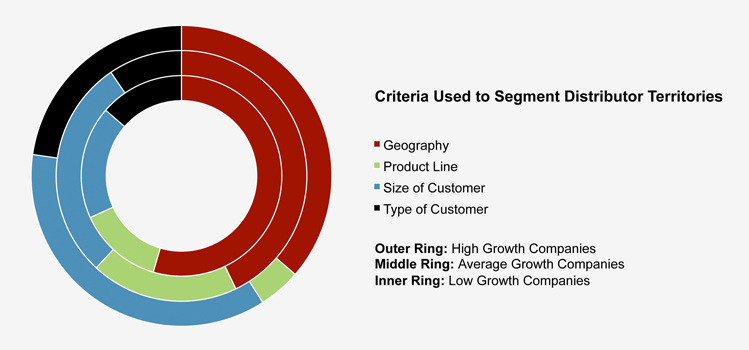
Managing Channel Partners to Fuel Growth in Uncertain Times


Cisco Systems is reinventing itself. The company is currently making headlines for slashing costs, announcing plans to lay off 6,500 employees, and selling off non-core product lines such as Flip video recorders and television set-top boxes. Behind the scenes, however, Cisco is making strategic moves designed to accelerate the company’s growth and profitability. A revamping of the channel strategy stands out as a key priority, with the company opting to “go deep” with a select number of preferred channel partners and reduce confusion by doubling down on five key product categories (versus 30 previously).

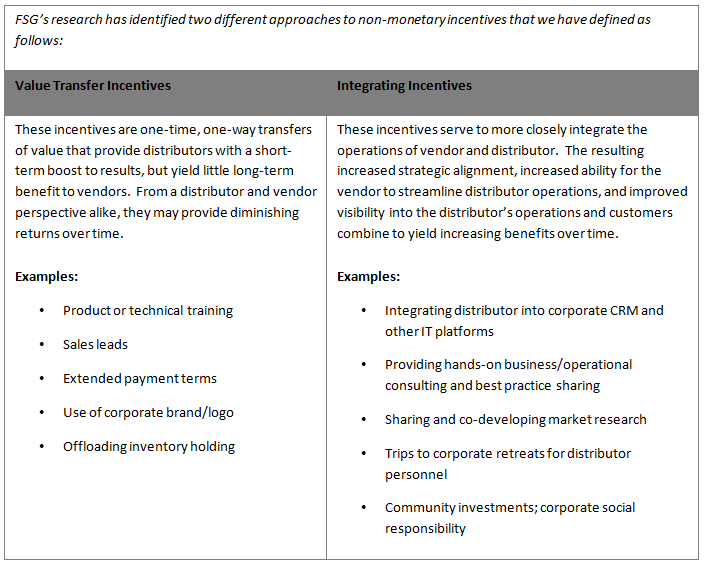
Incentives (especially non-monetary incentives) for channel partners are certainly something that Cisco will be evaluating. Non-monetary incentives in particular are playing an important role for vendors, as they are seen as a strategy for protecting margins and preventing damaging price competition. However, many vendors also believe that non-monetary incentives yield greater returns in enhancing performance since they represent specific investments in distributors’ capabilities. Cash payouts, on the other hand, may or may not be properly re-invested by the distributor in their business.

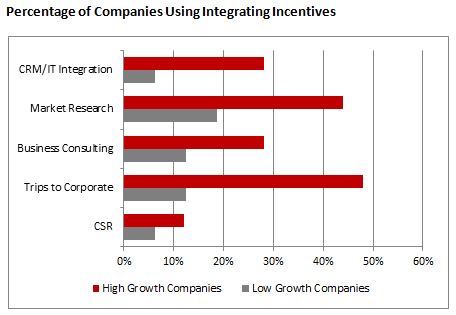
However, FSG’s research has discovered that not all non-monetary incentives are created equal. We have identified two distinct types of non-monetary incentives: 1) Integrating, and 2) Value Transfer. High growth companies are much more likely to turn to Integrating Incentives. These are non-monetary incentives that provide the vendor with increased visibility into and control over the operations of their distributors. These Integrating Incentives can act as a sort of Trojan Horse for vendors seeking to gain increased control over distributors in a way that does not cause their partners to put up defensive barriers.

In my next post, we will take a closer look at the “tough love” approach that high growth companies are taking in managing their relationships with channel partners.

Are you prepared for the impact of Friday’s downgrade on your emerging markets business?


Join Frontier Strategy Group to discuss the parallels between volatility in 2008 and 2011. Is history repeating itself? Or is 2011 a second black swan? We will answer these questions and discuss key tactical approaches to protect and grow your emerging markets business during these uncertain times.

Click the following link for teleconference details and to RSVP to this event.

Asia Pacific time zone (Click to download invitation)

US & Europe time zone (Click to download invitation)


Impact of US Debt Downgrade on Emerging Markets


Sovereign downgrades typically have two major consequences: first, interest rates increase as investors require additional returns to justify increased risk; second, banks have to raise capital as Tier-1 capital ratios are weakened, slowing lending and the economy. With the United States remaining as the world’s safe haven for capital during crises, these consequences are unlikely to materialize in this case.

Interest rates are unlikely to spike because there is no other low-risk alternative for capital preservation. With Europe’s own sovereign debt crisis turning it into a ‘hot-zone’, and the US economy teetering on the brink of a double-dip recession, capital has nowhere to turn except US government bonds. Equities are clearly not an option as benchmark indices have plummeted despite cheap valuations. European government debt may not be denominated in Euros by the time it matures. The best performing asset class during the past few weeks has been US Treasuries. The ten-year opened Tuesday at 2.38%, near all-time lows, despite warnings of a downgrade.

US banks, unlike other banks during sovereign debt crises, are not at risk. US banking laws treat US government debt as the safest holding regardless of credit rating so there is no need for banks to raise money to strengthen their capital base. The most imminent risk to US banks is the opaque derivatives trades banks have entered into to speculate on European government debt.

It is also important to acknowledge the political nature of downgrades. S&P’s decision is an effective commentary on Congress’s mismanagement of spending and broken processes. However, S&P also has an axe to grind as Congress embarrassed the ratings agencies by implicating their behavior as one of the root causes of the global economic downturn.

This downgrade is driven more by the fraught relationship between the US government and S&P, than challenging current economic realities. Real sovereign risk lies in Europe where each round of draconian spending cuts lowers the probability of recovery increasing the risk of a Eurozone default.

Emerging Markets Impact

For emerging markets, after a period of short-term volatility, it will be business as usual. China will complain loudly as the downgrade bolsters its case for more stringent debt management in the United States. These complaints will lack teeth, as China will need to maintain and add to its US Treasury portfolio to protect the asset from painful devaluation. A large sale of US government debt by China would be far more impactful to markets than the revised credit rating from S&P.

Other emerging markets stand to gain from this decision. They will lobby the ratings agencies for higher credit ratings based on improved debt management processes and lower debt ratios. The ratings agencies will have to react in favor of the emerging markets issuers, or risk losing their own credibility. In the years to come, the decision to downgrade the US (and possibly France, Germany, UK, Australia and other debt-laden markets) will benefit emerging markets as higher ratings will result in lower interest rates and more liquidity for them. Having access to capital markets on these terms will be one of the most important steps in graduating emerging markets to emerged markets.


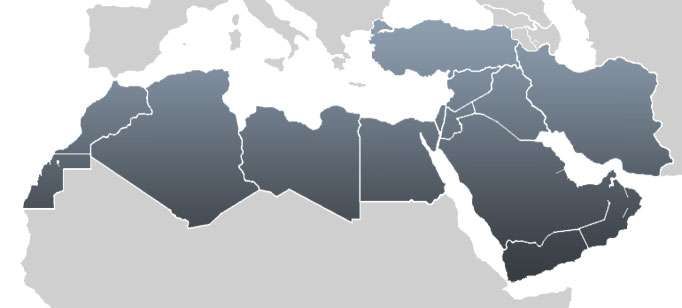
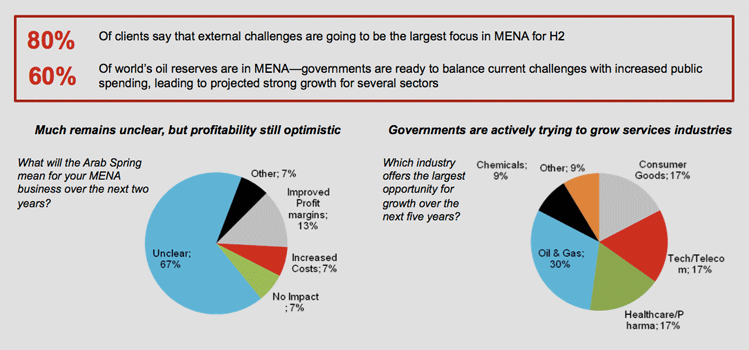
Huge potential for MENA investment despite regional uncertainty


  • Regional Spending - There are two key trends driving outlook in MENA:
    • MENA’s oil exporters are increasing spending of public funds to expand infrastructure and social stablility
    • Oil importers are not so lucky, and struggle with their fewer resources to keep unrest at bay
  • Business Strategy - Takeaways:
    • Instability will continue to dominate the regional narrative
    • Slow government transition should not scare away investors
    • MENA’s volatility necessitates an external strategic focus for foreign MNCs

Capturing Africa’s transformative urban growth


(Photo © Mayssa Daye: Satellite dishes in Juba, South Sudan highlight consumer appetites in even the poorest parts of Africa's rapidly growing cities)

Recent African headlines have rightly focused on desperate news of looming famine in the Horn of Africa; the vulnerability to adverse weather conditions of the large proportion of the continent’s population that continues to rely on subsistence agriculture remains a significant impediment to its future development. What is less widely known or reported is how rapidly that proportion is shrinking: Africa is now the world’s fastest-urbanizing region, a phenomenon that promises not only to transform the region’s food security outlook but also offers significant business potential.

Mass migration, massive potential market…

Africa’s total population only passed the 1 billion mark in 2009. By 2040, it will have 1 billion urban inhabitants and by 2050, 60% of all Africans will be living in cities. Lagos, Nigeria – which will shortly overtake Cairo as Africa’s largest city – grows by 58 residents every hour; at an estimated 10.5 million inhabitants today, Lagos is 40 times larger than it was in 1950. Between 2010 and 2020, it and seven other sub-Saharan African cities will add more than 1m residents each; of those, the Congolese capital Kinshasa will by itself add 4m.

Such an enormous mass population movement will inevitably create huge challenges: an estimated 70% of African cities’ inhabitants currently live in slum conditions. Overstretched and under-resourced municipal authorities will continually struggle to provide water, electricity and social services, not to mention governance and security, to their swelling populations as well as to investing companies. The continent’s urban centers will also remain focal points for political unrest, and – as a recent survey that deemed the Angolan capital Luanda the world’s most expensive place to live suggests – day-to-day operating costs for multinational companies can also be surprisingly elevated.

Yet Africa’s diverse and complex cities are also a magnet for consumer goods companies with the vision to recognize the combined potential of an emerging middle-class and a hitherto under-served mass market that exemplifies potential profits to be made at the so-called bottom of the [wealth] pyramid. Africa’s urban markets remain crucibles for business model innovation and adaptation, as exemplified by the trailblazing (and highly profitable) successes enjoyed by telecommunications and financial services firms over the past decade.

Capturing the urban African consumer opportunity

Increasingly it is Asian consumer goods companies having perfected their product mix and marketing strategies for targeting poorer customers in addition to swelling ranks of higher-spenders in home markets such as India or China – that are now taking the boldest steps into the region’s towns and cities. Seeing market stalls offering Indian-branded footwear and clothing or foodstore shelves stacked with Mandarin-branded produce is an increasingly common experience from Mauritania to Mozambique. While investments from the EU into Africa tripled between 2000 and 2008, Chinese FDI grew tenfold over the same timescale.

The emphatically urban emphasis of African consumer demographics – combined with an increasingly congested competitive landscape – points to the growing importance of developing an African city strategy for Western companies seeking to capitalize on growing business opportunities in the continent and avoid falling further behind their Eastern competitors.

Many newcomers to the region are surprised to learn that Africa already has more than fifty cities with a population of at least one million. While the projected average growth of 32% for those locations from 2010-2020 is both steep and enticing, 70% of Africa’s urban population growth over this decade will actually occur in smaller cities. Longer-term growth strategies for the continent will therefore involve eventually spreading to capitalize on opportunities in these locations as well: by 2025, Africa is projected to have 73 cities of 1-5m inhabitants and a further 84 of 0.5-1m inhabitants.

Difficult market access is often held up as an obstacle to expansion in Africa yet fourteen of the twenty largest cities on the continent are also sea ports, removing the overland logistics challenges that limit distribution and customer penetration in much of the continent. Clustering nearby cities around central hubs achieves further economies of scale, as does utilizing the so-called development corridors many African governments are prioritizing to accelerate infrastructure improvement and enhance market access and industrial investment. The spread of retail and distribution networks ever further into Africa’s interior offers further leverage possibilities: a major factor in US giant Wal-Mart’s recent investment in South Africa’s Massmart was a pre-existing footprint in twelve countries beyond its home country base.

Names like Ouagadougou, Lubumbashi, Ibadan and Douala may not yet rank alongside Chengdu, Wuhan or Zhengzhou in consumer goods’ companies expansion planning but they should definitely be on the radar. Fortune favors the brave, and the well-informed.

Curious to know how other major multinationals are planning to capture the urban African opportunity? Take part in Frontier Strategy Group’s inaugural African investment benchmarking survey. Contact africa@frontierstrategygroup.com for more information.


 

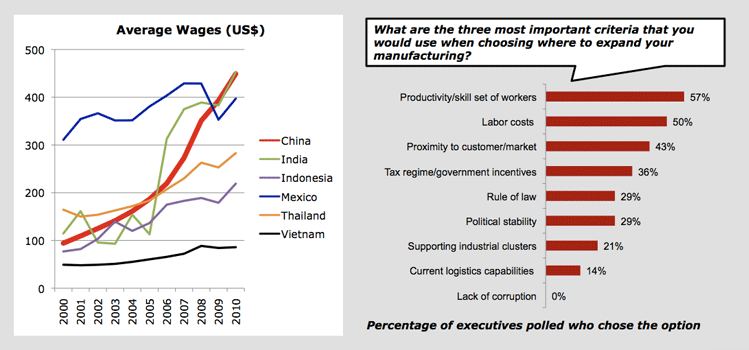
China Remains Competitive in Manufacturing Despite Rising Labor Costs


Due to rising labor costs in China’s coastal areas, many companies are re-evaluating their manufacturing strategy. Often they face a choice between other low-cost Asian countries and inland China. These manufacturing choices are likely to differ from industry to industry. Companies sensitive to labor cost will move out of China, while companies requiring total manufacturing solutions will move to inland China.

Trends:

  • Wage growth in China has outpaced most major emerging economies in the last 5 years, resulting in China’s labor costs being among the most expensive in the developing world
  • Some consumer goods companies traditionally using China as a manufacturing base have started to seek alternatives
  • Vietnam overtook China to become Nike’s largest manufacturing base in 2010, contributing 37% of Nike’s global output vs. 36% by China
  • However, many high-tech companies are increasing investment in China, particularly in the west
  • Global PC makers HP, Acer and Asus have invested hundreds of millions of dollars in western Chinese cities Chongqing and Chengdu, a fast growing laptop manufacturing hub which will produce 1/3 of global output in 2011

Drivers:

  • Companies moving out of China tend to be in labor-intensive industries in which labor is a large component of cost
  • China still has advantages in labor productivity, proximity to a large domestic market, and support from industry clusters, which are important for high value-added industries such as technology

Colombia and Peru are Becoming the Next Latin American Growth Frontiers


Buoyant consumer spending and robust FDI illustrate why MNCs are paying close attention to Colombia. In Peru, the appointment of a pro-business cabinet demonstrates that Humala’s government will emphasize growth and continuity. Meanwhile, questions about the political outlook in Chile, Argentina and Venezuela are on the minds of many investors as stories about protests, elections and an ailing caudillo fill the news:

Argentina: Argentina’s mixture of unorthodox economic policies is increasingly unsustainable

Brazil: The government cools the economy with monetary tightening and macro-prudential policies, but continues to spend heavily

Chile:Protests, strikes, and cabinet changes interrupt a long period of good news for Chile, but pose little long-term threat to stability

Colombia: Oil investment and surging exports are driving B2B demand, but B2C companies have reason to be equally optimistic

Costa Rica: The export market gains from increased demand in the United States while the domestic economy benefits from a revival in tourism

Dominican Republic: Short-term stability has deteriorated as protests and strikes over the rising cost of living become increasingly widespread

Ecuador:President Rafael Correa continues to push his populist economic agenda, betting on Chinese oil purchases

Mexico: Mexico’s recovery is shifting gears as sustained investment is starting to translate into higher wages and stronger consumer demand

Panama:While a free trade agreement with the US is still on the horizon, inward investment and growth continue at a torrid pace

Paraguay:Paraguay’s landlocked economy is at risk as Argentina and Brazil become increasingly unwilling to adhere to Mercosur trade terms

Peru: The appointment of free-market champions in Humala’scabinet signals continuity and moderation in the new president’s administration

Uruguay: The relative ease of doing business in Uruguay compared to its neighbors is increasing the country’s potential as a regional hub

Venezuela: New price controls won’t cure the other cancer ailing Venezuela, as inflation will grow with public spending over the next six months

« Previous PageNext Page »