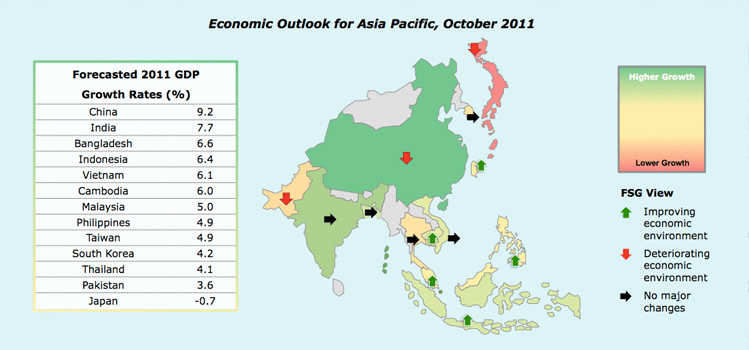
Most Asian countries continue to exhibit strong growth despite the recent turmoil in global markets. However, if there is a full-blown recession in the developed world, some markets will weather the storm better than others. In particular, domestically-oriented countries like India and Indonesia will be much less affected by a downturn in the West than will export-oriented countries like Thailand and Malaysia
- Bangladesh: Bangladesh’s deal with India will likely lead to long-term growth of bilateral trade and improvement of domestic infrastructure
- Cambodia: As Cambodia becomes increasingly integrated into the regional and global economies, it will start drawing significant attention from investors
- China: Signs of weakening consumer demand have appeared in the luxury goods industry, which has seen stellar growth numbers in H1 2011
- India: Continuing interest rate hikes along with inflationary pressures will dampen GDP and industrial growth for the remainder of 2011
- Indonesia: MNCs should ensure that they are effectively taking advantage of Indonesia’s numerous government incentive programs
- Japan: The economy’s slow path to recovery will further decelerate due to the global economic slowdown, rising Yen, and continuing energy issues
- Malaysia: Malaysia is pursuing an unprecedented expansion of its oil infrastructure that may create significant opportunities for multinationals
- Pakistan: Companies should expect price pressures in Pakistan to remain elevated for the foreseeable future
- Philippines: A new agreement with China will bolster bilateral trade and boost foreign direct investment in the Philippines
- South Korea: New anti-graft reform measures should help to improve South Korea’s corruption landscape over the medium term
- Taiwan: Taiwan’s business environment will continue to improve as the island’s leaders work proactively to attract investment
- Thailand: Companies should remain cautious of the political landscape until the country’s new government has established a solid base of support
- Vietnam: The government’s new minimum wage hike will undergird Vietnam’s inflationary spiral, prolonging the pain for multinationals in the country
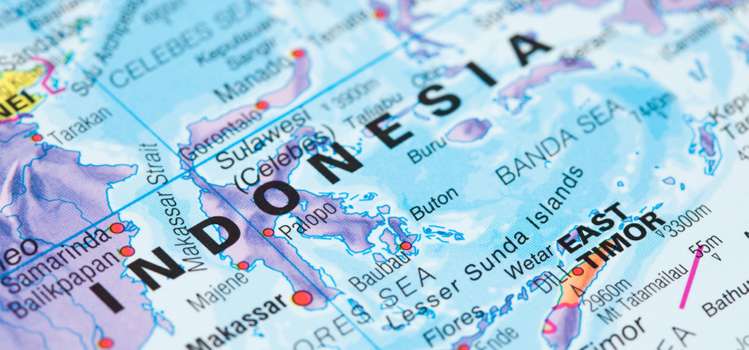
Indonesia’s increased demand for workers calls for creative solutions and higher salaries. There is a limited pool of skilled workers in Indonesia, especially for positions that require English language proficiency or technological skill. Liberalizing investment policies and increasing FDI will continue to put pressure on the pools of both skilled and unskilled workers. MNCs are struggling to retain the talent that will be key to long-term growth in Indonesia.
In Frontier Strategy Group’s view:
- MNCs need to launch rigorous training programs for both skilled and unskilled employees. Partnerships with local universities, trade schools, and government institutions should be set up to build a pipeline of qualified new hires.
- Creative incentive packages are the key drivers of talent retention. Selected examples FSG has observed include co-signing of car loans or mortgages and provision of scholarships for children study at foreign universities.
- MNCs fearful of wage increases in China who are looking to relocate operations to South East Asia need to consider the long-term implications of high demand for skilled and unskilled workers in Indonesia.
Regulatory changes in several countries are impacting the investment environment. In China, new policies may give foreign companies greater access to a US$1 trillion market. In Indonesia and Malaysia, regulatory changes will improve the business environment across several sectors. In Thailand, the government is pursuing policies that may unleash consumer spending along with inflation
- Bangladesh: Multinationals should monitor Bangladesh’s budgetary spending as it will impact the country’s ability to support industrial development
- Cambodia: Shortages of skilled workers may create a drag on Cambodia’s rapid growth in the coming years
- China: Recent changes to Beijing’s “indigenous innovation” rules may allow greater access to China’s enormous government procurement market
- India: New Delhi is poised to give multinationals greater access to an untapped portion of India’s massive retail market
- Indonesia: A new “tax holiday” policy will stimulate investment in several industries and lower the cost of expanding into Indonesia’s rural areas
- Japan: Power shortages currently plaguing Japan will become more severe in the coming months as the country continues to shut down reactors
- Malaysia: A new initiative to remove foreign equity restrictions in certain sectors has the potential to dramatically improve Malaysia’s business environment
- Pakistan: Efforts to boost economic development in Pakistan will be marred by worsening relations with the US
- Philippines: Manila’s new export development plan may create investment opportunities for companies in the IT, electronics, and agribusiness industries
- South Korea: High levels of household debt and rising interest rates will undermine South Korea’s consumer demand growth for the next 12-18 months
- Taiwan: Taiwan will face increasing competition in Europe, its fourth largest export market, as a result of a new FTA between the EU and South Korea
- Thailand: Companies should monitor government announcements about a variety of new policies that will impact Thailand’s investment environment
- Vietnam: If Hanoi continues to dither on raising interest rates, inflation may exceed the government’s new target, setting the stage for lower growth