



Trend
Recent policy choices indicate that political considerations are being placed ahead of sound economic management
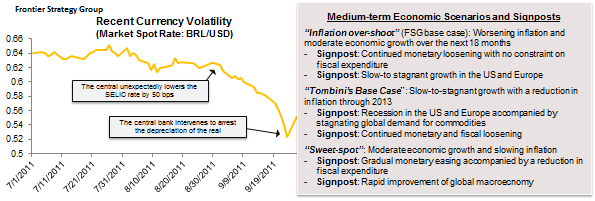
The central bank’s decision to cut interest rates, despite high inflation and employment, and subsequent intervention to arrest the depreciation of the real has created a tremendous amount of volatility
Industrial policy has become paramount as protectionism leaps into the fore, jeopardizing long-term competitiveness
Import taxes and foreign ownership laws are worsening regulatory uncertainty, leading some companies to rethink investment decisions
By choosing to shelter local producers rather than cut red tape and invest in infrastructure and human capital, the government is further distorting market incentives
Drivers
The government is betting that inflation will decrease as the global economy cools, making growth a higher priority
Financial markets are pricing in an additional 100 basis points worth of cuts to the SELIC rate by the end of the year
Political pressure to address the currency has been building ever since the Dilma administration took office
Dilma is hemmed in by a governing coalition and constitution that makes it difficult to enact long-term reforms to boost competitiveness
Frontier Strategy Group View
The recent spate of pro-inflationary policies poses serious risks to the Brazilian economy, especially given recent demands by workers to raise wages in 2012. If the global economy fails to deteriorate as much as Brazilian officials are expecting, a scenario that is not currently FSG’s base case, inflation could become a major problem
B2C companies selling to low and lower-middle income consumer segments should be wary as inflation reduces the purchasing power of these demographics the most


No related posts.


