



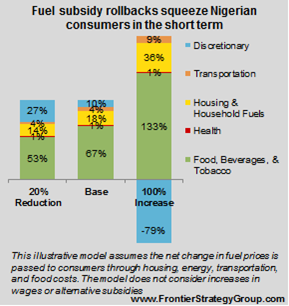
Nigeria’s government must walk a tightrope to successfully implement its reform agenda and satisfy angry citizens who are feeling the pain of fuel subsidy rollbacks. However, a resolution to the current political impasse is likely so any major changes to your strategy is a mistake
- Fuel subsidy rollbacks caused gasoline prices to rise by more than 100% to US$0.94 per liter. As a result, Nigeria’s two largest unions called indefinite strikes that could threaten the economy if a compromise is not reached and work stoppages spread to the oil sector
- President Goodluck Jonathan is framing the rollbacks as critical for the economy, which was burdened by the recurrent costs that total more than US$6 billion annually or roughly 25% of the budget
- The government claims it will reallocate the cost savings to spend on education, healthcare, and the energy infrastructure. However, the public is skeptical due to past wasteful spending and a draft budget that allocated more money to security than health, education, and energy combined
Three ways you can respond to the latest developments in Nigeria
- Diversify your production toward more high-margin products
- Leverage Frontier Strategy Group’s making the case materials and city-level data to quantify ROI in Nigeria
- Consider forward-buying key imported raw materials with cash-flow management tools as price pressure is likely to maintain upward momentum
Three ways fuel subsidy rollbacks impact Nigeria’s investment climate in 2012
- More competition for the purse: B2C companies will face more cross-sector competition to capture discretionary spending from cash-strapped Nigerian consumers
- The rollbacks will stoke food and fuel inflation, which impacts most Nigerians whom live on less than US$2 per day
- Heightened price sensitivity may cause consumers to trade down for value in the short term
- Difficulty in making the case: Nigeria’s medium-term growth potential remains the best among African peers, but negative headlines will raise doubt among some risk-averse corporate centers
- The strikes coupled with a recent spike in sectarian violence will scare away some investors
- Higher cost of doing business: All companies with local operations should brace for higher costs as instability weakens the naira and increases the likelihood of a currency devaluation
- Strikes amid ongoing sectarian violence, mid-teens inflation growth, and depleted currency reserves raises the specter of a devaluation
- A silver lining of a currency devaluation would be to make Nigeria a more attractive regional export hub


No related posts.


