


Weeding out corruption critical to African growth prospects


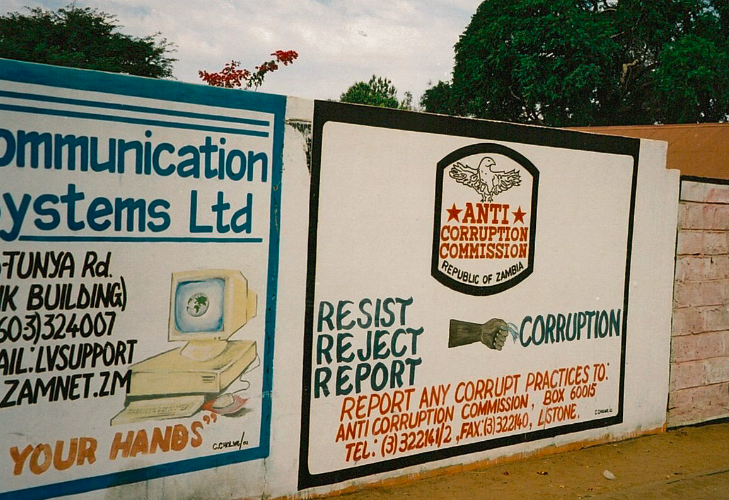
(A sign promoting the fight against corruption in Zambia - author's photograph)

From examinations of malpractice in South Africa’s police service, via investigations into grand larceny perpetrated by the recently toppled Gadhafi and Mubarak regimes in North Africa, to debates about new anti-graft bodies in Kenya and Zimbabwe, a cursory glance at media stories from the past seven days illustrate that corruption is rarely far from Africa’s headlines. Nor is it often absent from lists of investors’ most common complaints about, or reasons to delay, committing funds to the continent. With the business opportunity in the region proving increasingly difficult to ignore, and legislation governing Western companies’ ethical conduct tightening, developing holistic and effective corporate strategies to avoid entanglement in illegal activity has arguably never been more important.

Shifting sands, but still quicksand

Africa’s changing demographic and governance profile – generally younger and more democratic – is gradually changing its transparency outlook. Observing events in Tunisia and Egypt from close quarters and fearful of similar mass protests mobilized within their own increasingly connected societies and maturing civil society institutions, fewer governments south of the Sahara feel they can be seen to be tolerant of corrupt activity. However, as powerfully illustrated in a compelling recent book about the root causes and impacts of corruption in Kenya, the incentives that drive malfeasance including inter-ethnic competition and poor bureaucratic pay remain strong across most of the continent. The recent experiences of Nigeria, Senegal and Kenya amongst other countries highlight that all too often political movements that surf an anti-corruption and good governance wave to power all too often themselves succumb to temptation once entrenched in government.

Recognizing that transforming a vicious circle – where citizens, bureaucrats and businessmen all feel it is in their immediate personal interest to prolong corrupt practices – into a virtuous one is far from an overnight project, Western governments are increasingly seeking to rupture that co-dependency through extra-territorial legislation in their home countries. Until recently, the US Foreign and Corrupt Practices Act has been the trailblazer in this regard, ensnaring a who’s who of major corporations in its investigations – many of them with a footprint in Africa. A newer kid on the block, the UK Bribery Act, was only enacted on 1 July this year – it has raised eyebrows by outlawing smaller so-called ‘facilitation payments’ or small bribes made by UK entities – the grinding, every day variant of the corruption blight – as well as the large payments intended to skew business outcomes that usually attract the main focus of investigators.
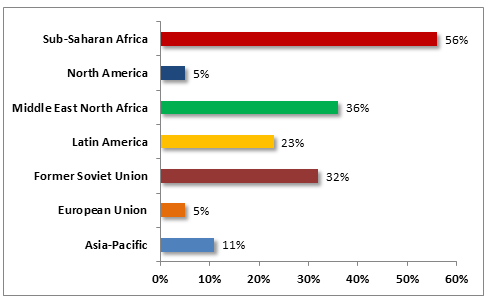
(Percentage of users who report paying a bribe to at least one of nine service providers in the past year; source: Transparency International Global Corruption Barometer, 2010)

Short term pain, long term gain

The howls of protest that greeted the UK legislation – that it’s impossible to do business in places like Africa without paying bribes, that zealous enforcement of its provisions will render UK businesses uncompetitive against less scrupulous competitors – underline the sort of short-term thinking that continues to define the intractability of the problem in the region. In fact, growing numbers of corporations are finding out that taking a zero-tolerance approach even in the most murky and problematic jurisdictions does eventually pay dividends. A short-term opportunity cost – of tenders lost or delays to processes previously greased by bribes – is rapidly replaced by a reduction in demands and enhanced status as an employer and partner of choice. The contribution to overall societal transformation may be more modest, but the benefits in terms of litigation and compromising commercial entanglements avoided are generally a more than sufficient ROI.

MENA Insulated from Global Economic Shocks for Now


Because of close trade ties, US foreign aid to the region, and American thirst for oil, S&P’s downgrade to the US credit rating a few weeks ago is surely a harbinger of doom for economies in the Middle East and North Africa, right? Not exactly.

After the S&P downgrade, stock markets fell across the MENA. Investors are understandably concerned about increased risk. However, FSG does not expect this to shift the regional risk profile significantly. The region should be less susceptible to economic shocks in the short term as many economies have already taken a beating due to revolutions, transitions, and ongoing political uncertainty associated with the Arab Awakening. One potential impact would be an uptick in inflation growth in the Gulf. This is because five of six GCC currencies are pegged to the US Dollar. If the US Federal Reserve decides to begin a third round of quantitative easing, then it would place upward pressure on the price of importing goods in the region.

What unfolds in Europe and Asia for the rest of the year is likely to have a more profound impact on the investment outlook for the Middle East and North Africa going into 2012. A deepening Euro zone crisis threatens countries with close trade ties to the EU. Morocco and potentially Egypt could see their currencies weakened, while Turkey could be squeezed by a slowdown in exports and foreign investment.

Hydrocarbon economies like Kuwait, Qatar, Saudi Arabia, and the UAE are fairly insulated because their respective budgets factor in oil prices averaging a range from $55 (Qatar) to $85 (Saudi Arabia) per barrel on the year. Oil has already averaged well over $100 per barrel and we are approaching the last quarter of 2011. Gulf oil exporters can draw on excess crude revenue to sustain aggressive public spending and economic diversification programs in 2012. Still, a European recession combined with a trade slowdown in Asia would represent a serious blow to oil demand and impact prices as a result. This could lead to a delay in public sector projects and place an increasing burden on the private sector to create more jobs locally.

Overall, FSG does not expect global instability to impact the Middle East and North Africa in the short term. However, a deepening euro zone crisis combined with a slowdown to Asian demand could prove to be a toxic cocktail for the region in the medium term. The silver lining in this type of double-whammy scenario would be reduced global demand for commodities and lower food and fuel prices in the region. This would be particularly important for countries impacted by the Arab Awakening as they look to rebuild their economies.

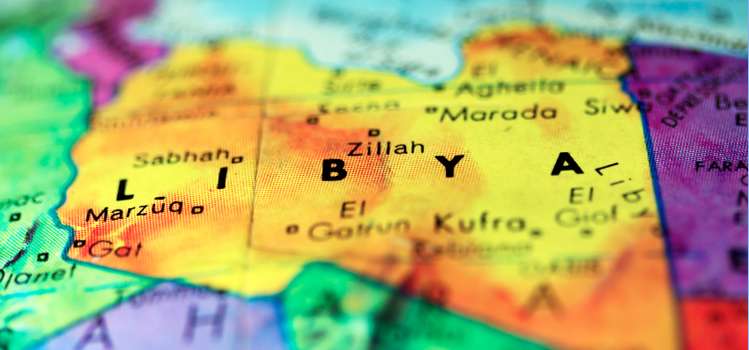
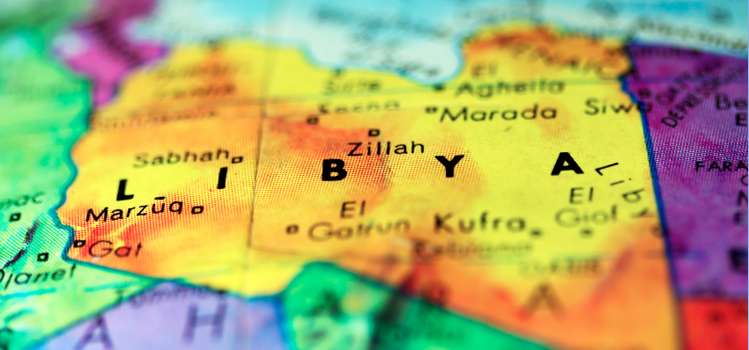
Interview: Arezki Daoud on challenges faced by a post-Gaddafi Libya


To gain a better understanding of the impact of recent events in Libya, I spoke with Arezki Daoud who is editor of The North Africa Journal.

In a post-Gaddafi Libya, what issues will the government need to focus on through next year for a successful transition?

This weekend’s events were predicted. We forecasted a protracted conflict, one that would end with the slow extinguishing of the regime in the manner that we have been witnessing. In essence, despite the bloody outcome, the terrible loss of life and wholesale destruction of the country, what’s coming could potentially be a more difficult period for the Libyans. Their fight against Gaddafi was a unifying factor. Now that that factor is gone, differences are likely to emerge on a host of issues, starting with drafting a constitution, establishing institutions, empowering political leaders to take proper action within a new framework of a proper rule of law, etc. But more importantly, the challenge for the Libyans would be to avoid falling into the trap of tribalism. In this conflict, many won, a few have lost and those who have lost could pay dearly if the spirit of revenge takes over.

In addition, we are assuming in the short term that rogue elements will operate under the radar to undermine any progress on the political front. They will work hard to pit tribes against other tribes. The use of shadowy agents is common practice in the Arab world. We have seen it in Tunisia, Egypt, Syria, etc and we believe Muammar Gaddafi has developed some of the strongest underground destabilization networks in the Arab world.

So in terms of what to do, it is critical that security be under the control of a single authority and that a process starts quickly to establish a constitution.

Do you expect the transition timeframe to last longer than in Egypt or Tunisia due to Libya’s lack of government institutions?

The likely scenario is one that looks at a much longer transition period for all the reasons mentioned above. But in a virgin territory where there has been no supreme law, there is also a slim likelihood of a faster political transition. We should assume that political stabilization could take more than one year.

What does this mean for regional stability? Do you think this will lead to a significant decrease in global oil prices?

The market may respond positively purely on the news of the end of Gaddafi, but the impact of Libyan oil in the world’s supply system will be limited given the economic crises affecting consuming markets. Even without Libya, oil prices have been dropping with the weakening global economy, therefore we expect the end of this crisis will have limited impact on the oil sector.

What types of challenges do you see for foreign businesses in a post-Gaddafi Libya?

Corporate executives hate uncertainty and so the lack of clarity around the existence of central authority could be a major inhibitor to foreign investments at this stage. Executives we talk to often say they will take a wait-and-see approach and will move into the country as soon as a strong authority is in place, which would create the right conditions for operating in the country. Libya has many experts that could help shape up future business legislation, but this is too premature to speak of such business environment as the political environment remains volatile.

What types of opportunities do you see for foreign businesses in a post-Gaddafi Libya?

Business opportunities are likely to arise within 6 months after the official end of the hostilities. Given the Western support to the insurgents, Western companies are likely to be the first to take advantage of the reconstruction, modernization that the country will undergo. This would positively impact the obvious sectors, namely infrastructure, oil and gas but also services as tens of thousands of foreign workers left the country and now a foreign workforce will be required to bring services back. Other industries, from consumer goods to pharmaceuticals will have to wait yet the country will likely resort to import, providing opportunities as well.

Transition in Libya - What MNCs Need to Know


Muammar Gaddafi’s 42-year grip on power is slipping away as rebel forces fight to gain control of Libya’s capital Tripoli. This bloody conflict has taken a heavy toll on Libya’s economy and its people, but more challenges lie ahead as the country will soon focus on rebuilding and a political transition.

While it is too early for most foreign companies to return to Libya, firms should start to assess major players in the National Transitional Council (NTC) for a future government relations strategy. A transitional leadership already exists and new political players will emerge as prospective candidates start to jockey for position ahead of elections that will take place within the next year.

The NTC is speaking in a conciliatory tone regarding how former regime associates will be treated during the transition. This is not surprising considering the number of officials that have defected in recent months. However, foreign MNCs should still evaluate local partner ties to the past regime, especially if there are tribal connections to Gaddafi. As we are seeing in Egypt, Tunisia, and around the region, companies can experience a significant slowdown in business if the government targets their local partners for corruption investigations. There are serious reputational issues to consider as well.

Because many government institutions will need to be built from scratch, companies should keep a close eye on efforts to write a new constitution. This will likely mean significant changes to a post-Gaddafi business environment, which could lead to much greater transparency in the long term.

The hydrocarbon sector is still critical to Libya’s development, but there is already talk that it will take 18 to 24 months to return oil production to pre-February 2011 levels. Libya will continue plans to diversify its economy away from hydrocarbons and there will be a need to (re)build infrastructure- both physical and institutional- which will provide long-term opportunities to B2B companies in the construction, IT, cement, and transportation sectors.

GDP per capita is among the highest in Africa due to Libya’s oil and gas resources and a small population though little of this money has flowed to the majority of the population in the past. If the government implements new policies to address this critical flaw, then it could lead to a plethora of new opportunities for B2C companies.

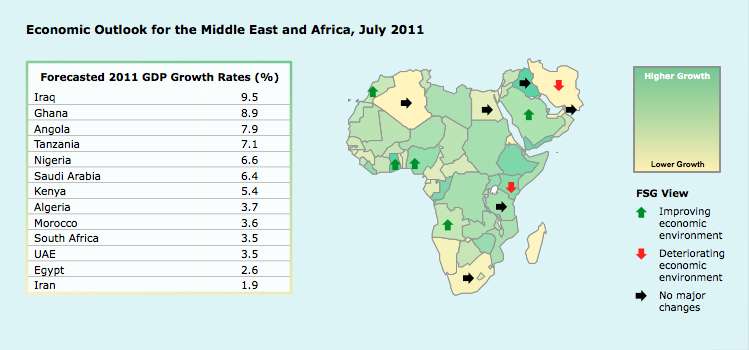
Monthly Regional Insights: Middle East & Africa


Consumers are struggling with higher food and fuel prices across the emerging markets of Middle East and Africa as external factors such as high commodity prices and regional unrest combine with internal factors including strong domestic demand. Next month, Ramadan will heighten the upward pressure on prices in countries with large Muslim populations, which may lead governments to consider interest rate hikes to bring inflation under control

Algeria: A desire for stability will trump any motivation for political change in the short term

Angola: Moody’s and Fitch signaled that Angola’s investment climate is improving, but several threats could derail recent progress

Egypt: The new budget plan fails to address how Egypt will emerge from its post-revolution struggles, but cautious optimism remains for 2012

Ghana: Politically stable Ghana has made huge strides recently in local enterprise stimulation and resource manufacturing potential

Iran: The rollback of subsidies is sustaining inflation at high levels, which is hurting Iran’s economy more than sanctions

Iraq: Investment opportunities in Iraq are growing rapidly, but the security situation remains precarious in the medium term

Kenya: Economic potential is restricted by high commodity prices, which are contributing to inflation growth and a weakening currency

Morocco: Relative stability should hold for the short term, but fallout from the constitutional referendum should be monitored closely

Nigeria: The development of the healthcare sector may be a slow process, but its untapped potential is huge

Saudi Arabia: Pace of government transactions slows, but private consumption spike will provide opportunities for consumer-oriented companies

South Africa: The investment climate received a boost with the approval of Wal-Mart’s entry, but familiar challenges still threaten the economy

Tanzania: Massive infrastructure plan hinges on willingness of private investors to take a risk on Tanzania

UAE: The government is getting ready to launch a key industrial zone just as companies revisit the UAE as a long-term export base

Each month Frontier Strategy Group releases monthly market reports to its clients. These concise, executive-friendly reports highlight key developments and market trends in a particular region.


« Previous Page