


Eight big questions for Africa in 2012


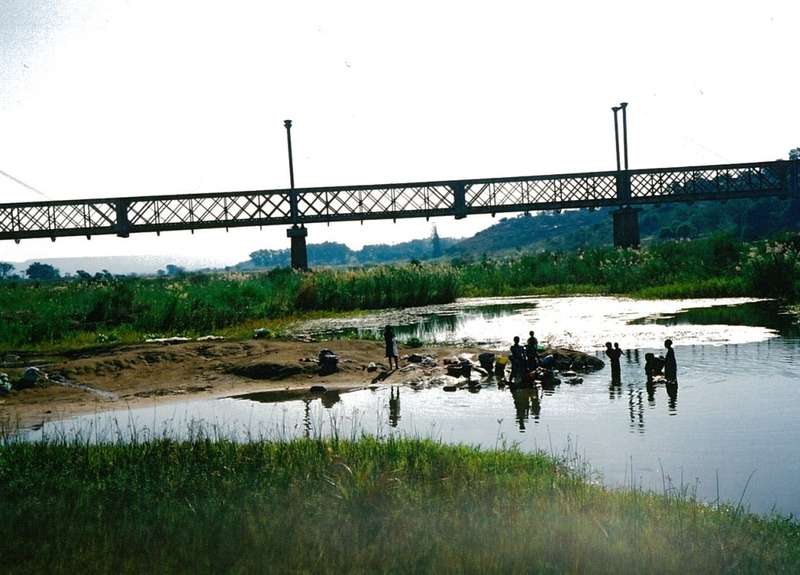
(Tradition continues along Mozambique’s Maputo Development Corridor)

Part one

With unprecedented levels of investor interest both on merit, and because growth may well prove elusive elsewhere, 2012 promises to be an exciting year for sub-Saharan Africa. In this two-part series, I examine some of the key questions businesses looking to the continent should ask themselves as they plan ahead:

(1) Can the continent withstand continuing volatility in commodity prices?

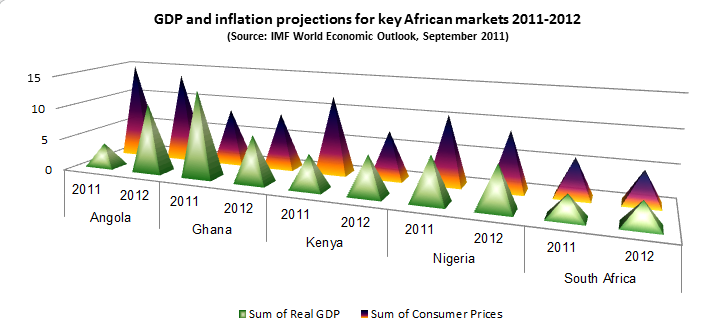
While broadly insulated from sovereign debt and banking-related contagion from the OECD countries, Africa’s vulnerability to commodity price movements – particularly in the form of inflation – remains considerable, and will be a key theme for the region’s macro-economic outlook alongside an average 5.25-5.75% GDP growth projection into 2012, driven by strong domestic consumption. Importers of food and fuel – including Ethiopia, Kenya and Uganda – are already facing sharp inflationary pressure, a situation that could worsen in the year ahead if costs for those inputs trend upward. Producers of oil and industrial metals – Angola and Nigeria the giants in the former category, countries such as Zambia and Congo (DRC) falling in the latter – will meanwhile see their fortunes rise or fall depending on global commodity price and demand shifts, with higher prices boosting government currency earnings but also creating upward pressure on domestic prices. A renewed recession in Western markets, meanwhile, would impact African economies through lower remittances and renewed risk aversion amongst investors from those affected countries. South Africa, with its exposures on metals prices, established manufacturing exports, developed tourism sector, looks particularly vulnerable should worst-case macro-economic scenarios play out in North America, Western Europe and Japan.
(2) Will a series of major elections cause seismic shifts or entrench the status quo?

2011 has been a busy time for elections in Africa: larger countries that have been or are yet to go to the polls this year include Cameroon, Congo (DRC), Nigeria, Uganda and Zambia. Assuming Zimbabwe’s vote is delayed as expected, that country will join a similarly important list for 2012 that also includes Angola, Ghana, Kenya (whose outlook I cover in more detail elsewhere in this list), Mali and Senegal. In addition to the familiar potential for delays, disputes and protests, this wave of elections could be demonstrative of a number of wider cross-border trends. To begin with, that so many countries are organizing and holding broadly free and fair voting each year represents a dramatic and continuing important shift away from the autocratic norms of the 1980s and early 1990s. On the flip side, with accountability and transparency also comes greater policy unpredictability – as mining companies in Guinea discovered in 2010, when a change of president via the ballot box in that country catalyzed a major review of mining licences and royalty payments. Many of the elections will pit very elderly incumbents – Senegal’s Wade and Zimbabwe’s Mugabe are both over 85, while Angola’s dos Santos is entering his 70s – against younger opponents promising an agenda of change, reform and renewal. In addition to generational and policy change, how to manage and beneficially spend these countries’ growing mineral wealth will be a prominent issue in many of the elections – most especially in oil- and diamond-rich Angola and in Ghana’s first vote since it joined the ranks of petroleum producers, but also in Mali and Zimbabwe where mineral finds have yielded much-needed new government revenue streams.

(3) Will North Africa’s wave of anti-government protests shift southwards?

It hasn’t escaped the notice of many Africa watchers that the same cocktail of raw ingredients that broadly underpinned the so-called Arab Spring – long-entrenched and corrupt undemocratic regimes presiding over increasingly youthful and socially connected, technology-savvy populations struggling with unemployment – are also present in a fair number of sub-Saharan countries. It should be noted that mass uprisings leading to regime change are not unknown in the region – the toppling of Madagascar’s previous president in 2009 providing but one recent example – while military-led coups, although far rarer than in previous decades, also continue to occur sporadically in some countries. For some, the question has become why such ‘revolutions’ are not more commonplace given the potentially volatile causal factors in place. The answer to that question likely varies location, but includes – channeling de Tocqueville’s theory of what causes revolutions – a certain degree of lower expectations on the part of poorer African populations (often focused more on basic subsistence / survival or emigrating than marching on the streets) than their Arab counterparts, combined with governments that by and large have still maintained a sufficient monopoly of force and willingness to stamp out dissent fairly ruthlessly before it spreads. With public expectations rising alongside GDP – and food prices – in the months ahead, the potential for more unrest during 2012 is highly credible. Whether this manifests as more ‘manageable’ street protests of the type witnessed already in a number of countries during 2011 (such as Burkina Faso, Mauritania and Uganda) or more sustained disturbances remains to be seen. Other candidate countries for turmoil in the year ahead include Senegal, Gabon, Zimbabwe and Cameroon.

(4) Can Kenya come through a pivotal year unscathed?

It’s been a tough few weeks for Kenya, East Africa’s critical hub market: from the serious food crisis in its north, through the abduction of a female British tourist and the murder of her husband in the coastal resort of Lamu, to a major pipeline fire near the capital Nairobi. The negative impact of such developments on tourist visitor numbers and investor appetite would be negligible compared to the situation should the serious nationwide political violence that accompanied its December 2007 election resurface surrounding new polls due in August 2012. The implementation of a new constitution and wider Kenyan politics remain effectively on hold pending the long-awaited start of hearings at the International Criminal Court in The Hague, involving a number of key politicians accused of involvement in the clashes that paralyzed the country in 2007-2008. Any resurgence in political violence due to the Court’s findings or around the next poll will reverse recovery in the tourism sector, and with it any chance of growth close to the 5.7% YOY GDP figure projected for 2011. In the long-term Kenyan politics needs to move on from confrontational, ethnic-based divisions into more ideological / policy-based debates in order to achieve stabilization and much-needed reform.

To learn more about Frontier Strategy Group’s regular Market Intelligence on Africa’s key investment markets, contact africa@frontierstrategygroup.com to learn how we can help

Putin’s return to the presidency – not all good news


Saturday saw Russia’s biggest political riddle resolved – Vladimir Putin announced he was running for another term as president and offered Medvedev the post of prime minister. What does this mean for Russia’s business climate?

We now have clarity about Russia’s leadership for at least another six years. United Russia is set to win the elections this fall, and there is no doubt Putin will win the presidential elections in March 2012. This implies continuity in current government policies and actors, and will certainly boost investor confidence in Russia. It should at least partially support Russia’s falling currency and weakening stock market. Although the continuing crisis in the euro zone and the falling oil prices will minimize the announcement’s positive effect on the ruble, we can at the very least expect greater capital inflows through the rest of the year as well as an increase in FDI in the country.

In the short-to-medium term, this is good news for MNCs selling and operating in Russia, especially in the context of an unpredictable global economy. However, there are several potential threats down the road companies should watch out for.

First, there is wide consensus that the Russian economy requires fundamental reform away from its dependence on oil prices and high government spending. Such reform would mean reducing government spending on social programs, and will certainly be met with discontent among the population, something that Putin may or may not be ready to face. There is significant inertia in the Russian government and Putin is if anything a symbol and perpetuator of the status quo. Should oil prices remain high, Russia will hum along well enough. However, a prolonged fall in oil prices will bring about a very serious crisis in Russia, and the country is nowhere nearly as well prepared to weather it now than it was in 2008.

Second, while Russians still see no political alternative to Putin, there is a growing sense of stagnation – political, social, and economic within Russia that Putin is increasingly beginning to symbolize. Russians may vote for Putin, but that doesn’t mean they actively support him and his policies. In the short-to-medium term this has few implications. In the long term, however, it’s the stuff of social upheaval. Russia is inevitably headed into a major political transformation, and it’s now clear its current political leadership is not ready to steward the country through to it.

To sum it up, MNCs will benefit from a relative improvement in Russia’s business climate in the short term, will need to watch carefully for whether and what economic reforms the government undertakes after March 2012, and expect that in the long term, the rules of the game in Russia will change.

Monthly Regional Insights - Central and Eastern Europe (September)


Rising concern about the euro zone crisis gathers above the region like a dark storm cloud. While Poland’s economy is positioned to weather the storm, many other countries are quite exposed to regional economic instability, including Bulgaria, Hungary, Romania, and Ukraine. A drop in trade with the EU could squeeze the Turkish economy, which has grown increasingly dependent on Europe for FDI and as an export market. Russia hopes to ride the continuation of a good harvest and strong oil prices for a strong finish to 2011

  • Bulgaria: The economy is gradually recovering but inflation, low investment, and the euro zone crisis will continue to weigh on growth
  • Croatia: Despite welcome news on its EU membership, Croatia continues to struggle with serious economic problems
  • Czech Republic: A surge in foreign investment in the local currency would threaten export growth, which is a critical element to the Czech economy
  • Hungary: Hungary’s economy is intricately tied to the region, which is hurting its short-term economic outlook
  • Kazakhstan: The government decision to block internet sites and ongoing labor unrest taint the investment climate
  • Lithuania: With inflation stabilizing and the economic recovery on track, consumer demand will support growth more actively in H2 2011
  • Poland: While the euro zone crisis is bad news for all of Europe, Poland’s economy looks set to weather the storm better than most
  • Romania: Romania’s strong export figures are leading economic expansion, but the euro zone crisis is a threat to this engine of growth
  • Russia: Decelerating inflation and declining capital outflows underline an improving economic outlook
  • Serbia: Serbia’s arrest of war criminal is offset by rising tensions with Kosovo that are disrupting trade
  • Slovakia: A proposed draft healthcare law, likely to be adopted, will undermine pharma companies in Slovakia
  • Turkey: Government policy and the external environment will likely lead to a moderate economic slowdown
  • Ukraine: The local economy continues to recover, but euro zone crisis could derail this year’s progress


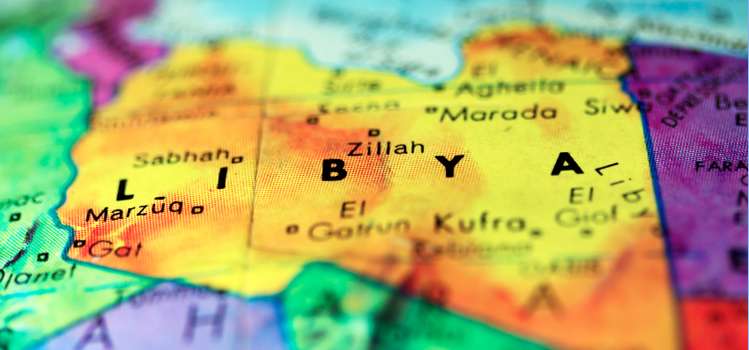
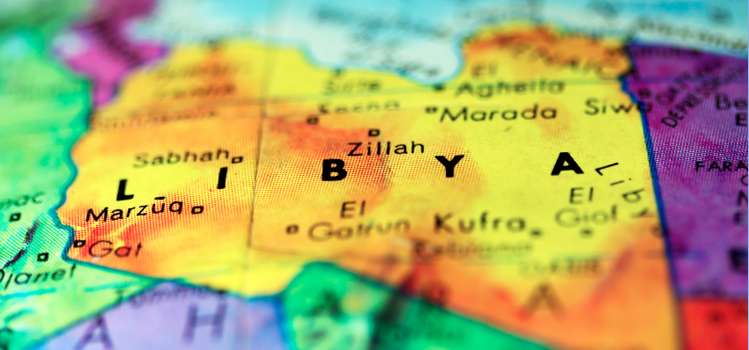
Interview: Arezki Daoud on challenges faced by a post-Gaddafi Libya


To gain a better understanding of the impact of recent events in Libya, I spoke with Arezki Daoud who is editor of The North Africa Journal.

In a post-Gaddafi Libya, what issues will the government need to focus on through next year for a successful transition?

This weekend’s events were predicted. We forecasted a protracted conflict, one that would end with the slow extinguishing of the regime in the manner that we have been witnessing. In essence, despite the bloody outcome, the terrible loss of life and wholesale destruction of the country, what’s coming could potentially be a more difficult period for the Libyans. Their fight against Gaddafi was a unifying factor. Now that that factor is gone, differences are likely to emerge on a host of issues, starting with drafting a constitution, establishing institutions, empowering political leaders to take proper action within a new framework of a proper rule of law, etc. But more importantly, the challenge for the Libyans would be to avoid falling into the trap of tribalism. In this conflict, many won, a few have lost and those who have lost could pay dearly if the spirit of revenge takes over.

In addition, we are assuming in the short term that rogue elements will operate under the radar to undermine any progress on the political front. They will work hard to pit tribes against other tribes. The use of shadowy agents is common practice in the Arab world. We have seen it in Tunisia, Egypt, Syria, etc and we believe Muammar Gaddafi has developed some of the strongest underground destabilization networks in the Arab world.

So in terms of what to do, it is critical that security be under the control of a single authority and that a process starts quickly to establish a constitution.

Do you expect the transition timeframe to last longer than in Egypt or Tunisia due to Libya’s lack of government institutions?

The likely scenario is one that looks at a much longer transition period for all the reasons mentioned above. But in a virgin territory where there has been no supreme law, there is also a slim likelihood of a faster political transition. We should assume that political stabilization could take more than one year.

What does this mean for regional stability? Do you think this will lead to a significant decrease in global oil prices?

The market may respond positively purely on the news of the end of Gaddafi, but the impact of Libyan oil in the world’s supply system will be limited given the economic crises affecting consuming markets. Even without Libya, oil prices have been dropping with the weakening global economy, therefore we expect the end of this crisis will have limited impact on the oil sector.

What types of challenges do you see for foreign businesses in a post-Gaddafi Libya?

Corporate executives hate uncertainty and so the lack of clarity around the existence of central authority could be a major inhibitor to foreign investments at this stage. Executives we talk to often say they will take a wait-and-see approach and will move into the country as soon as a strong authority is in place, which would create the right conditions for operating in the country. Libya has many experts that could help shape up future business legislation, but this is too premature to speak of such business environment as the political environment remains volatile.

What types of opportunities do you see for foreign businesses in a post-Gaddafi Libya?

Business opportunities are likely to arise within 6 months after the official end of the hostilities. Given the Western support to the insurgents, Western companies are likely to be the first to take advantage of the reconstruction, modernization that the country will undergo. This would positively impact the obvious sectors, namely infrastructure, oil and gas but also services as tens of thousands of foreign workers left the country and now a foreign workforce will be required to bring services back. Other industries, from consumer goods to pharmaceuticals will have to wait yet the country will likely resort to import, providing opportunities as well.

Transition in Libya - What MNCs Need to Know


Muammar Gaddafi’s 42-year grip on power is slipping away as rebel forces fight to gain control of Libya’s capital Tripoli. This bloody conflict has taken a heavy toll on Libya’s economy and its people, but more challenges lie ahead as the country will soon focus on rebuilding and a political transition.

While it is too early for most foreign companies to return to Libya, firms should start to assess major players in the National Transitional Council (NTC) for a future government relations strategy. A transitional leadership already exists and new political players will emerge as prospective candidates start to jockey for position ahead of elections that will take place within the next year.

The NTC is speaking in a conciliatory tone regarding how former regime associates will be treated during the transition. This is not surprising considering the number of officials that have defected in recent months. However, foreign MNCs should still evaluate local partner ties to the past regime, especially if there are tribal connections to Gaddafi. As we are seeing in Egypt, Tunisia, and around the region, companies can experience a significant slowdown in business if the government targets their local partners for corruption investigations. There are serious reputational issues to consider as well.

Because many government institutions will need to be built from scratch, companies should keep a close eye on efforts to write a new constitution. This will likely mean significant changes to a post-Gaddafi business environment, which could lead to much greater transparency in the long term.

The hydrocarbon sector is still critical to Libya’s development, but there is already talk that it will take 18 to 24 months to return oil production to pre-February 2011 levels. Libya will continue plans to diversify its economy away from hydrocarbons and there will be a need to (re)build infrastructure- both physical and institutional- which will provide long-term opportunities to B2B companies in the construction, IT, cement, and transportation sectors.

GDP per capita is among the highest in Africa due to Libya’s oil and gas resources and a small population though little of this money has flowed to the majority of the population in the past. If the government implements new policies to address this critical flaw, then it could lead to a plethora of new opportunities for B2C companies.

« Previous Page