



Eight big questions for Africa in 2012 (Part II)


(5) With a mandate to govern, can Nigeria’s new government implement positive and sustainable reforms?

Between its petroleum-dominated economics and mind-bending demographics, Nigeria is well-positioned for sustained growth and diversified foreign direct investment in the decade ahead: a leading economist has picked the country to be the world’s fastest growing across the four decades to 2050. With its new government now in place for the best part of four years following the 2011 elections cycle - including key individuals favored by business in seat at the both the Finance Ministry and the Central Bank - the time is overdue for a meaningful political vision to capture that opportunity and steer the country towards its eventual destiny as Africa’s regional super-power. Following the creation of a sovereign wealth fund to manage oil-related windfalls and restructuring of the country’s troubled banking sector under the previous administration, future critical reform milestones to look for in President Goodluck Jonathan’s first full term must include tangible progress on tackling entrenched official corruption at all levels of the country’s extensive bureaucracy. In terms of both their immediate creation of investment opportunities and their wider demonstration of an improvement rather than inertia culture in the country’s legislative system, meanwhile, movement will also be expected on finally enacting long-overdue measures to reform the country’s hydrocarbons industry (the delayed Petroleum Industry Bill) and to liberalize the its public healthcare provision (the National Healthcare Bill, now over six years in hiatus).

(6) Will there be a leadership challenge in South Africa?

Better the devil you know, or the devil you don’t? That’s the dilemma facing many businesses with a footprint in South Africa as they contemplate the possibility of controversial President Jacob Zuma facing a serious challenge to his leadership position and broader policy platform at the ruling African National Congress (ANC)’s elective conference in Mangaung (Bloemfontein) in December 2012. Zuma has disappointed businesses with his inability to kick South Africa’s economy into rapid growth, his apparent inertia (and, at times, alleged complicity) in the face of creeping official corruption at all levels of the country’s bureaucracy, and perhaps most damagingly his ambivalence to growing calls from the ANC’s radical youth wing (the ANCYL) for the nationalization of various sectors of the private economy. Ironically, however, it is steps in recent weeks by Zuma’s leadership team belatedly to silence the ANCYL’s outspoken leader Julius Malema – whose support was critical to Zuma’s initial ascendancy - that have upped the stakes for Mangaung and created the possibility of serious attempts throughout 2012 to displace pro-business moderates from government.

(7) Will Asian companies continue to make the running in Africa?

The story of Chinese investment, and to a slightly lesser extent companies that hail from other Asian countries, in Africa is a popular academic and media topic. The appetite for African growth from businesses that honed their model in Asia is apparently boundless. Asian vehicle manufacturers Honda, Hyundai, Toyota, Suzuki, Tata and Mahindra have all set their sights on South Africa; Samsung hopes to generate $10 billion in annual revenue in Africa by 2015 with a R&D hub in Kenya; and in recent weeks Chinese handsets manufacturer Huawei has announced a major play for the booming Nigerian telecommunications market. Part of Africa’s attractiveness as a market – beyond its raw consumer potential – is its relatively uncluttered competitive landscape. With every year that passes, that scenery becomes more congested. Western companies arguably already lag behind their Eastern counterparts in numerous markets across various verticals; the danger is that recession or slowdown in their home markets into 2012 sees Western firms revisit ever stronger conservatism and risk aversion towards the African opportunity, despite its favorable growth profile, allowing that gap to widen further – potentially beyond reach – as Asian investment continues to flow unchecked into the continent. Meanwhile, side-effects of this trend can also be expected to accelerate in 2012: diversifying trade and investment partners strengthens the hands of African governments, and lessens their dependence on, and motivation to defer to the legislative and regulatory preferences of, Western operators. Given many Asian investors’ emphasis on long-term manufacturing, research/development and supporting infrastructure components to their investments, the overall bar for all businesses entering the market can also be elevated as a result; relationships between employees and host communities and investing businesses can also be substantially altered by these Asian pioneers.

(8) Can East Africa meaningfully integrate?

The East African Community regional bloc (comprising Kenya, Tanzania, Uganda, Rwanda and Burundi) on 1 January 2010 formally launched a common market. All five countries have already adopted a common external tariff, an identical tax applied to imports from outside the bloc, and allowed duty-free regional trade with the exception of Kenya, the largest economy. Given that East Africa lacks a single economy of the scale of Nigeria in the west or South Africa in the south, material progress on implementing the common market and transitioning towards the free movement of people, capital and services across the five countries’ borders, as well as the abolition of import duties, is critical to the region’s future growth prospects. If precedent is a guide, implementation during 2012 and beyond is likely to be under-funded and therefore slow and patchy – while structural obstacles to meaningful integration from both inadequate transportation infrastructure and deficient electrical power supplies will remain significant. Nevertheless, with its booming demographics and swelling natural resource potential as well as its proximity to Middle Eastern and other Asian markets, East Africa remains an exciting growth frontier for investment. Ultimately, the aim is also to introduce a single EAC currency to further simplify regional trade.

To learn more about Frontier Strategy Group’s regular Market Intelligence on Africa’s key investment markets, contact africa@frontierstrategygroup.com to learn how we can help

Surfing the African technology wave


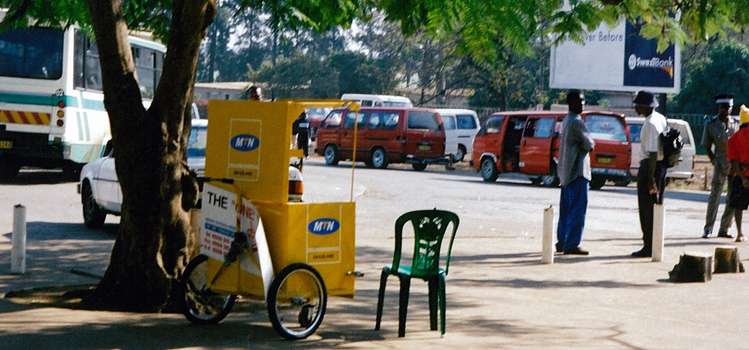
(Evidence of growing technology adoption, such as this mobile telephone sales booth in Swaziland, are increasingly ubiquitous in Africa)

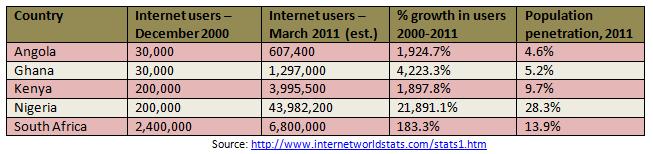
The adoption of new forms of communication in Africa over the past decade – both mobile telephone and internet – has been nothing short of revolutionary. The continent is estimated to have produced over 316 million new mobile phone users since 2000, passing 500 million total subscriptions late in 2010, and its total internet user population is now estimated at almost 120 million. Previously, communicating over long distances was fraught with difficulty and expense; that outlook has been transformed. The significance of these trends for African economic development, transparency and democratization is profound; the opportunity for technology companies and indeed for businesses across many other sectors capable of leveraging such channels for advertising and delivery is no less significant.

An unmitigated success story

The growth and profitability of mobile telephone networks in Africa is by now a widely related success story. In addition to the staggering uptake figures recorded (and company results posted), what is equally exciting is the innovation and knock-on benefits this trend has generated throughout the continent. These include access to innovative financial services products for mobile users (trailblazed by the much-studied M-Pesa scheme in Kenya), better agricultural product pricing information for farmers, and Celtel/Zain’s unprecedented low-cost international roaming capabilities within sixteen countries that are the envy of both travelling Europeans and companies importing goods physically across borders in Africa alike. New high-speed underwater fiber-optic cables encircling the continent’s coastline are meanwhile dramatically improving access speeds. Mobile broadband internet subscriptions in African countries are expected to reach a cumulative 265m by 2015.

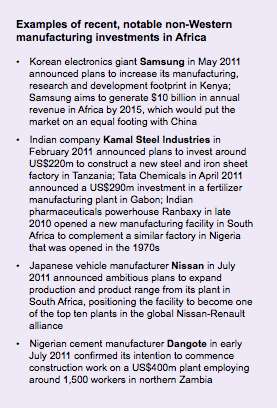
The attraction of capturing the African digital market and exploiting its potential for new service offerings is bringing bigger and bigger names to the table. Earlier this month, Google announced it would be training 1,000 Kenyans to act as ambassadors for its products. Its move follows those of Asian companies LG Electronics and Huawei, both of which have already established local academies to train product experts and source locally-relevant innovations and adaptations to their product portfolio in the region. Korean electronics giant Samsung has announced a particularly ambitious growth strategy for the continent, aiming to generate $10 billion in annual revenue in Africa by 2015 (a fivefold increase on current sales which would put the market on an equal footing with China). Samsung reported 31% growth in revenue to US$1.23bn for its Africa operations in 2010.

New trends, new opportunities

Recent results announced by Chinese handset manufacturer Huawei on tremendous sales of its affordable IDEOS U8150 Android smart-phone in Kenya highlight the appetite and with it the opportunity for selling technology products in Africa despite comparatively low income levels. Figures revealed in June by mobile internet browser development firm Opera meanwhile showed Nigeria as the world’s fourth most active user market, followed by South Africa in seventh place. Belying its terribly outdated labeling as the ‘dark continent’, the hunger for connectivity, and openness to new technologies and service models, are clearly as strong - if not stronger - in Africa than anywhere else in the world.

Reflecting this rapid adoption of technology, e-commerce is an increasingly influential segment of African customer retail, enabling exponential increase in product access and equally dramatic reductions in the continent’s often forbidding costs of sale at through more traditional retail outlets. Recent media coverage highlights its rapid growth in South Africa, often a weathervane for the rest of the continent: the country’s population spent more than R2bn (US$275m) online in 2010 excluding air travel and accommodation outlays. This entailed a 40% increase on 2009’s figure, with 2011 expected to see a further 30% increase. The traditional perception that African consumers abide by the “I buy what I see” principle appears to be shifting, and forward-thinking businesses will seek to move ahead of that curve in their local online offerings.

In a similar vein e-learning and e-health solutions could also offer significant acceleration capacity to combating some of the continent’s serious social service provision deficiencies. Cloud computing, virtualization and hosted services are all constitute growth segments for further expansion. As the past decade has shown, in this respect the African sky really is the only limit.

Interested in learning how your company can leverage new technology channels to sell to and grow in Africa? Contact africa@frontierstrategygroup.com to learn how we can help


Myths and Realities of the African Middle Class


(Luanda, Angola: behind the tattered façade, a new middle class is emerging - author’s photograph)

In March 2007, long-serving Angolan President Jose Eduardo dos Santos formally opened a perfect metaphor for Africa’s changing consumer market profile. Located in the Talatona suburb of the country’s malarial and overcrowded capital city Luanda – perhaps best known for its pock-marked buildings, and the orphaned street children - the Belas shopping center is one of the most modern facilities of its type anywhere in Africa. The complex includes restaurants, banks, a planetarium and a multiplex cinema; high-end consumer brands with retail outlets in the center include Swatch (wristwatches) and Samsung (electronic goods); reflecting a growing local appetite for luxury items of which it is the perfect embodiment, the center also organizes Belas Fashion, showcasing the season’s latest apparel styles and designs.

The African middle-class: who (and where) are these guys?

Anyone who has taken a commercial flight into Africa from London, Paris, Brussels or Johannesburg will have seen members of the African consumer population with their own eyes: individuals and families with the disposable incomes not only to travel abroad but to bring back (often large quantities of) Western consumer goods home with them. Given both data absences and disputes over definitions, accurately scaling the size of this population is challenging. A recent report by the African Development Bank attempted to do exactly that; its headline finding was that estimated that Africa’s middle class has expanded to over 300m people. Equivalent to roughly a third of the continent’s total residents, this places Africa’s middle class close to the same size as both India’s and China’s.

The study’s definition of individuals with annual income exceeding $3,900 in purchasing power parity (PPP) terms as ‘middle-class’ is problematic; clearly, between US$2-$20 per day in available income is not a definition of middle-class that many in the West would recognize. The proportion of these people at risk of dropping back into poverty if food prices continue to rise much higher, for example, is also significant. Regardless of some of its limitations, however, the message of such data is that this emerging population is demographically significant – and therefore that the growing business opportunity it presents is compelling.

Sale of the (twenty-first) century

The pre-existing awareness of and appetite for Western brands amongst consumers in Africa is considerable– as the ubiquitous, proudly-worn English Premier League soccer jerseys and hand-drawn Nike logos that adorn the sides of minibus taxis the length and breadth of the continent illustrate. In many ways, the region is highly conducive to retail growth: its mostly wide-open and rapidly expanding multi-media channels for advertising, large diaspora populations in the West, comprehensive traditional and growing modern retail networks and the comparatively smaller and less sophisticated counterfeiting problem than Asia presents all work in the continent’s favor.

Recognizing the increasingly widely-quoted aphorism that Africa’s consumer market is ‘where China was twenty years ago, where India was ten years ago’, growing numbers of companies are planning to exploit this last great untapped (and still relatively uncluttered and uncompetitive) market, using footholds in upscale parts of the biggest cities and locally-tailored packaging and pricing solutions just as similarly foresighted pioneers were doing in those Asian markets years earlier. Recent store openings in West African cities such as Lagos and Abidjan include franchise outlets selling Mercedes Benz motor vehicles and European giant Mango’s clothing lines.

A powerful model for the rest of Africa is South Africa, where the emergent middle-class within the county’s majority ethnic group even has its own nickname – the ‘black diamonds’ – as well as a wealth of retail analysis, events and marketing targeted specifically at its growing numbers, influence and spending power. This group is estimated to comprise around one-tenth of the 22m adult black South Africans, and account for up to 40% of that population’s overall spending. Identifying and accessing similar cohorts in other populous African counties will represent a holy grail for businesses seeking to find new customers in the years ahead.

Buy one (benefit), get two free

The emergence of a growing and increasingly affluent African middle-class should have additional ‘virtuous circle’-style benefits above beyond the pure (and considerable) new business opportunity it represents:

  • Itself often a beneficiary of more democratic, peaceful and liberalized political systems, Africa’s growing and ever better-informed middle-class population should also be an increasingly vociferous source of demands for ever better governance, public service provision and transparency / accountability from its governments and public servants
  • Perhaps recipients of overseas or newly universal primary school education, the determination and spending ability of new generations of middle-class African parents to secure the best possible local education for their own offspring in turn will in the medium-term be a critical factor in closing Africa’s often acute talent deficit; a spate of recent private equity investor interest in affordable private schooling providers in South Africa illustrates this dynamic in action

Interested in learning more about the opportunity for your business to sell to and grow in Africa? Contact africa@frontierstrategygroup.com to learn how we can help


Unlocking Africa’s Manufacturing Destiny


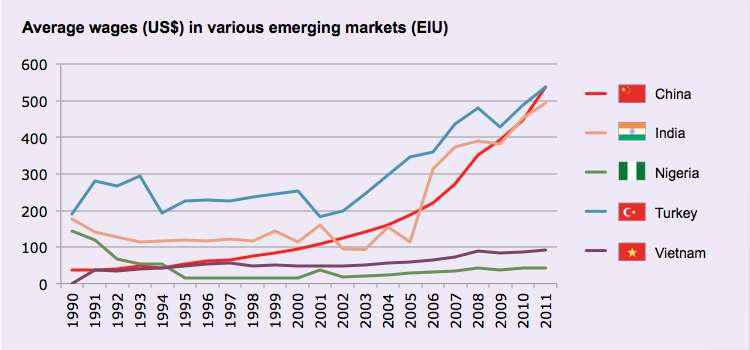
What do disgruntled Chinese bachelors and unemployed Indian call-center workers have to do with sub-Saharan Africa? At the moment, not much: A recent UN report shows that the continent at present accounts for a meager 1% of the world’s total manufacturing output. However, the same demographic and wage inflation trends that are currently raising questions about the long-term sustainability of Asian countries’ hard-won reputation for offering manufacturing firms a plentiful and cheap supply of labor do point to an opportunity for Africa — if a number of important constraints can be overcome.

Demographic trends are in Africa’s favor

The attractiveness of China as a low-cost manufacturing destination is dimming as its demographic profile changes. Due to the single child policy, the Chinese workforce will decline by around 100 million (from 72% of total population to 61%) between 2010 and 2050, with associated upward wage pressures. India is often characterized as entering a period of ‘demographic dividend,’ with a younger workforce capitalizing on a more expensive Chinese labor force.

Likewise, in Sub-Saharan Africa, the workforce will grow to 1.1 billion people by 2040. With its own demographic dividend paying off, Africa will become an increasingly attractive destination for manufacturing.

A long road with a lot of potholes

Despite the demographic and pricing trends in its favor, Africa has a long way to go if it is to become a global manufacturing destination of choice. The continent’s reputation for rampant corruption and almost permanent political instability may be a generalization — both trends are broadly improving across most of the continent — but infrastructure constraints (in particular the reliability of electricity and water) and skills shortages are both more ubiquitous, and arguably more intractable. Red tape impeding new investment, opaque tax laws, burdensome employment regulations and vexed labor relations present further obstacles in many markets.

The more enlightened African governments are aware of these impediments, and have made adding local value to the continent’s multiple natural resource exports a key priority from a foreign exchange generation and job creation perspective. Several are among the world’s most active business environment reformers; infrastructure improvement projects are proliferating around the continent. Skills enhancement and overcoming corruption are more systemic transformations that will take longer to achieve. Meanwhile, Africa is also seeking to capitalize on its competitive advantages of labor costs, availability and proximity to key markets by creating a wave of tax-efficient industrial development zones. Over 20 countries in the region offer such incentives, including Kenya, Nigeria, Ghana and Tanzania.

A sign of things to come?

Perhaps the most telling long-term indicator of Africa’s future manufacturing potential is the growing trend of Asian and other emerging market-headquartered companies placing facilities into Africa. Emirati, Japanese, Chinese, Korean and Indian companies have all announced major manufacturing investment plans in various African countries in recent months. Western companies are currently waking up to Africa’s consumer potential, in many cases several debilitating steps behind their Eastern competitors. Frontiers Strategy Group advises them to track a parallel trend to manufacture as well as sell their goods locally.


Frontier Strategy Group launched its new AfricaVantage service, designed to give global companies the data tools, strategic insights and high-level networking opportunities they need to capitalize on the growing African opportunity. Look out for new posts on the region in the next few weeks.