



With 155 million people and projections of 7.4% GDP growth in 2011, Nigeria is already a “can’t miss” consumer market opportunity. That said, in the next several years there will be multiple bumps on the road as Nigeria transitions from a corrupt, ethnically divided, oil driven economy, to a modern, diversified powerhouse.
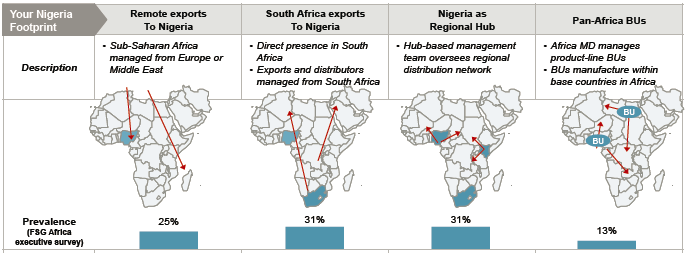
In 2012 in particular FSG believes there is a 50% likelihood of a double dip recession. The following outlines what the potential impact of a recession could have based on your current Nigeria footprint:
Remote Exports to Nigeria
- Volumes could decline as currency weakens
- Distributors may be crunched for credit
- Lower logistics, fuel costs as oil prices moderate
- Greater flexibiliy to increase/reduce export volumes
- Indicators to watch: Exchange rates, Oil prices, Credit growth
South Africa Exports to Nigeria
- Volumes could decline as currency weakens agains rand
- Distributors may be crunched or credit as oil prices moderate
- Greater flexibility to increase/reduce export volumes
- Indicators to watch: Exchange rates, Oil prices, Credit growth
Nigeria as a Regional Hub
- Distributors may be crunched for credit
- Lower logistics, fule costs as oil prices moderate
- More protection from volatile exchange rates when assessing domestic market
- Greater responsiveness to market dmeand
- Indicators to watch: Domestic food prices, Oil prices, Exchange rates
Pan-Africa Business Units
- Distributors may be crunched for credit
- Lower logistics, fuel costs as oil prices moderate
- More protection from volatile exchange rates when manufacturing in domestic market
- Greater responsiveness to market demand
- Indicators to watch: Pan-Africa GDP, Exchange rates, Oil prices


No related posts.


