



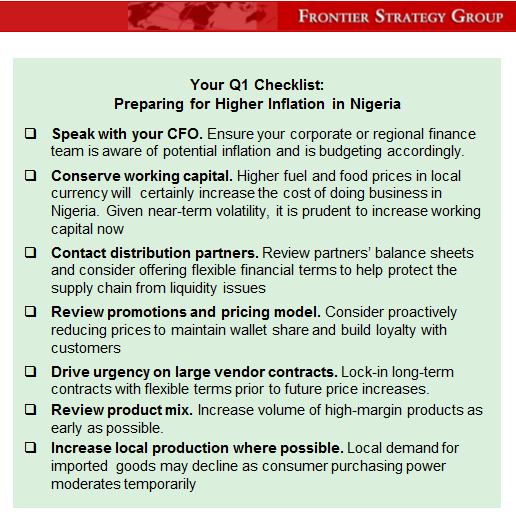
Trend
- Nigeria’s underlying growth trajectory continues to be strong, with 6.6% GDP growth forecast for 2012
- A recent uptick in inflation is likely to accelerate, with inflation forecasts increasing from 10% to 14-15%
- Core inflation (which excludes volatile components food and energy) has remained steady at 10.8%
Drivers
- Fiscal Policy Expansion Continues Unabated: The new government’s 140% increase in the minimum wage and partial removal of the fuel subsidy will cause a significant increase in prices in Q1
- Limited Monetary Policy Options: The Central Bank instituted a number of anti-inflationary measures in Q4 2011: devaluing the naira to ₦155/USD, increasing the benchmark interest rate to 12%, and eroding its foreign reserves to 6 months of imports from 17 months. Though foreign reserves have since recovered, the Central Bank has few tools available to aggressively stem inflation
Frontier Strategy Group View
- Inflation is likely to rise significantly in the next two months. Operating costs, particularly transportation and input prices, are likely to increase through summer 2012
- Ongoing fiscal outlays to support the fuel subsidy regime will also weigh on local prices
- With few monetary policy tools available to support the naira, currency volatility will be a concern. The naira will remain stable if oil prices remain moderate (US$100-120/bbl) and the partial fuel subsidy removal is not reversed. Otherwise, the Central Bank will be under significant pressure to further devalue


No related posts.


