




(5) With a mandate to govern, can Nigeria’s new government implement positive and sustainable reforms?
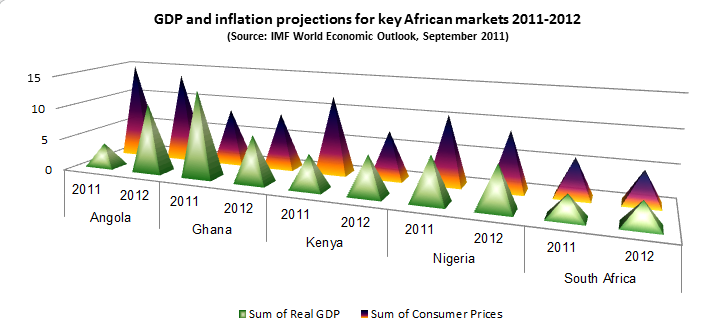
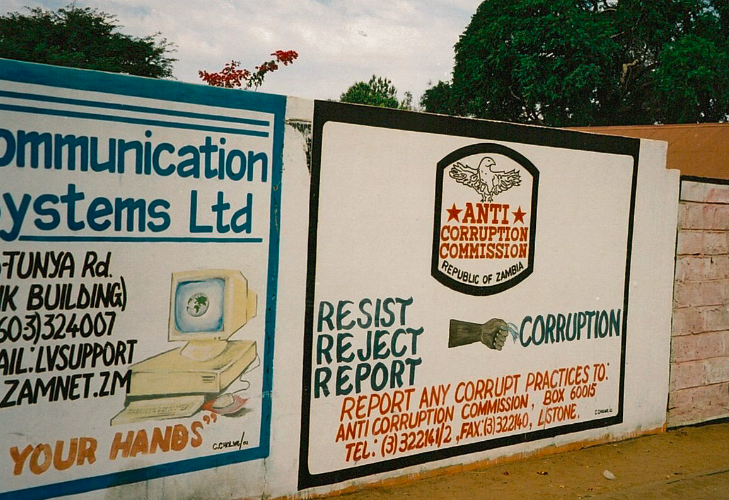
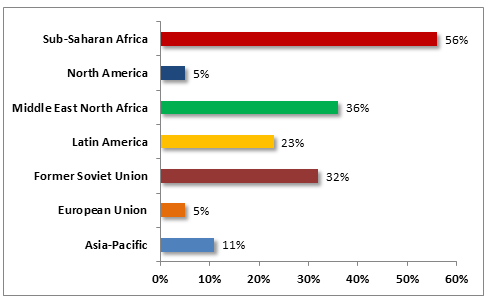
Between its petroleum-dominated economics and mind-bending demographics, Nigeria is well-positioned for sustained growth and diversified foreign direct investment in the decade ahead: a leading economist has picked the country to be the world’s fastest growing across the four decades to 2050. With its new government now in place for the best part of four years following the 2011 elections cycle - including key individuals favored by business in seat at the both the Finance Ministry and the Central Bank - the time is overdue for a meaningful political vision to capture that opportunity and steer the country towards its eventual destiny as Africa’s regional super-power. Following the creation of a sovereign wealth fund to manage oil-related windfalls and restructuring of the country’s troubled banking sector under the previous administration, future critical reform milestones to look for in President Goodluck Jonathan’s first full term must include tangible progress on tackling entrenched official corruption at all levels of the country’s extensive bureaucracy. In terms of both their immediate creation of investment opportunities and their wider demonstration of an improvement rather than inertia culture in the country’s legislative system, meanwhile, movement will also be expected on finally enacting long-overdue measures to reform the country’s hydrocarbons industry (the delayed Petroleum Industry Bill) and to liberalize the its public healthcare provision (the National Healthcare Bill, now over six years in hiatus).
(6) Will there be a leadership challenge in South Africa?
Better the devil you know, or the devil you don’t? That’s the dilemma facing many businesses with a footprint in South Africa as they contemplate the possibility of controversial President Jacob Zuma facing a serious challenge to his leadership position and broader policy platform at the ruling African National Congress (ANC)’s elective conference in Mangaung (Bloemfontein) in December 2012. Zuma has disappointed businesses with his inability to kick South Africa’s economy into rapid growth, his apparent inertia (and, at times, alleged complicity) in the face of creeping official corruption at all levels of the country’s bureaucracy, and perhaps most damagingly his ambivalence to growing calls from the ANC’s radical youth wing (the ANCYL) for the nationalization of various sectors of the private economy. Ironically, however, it is steps in recent weeks by Zuma’s leadership team belatedly to silence the ANCYL’s outspoken leader Julius Malema – whose support was critical to Zuma’s initial ascendancy - that have upped the stakes for Mangaung and created the possibility of serious attempts throughout 2012 to displace pro-business moderates from government.
(7) Will Asian companies continue to make the running in Africa?
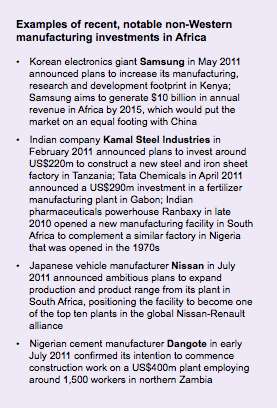
The story of Chinese investment, and to a slightly lesser extent companies that hail from other Asian countries, in Africa is a popular academic and media topic. The appetite for African growth from businesses that honed their model in Asia is apparently boundless. Asian vehicle manufacturers Honda, Hyundai, Toyota, Suzuki, Tata and Mahindra have all set their sights on South Africa; Samsung hopes to generate $10 billion in annual revenue in Africa by 2015 with a R&D hub in Kenya; and in recent weeks Chinese handsets manufacturer Huawei has announced a major play for the booming Nigerian telecommunications market. Part of Africa’s attractiveness as a market – beyond its raw consumer potential – is its relatively uncluttered competitive landscape. With every year that passes, that scenery becomes more congested. Western companies arguably already lag behind their Eastern counterparts in numerous markets across various verticals; the danger is that recession or slowdown in their home markets into 2012 sees Western firms revisit ever stronger conservatism and risk aversion towards the African opportunity, despite its favorable growth profile, allowing that gap to widen further – potentially beyond reach – as Asian investment continues to flow unchecked into the continent. Meanwhile, side-effects of this trend can also be expected to accelerate in 2012: diversifying trade and investment partners strengthens the hands of African governments, and lessens their dependence on, and motivation to defer to the legislative and regulatory preferences of, Western operators. Given many Asian investors’ emphasis on long-term manufacturing, research/development and supporting infrastructure components to their investments, the overall bar for all businesses entering the market can also be elevated as a result; relationships between employees and host communities and investing businesses can also be substantially altered by these Asian pioneers.
(8) Can East Africa meaningfully integrate?
The East African Community regional bloc (comprising Kenya, Tanzania, Uganda, Rwanda and Burundi) on 1 January 2010 formally launched a common market. All five countries have already adopted a common external tariff, an identical tax applied to imports from outside the bloc, and allowed duty-free regional trade with the exception of Kenya, the largest economy. Given that East Africa lacks a single economy of the scale of Nigeria in the west or South Africa in the south, material progress on implementing the common market and transitioning towards the free movement of people, capital and services across the five countries’ borders, as well as the abolition of import duties, is critical to the region’s future growth prospects. If precedent is a guide, implementation during 2012 and beyond is likely to be under-funded and therefore slow and patchy – while structural obstacles to meaningful integration from both inadequate transportation infrastructure and deficient electrical power supplies will remain significant. Nevertheless, with its booming demographics and swelling natural resource potential as well as its proximity to Middle Eastern and other Asian markets, East Africa remains an exciting growth frontier for investment. Ultimately, the aim is also to introduce a single EAC currency to further simplify regional trade.
To learn more about Frontier Strategy Group’s regular Market Intelligence on Africa’s key investment markets, contact africa@frontierstrategygroup.com to learn how we can help