



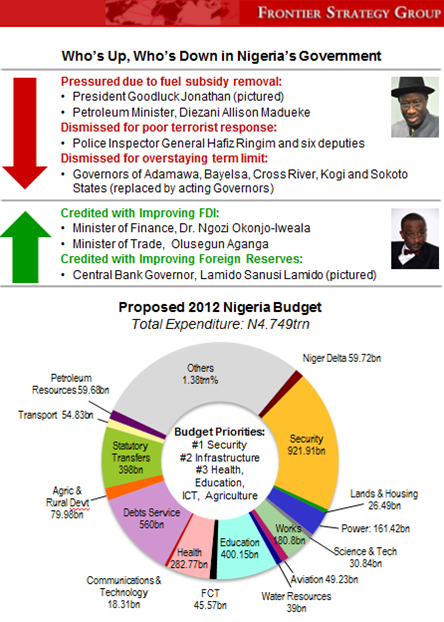
On January 1, the Nigerian government removed the long-standing subsidy on fuel, increasing prices from 65 to 150 naira per liter. Following local protests and negotiations, President Jonathan reduced the increase to 97 naira per liter, a 50% increase
While some view this as a clever strategic move, the haphazard implementation (including using the military to quell protests) has called into question the government’s ability to implement other much-needed reforms
Drivers
Reduced Political Capital: The new president’s “honeymoon” has officially ended. The president can no longer count on broad-based political support, and has recently been stymied by state governors, unions, state legislators, and religious leaders
Poverty and Inequality: A perception that reforms favor elites and businesses will continue to plague the president. Critically important will be future implementation of the president’s “jobs agenda” for generating employment, especially among youth
Fighting Corruption: Recent anti-corruption moves, such as dismissing state governors, are largely symbolic and the president’s policies must succeed where others have failed
FSG View
The fuel subsidy removal is unlikely to be repealed. Higher local fuel prices and reduced consumer discretionary spending should be priced into operating budgets immediately
The next three months will be critical to bolstering government credibility and preparing for upcoming economic improvements


Related posts:
- What Strikes in Nigeria Mean for Your Business in Africa Nigeria’s government must walk a tightrope to successfully implement its...


