Emerging Market View: What Our Analysts Are Reading – 6/28/2013

LLocated in different regions around the globe, our research teams are constantly keeping an eye on headlines impacting emerging markets. Here are a few articles with commentary in this week’s emerging market view:

Argentina y Brasil liberarían comercio de autos por falta de acuerdo: fuente - Reuters Latin America

“Argentina and Brazil failed to reach an agreement a 2008 agreement on auto and auto parts trade. The agreement’s expiration will theoretically liberalize the trade further, a situation that is unlikely in reality. This dispute is another example of how trade relations between the countries have worsened and how the Mercosur trade bloc has become less and less useful for integrating supply chains.”
-Clinton Carter, Director of Research and Product Development for Latin America

Bad loans rise sharply in Shanghai bank sector - South China Morning Post

“Bad debt ratio shoots up in Shanghai, indicating deterioration of economic outlook in the Yangtze River Delta area. Companies need to tighten its credit management policy to minimize payment defaults and delays.”
-Shijie Chen, Practice Leader for Asia Pacific Research

Progress report: European Union’s move to banking union - Financial Times

“This is an excellent summary of the issues at stake in today’s make-or-break session of EU finance ministers ahead of Thursday’s EU Summit and before ministers pause for the summer. The banking union has been flagged as a crucial step towards progress in eurozone recovery. Its failure would spell continued sluggish growth.”
- Lauren Goodwin, Senior Analyst for Western Europe
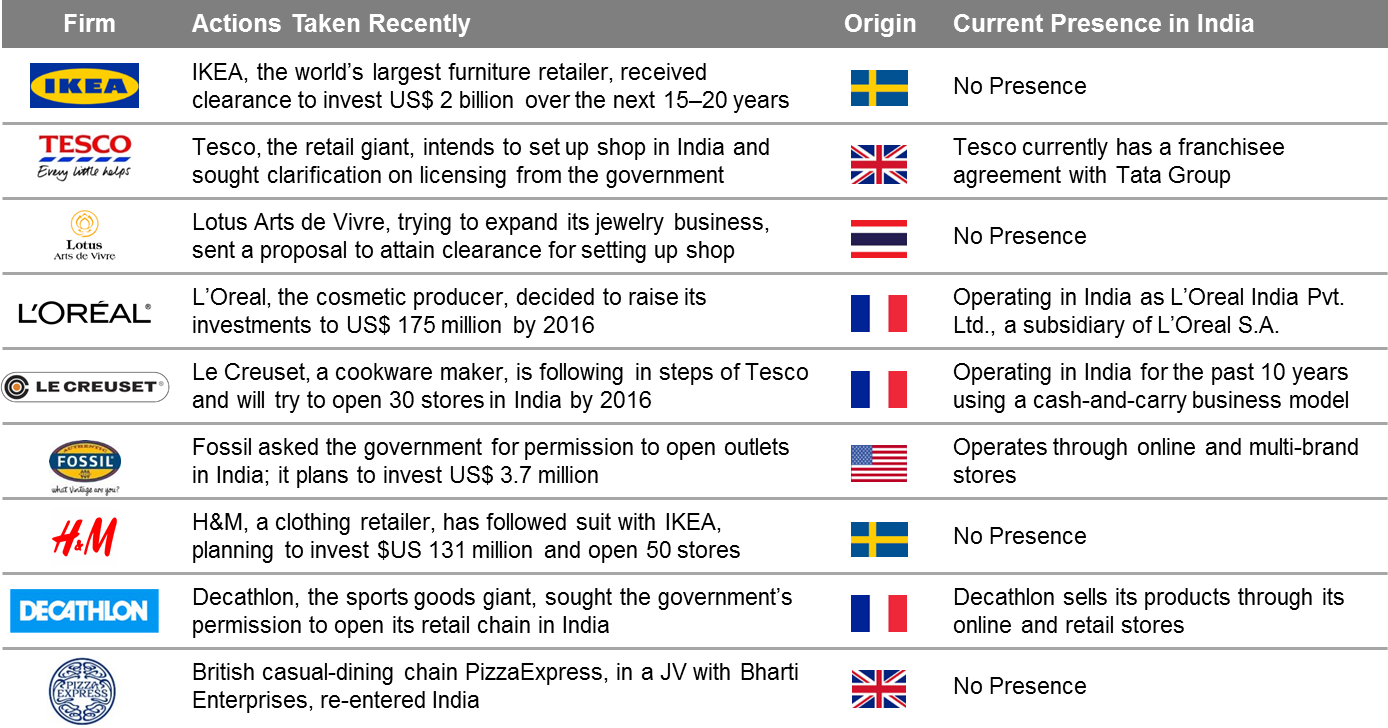
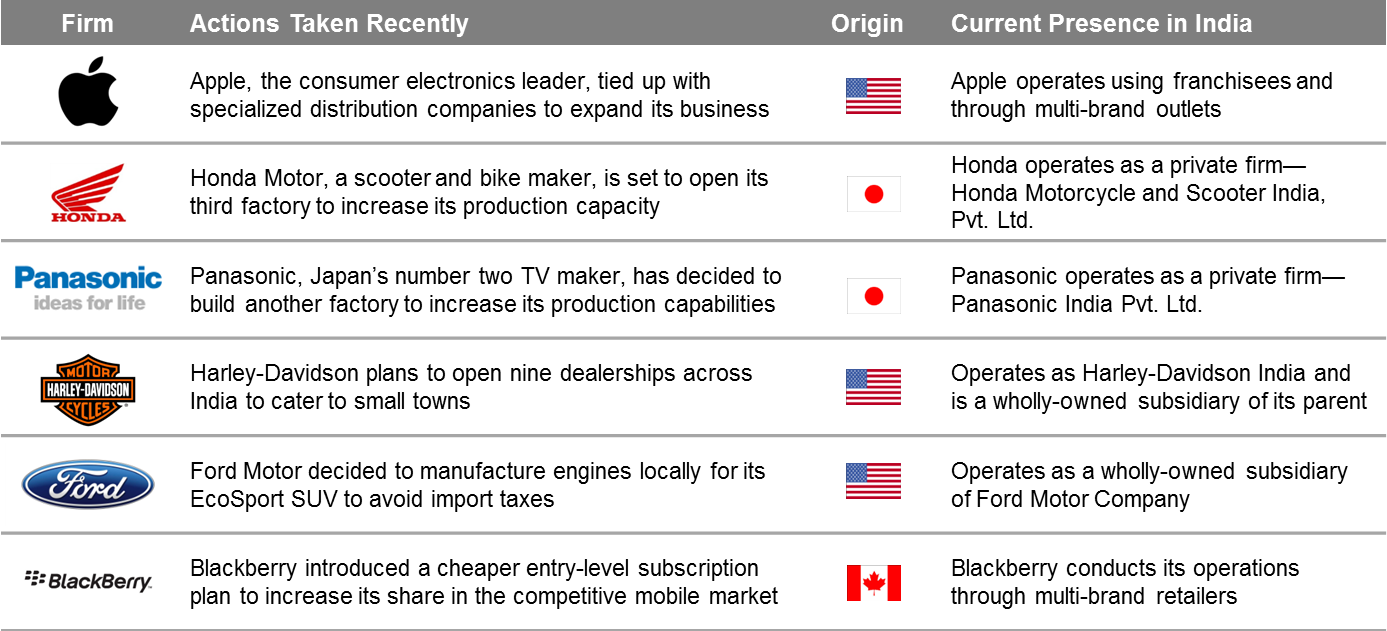
Multinationals Continue to See Long-Term Potential In India Despite Current Volatility

Many multinationals believe in India’s longer-term consumption growth, reflecting sustained interest

Unilever’s announcement to purchase an additional 22.5% stake in its Indian subsidiary for US$ 5.4 billion is indicative of the faith that many MNCs have in India’s longer-term growth potential (see list below for other such investments)

  • We are going to be continuing to export more and more vehicles from India because India is so competitive and the vehicles here are so representative of the vehicles that people want around the world.
    -Ford Chief Executive, Alan Mulally
  • “India is growing like most other developing countries where there are a lot of opportunities in consumer electronics and appliances. Our philosophy has been to not simply import products from other countries, because items should be specially customized for Indian consumers, keeping local needs in mind.”
    -Panasonic President, Kazuhiro Tsuga

Consumer and Retail Industry

The majority of interest from MNCs in India has been in sectors that are associated with private consumption, which accounts for about 60% of GDP, as this segment is expected to grow strongly with the rise of the middle class and growing labor force

Consumer and Retail Industry


Automobile and Electronics

Several firms in the automobile and electronics sectors have invested in increasing their capacity despite experiencing a slowdown in sales, demonstrating their belief that the current conditions are unlikely to persist much longer

Automobile and Electronics


Royal Succession Planning at Saudi, Inc.

Qatar’s royal succession puts Saudi Arabia’s unresolved leadership question back into the spotlight. While it is unlikely the next king will alter Saudi Arabia’s path, it is important for companies to be prepared given the prominence of the market in their portfolio.

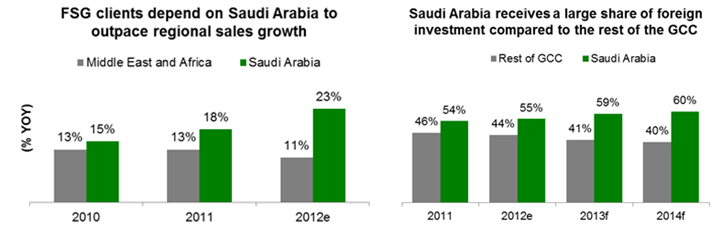
A survey conducted last year revealed that FSG clients count on Saudi Arabia to deliver sales growth rates than are more than double the overall average in the Middle East and Africa region. In addition, Saudi Arabia is forecast to receive 60% of FDI directed to the GCC by 2014, indicating a heavy reliance on the Saudi market among foreign investors.

Saudi Arabia v MEA and GCC

While a smooth transition is more likely than a botched one, the lack of political certainty will keep senior executives up at night. To understand why a smooth transition is important to business, consider how the king’s role has evolved during the past several decades. King Abdullah is essentially the CEO of one of the largest corporations in the world.

Four ways the king manages Saudi Arabia, Inc.

  1. Messaging to the board: The Saudi state’s legitimacy is built on support from religious conservatives, and the king must ensure they are satisfied with the direction of the country
  2. Keeping employees motivated: The king manages royal family rivalries by appointing new princes to positions of importance. Princes are motivated to remain loyal based on the prospect of increasing power that is laid out by this policy. The king also allocates generous allowances to more than 25,000 royal family members in exchange for support
  3. Setting the corporate vision / strategy: King Abdullah’s cautious reform agenda is slowly improving the investment climate and aims to promote sustainable growth. While the king cannot control all of the implementation, his vision plays a key role in the shaping the direction of the kingdom
  4. Portfolio Management: As part of the king’s power to set a strategic agenda, he sets the tone for which sectors and sub-regions benefit the most from public spending

Just as corporate entities are vulnerable to a lack of clear succession planning, so is Saudi Arabia Inc. King Abdullah has done much to alleviate these concern in recent years, positioning young princes in key ministerial and gubernatorial posts, and ensuring the princes that are next in the line roughly share his vision for the country. Still, doubts will likely persist until Saudi Arabia is able to successfully move to the next generation of leaders.

In preparation for changes in Saudi Arabia, companies can take actions now to protect their business:

  1. Establish and maintain government contacts on multiple levels: ministerial, regional, and municipal. This will promote cohesive relationships during a leadership transition
  2. Extend receivables for key customers and buy long-dated oil futures if you are concerned about a sustained disruption to the business landscape
  3. Do not alter or reduce investment plans in Saudi Arabia, particularly in social sectors like education and healthcare
  4. Communicate to corporate that you have a plan in the event of a royal succession

Podcast: Establishing a social media strategy to succeed in emerging markets

MNCs focused on emerging markets are investing money in social media activities, which is no longer seen as the latest fad. There is good reason for this type of investment. Last year Internet usage grew 8% YOY to 2.4 billion users, led by emerging markets like China, Indonesia, and Russia. Among emerging markets, more than 80% of Internet users are active on social media sites in Brazil, Egypt, Mexico, Russia, and Turkey. New technologies are making it possibly for billions of low-income GSM phone users to access Facebook and Twitter, particularly in Asia, Latin America, and Sub-Saharan Africa.

This shifting dynamic is on the corporate radar because it represents generational opportunities, but also new types of risks across sectors. So why do so many companies lack a clearly defined strategy that ties social media activities to achieving business objectives? The answers vary by organization, but typically include a combination of factors, such as fear, inexperience, and a lack of corporate buy-in.

Establishing a social media strategy is especially critical for senior executives overseeing regional or international businesses for their companies. These executives represent the critical link between development of a social media strategy globally and undertaking social media activities locally. A poorly-conceived global strategy exposes regional executives to new types of risk management crises, a waste of precious resources, and the prospect of falling behind competition. In contrast, a global strategy that can be mapped to support business objectives in the regions can help senior executives deepen customer relationships, find new customers, and build sustainable business growth.

For more on why emerging-markets focused companies cannot live without a social media strategy, listen as FSG CEO Rich Leggett moderates a discussion with Practice Leader Matthew Spivack. Topics covered include how companies use social media to support business objectives, measuring ROI, and social media’s relevance to B2B and B2G companies.

The full podcast is available for download here.


Emerging Market View: What Our Analysts Are Reading – 6/21/2013

.
Sifting through a constant flow of news, our analysts have summarized the following few articles from around the world in this week’s Emerging Market View:
.
.
“Companies should prepare for significant weakening of the lira and the forint, and potentially the zloty as a result of the Fed’s announcement.”
- Martina Bozadzhieva, Associate Practice Leader for Central and Eastern Europe
.
“Automobile sector not the only one to be experiencing such trends - see FSG’s Latest Quarterly Market Review on India (Q2) to see some of the other sectors which have shown similar trends plus the short-term scenario planning that is necessary to protect MNCs from any downside risks.”
- Shishir Sinha, Analyst for Asia Pacific Research

Related reading on India: Interconnectedness of Issues Makes Scenario Planning Critical

.

“Mexico’s president is doubling down on commitments to open the oil and gas sector to greater private and foreign investment. Such a move, if accomplished, would be a historic break from the past and could usher in a new era of investment, reverse declining oil output, and win vast new resources for the Mexican government.”
-Clinton Carter, Director of Research and Product Development for Latin America

India: Interconnectedness of Issues Makes Scenario Planning Critical

Growth is likely to bottom out as a few positive trends are emerging that are likely to create near-term gains

  • Cost of Borrowing: Reserve Bank of India, India’s central bank, cut the key lending rate, bringing down the total cost of borrowing by 75 basis points during 2013, in order to promote growth in investments and consumption
  • Price of Goods: India’s stubborn inflation has also fallen to a 41-month low of 4.89%, into the central bank’s comfort zone of 4–5%, as food and fuel prices have fallen significantly over the past few months
  • General Demand: Industrial production growth has also exceeded market expectation, growing at 2.5% during March. It benefited from the positive expansion in manufacturing output and capital goods production, highlighting slow but sustained demand
  • Rural Demand: Private-consumption demand from more than half of India’s total workforce from the agriculture sector is set to increase, because meteorologists expect normal monsoon rains this year after parts of the country suffered from drought last year

However, interconnectedness of issues makes scenario planning critical in the medium to short run in India

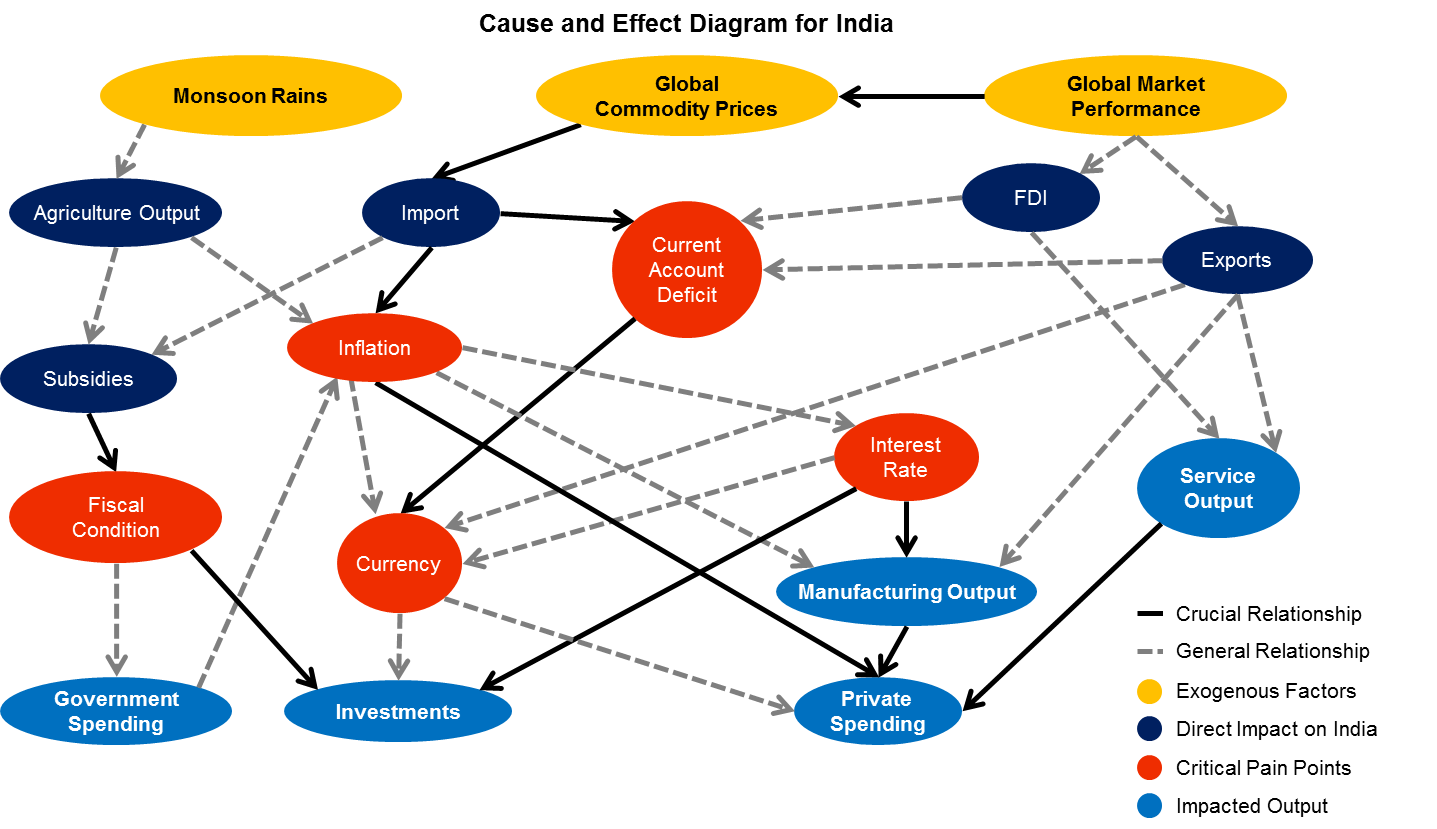
A bullish view on India’s long-term potential is justified, but it should not overshadow the need for careful planning in the short-to-medium term as several fundamental issues remain unresolved and in a precarious situation. The causes of some of India’s critical pain points are factors beyond the control of most MNCs can impact their businesses (see diagram below):

Cause and effect diagram for India


Global price impact: Fragile current account deficit can benefit from global decline in commodity prices

(a) What is the status of the current account deficit (CAD)?

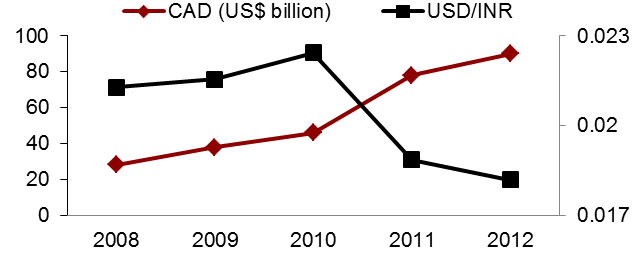
  • India’s current account deficit has grown more than five times (in USD) over the past six years, driven by the country’s insatiable demand for oil and gold imports. The overall CAD is estimated to be at around 5% of GDP, which is twice the sustainable level

(b) Why is this important?

  • The trade imbalance, caused by subdued exports demand, and terrific import growth has led to a high CAD, which in turn has caused a major devaluation of the rupee
  • Such volatility affects a MNC’s ability to import goods in a price-sensitive market, hurts the bottom line when repatriating income, and increases the USD import bill for the country

CAD v USD/INR


(c) What is likely to change moving forward?

  • The global prices of gold and oil have decreased this year, directly reducing pressure on the CAD. Moreover, the government has introduced a US$ 550 million stimulus package to incentivize export growth while increasing the import duty on gold
  • The government also slashed the tax rate levied on the interest that foreign investors earn on their investments in local bonds from 20% to 5%, encouraging more capital inflows in the debt markets

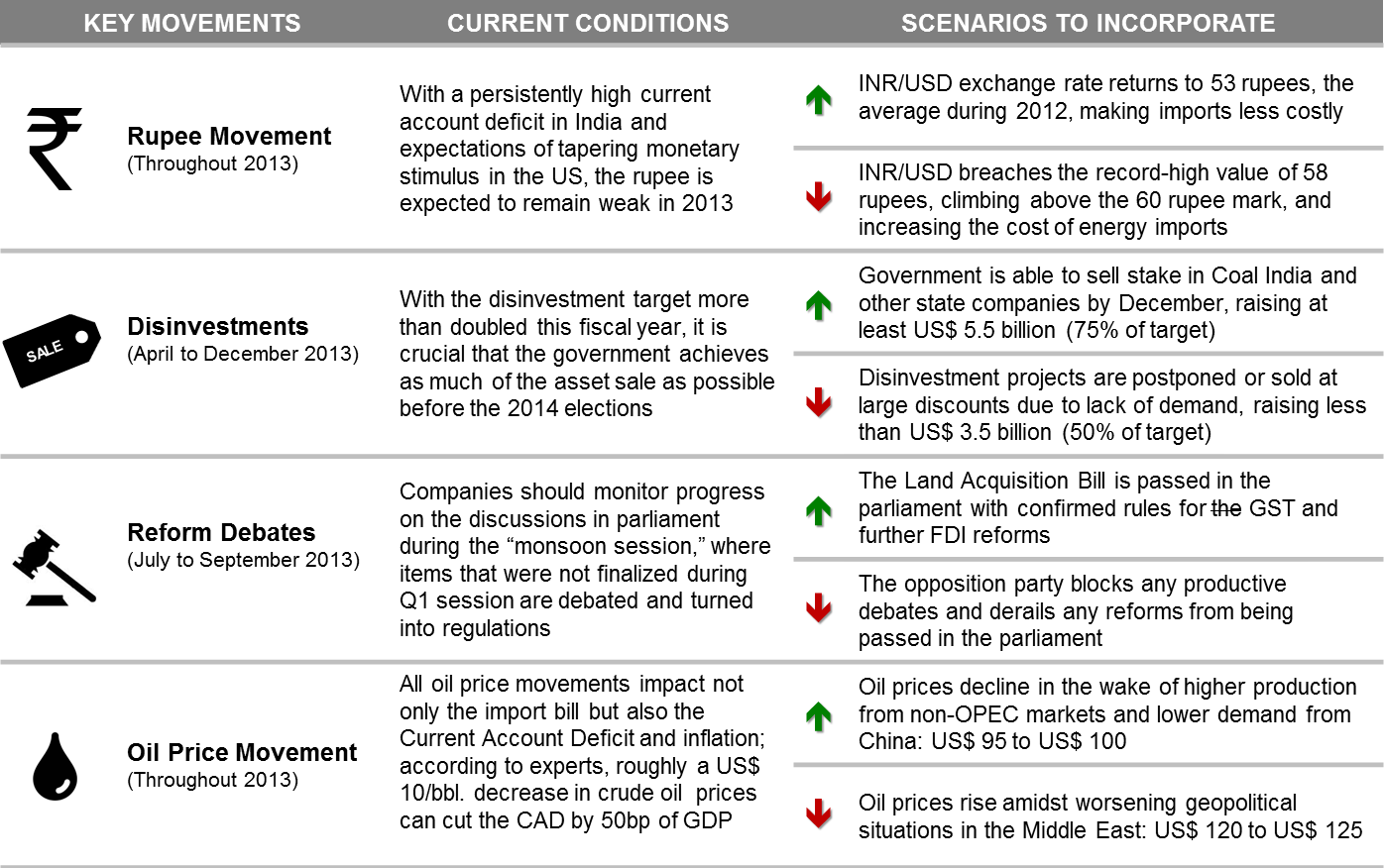
Companies’ short-term (12 month) scenario analysis should incorporate these key trigger points:

Key movements diagram


The Bloom is Off the Rousseff

Today marks the seventh day of demonstrations in São Paulo; demonstrations that started as small protests expressing frustration with bus fare increases in the city but have now spread to major cities throughout the country. The protests have captured the imagination of the population and the media and have proven both resilient and spontaneous.

Frontier Strategy Group’s Latin American research team and expert advisory network are following the evolution of the demonstrations and would like to offer our clients analysis on how these developments have altered our FSG View on Brazil and how the events could impact our clients’ businesses.

FSG View on Brazil’s Economic Outlook:

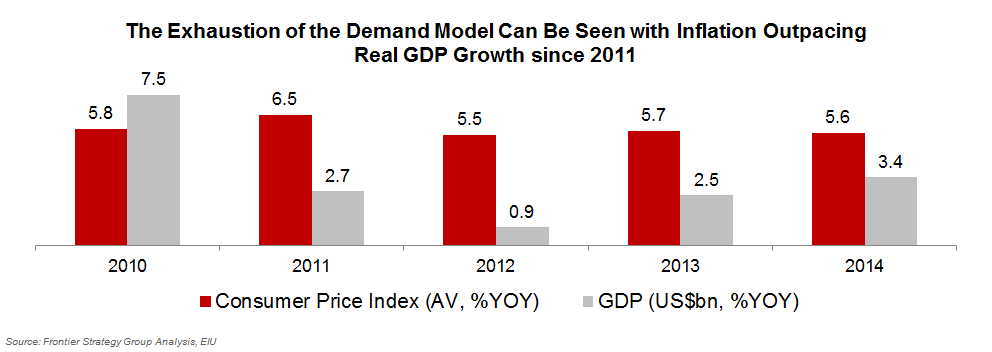
FSG’s recently released Regional Overview for Latin America expresses our view that Brazil’s macroeconomic slowdown and generally weak business performance of the last year is due to the exhaustion of the demand-driven economic model popularized by the Lula government and employed by the current Dilma Rousseff government (see graph below).

  • We caution our clients that even though this economic model is less and less effective at generating broad GDP growth, it is still effective at maintaining wage growth and high employment. Positive real wage growth and low unemployment are great news for Dilma, and until very recently her approval ratings were the highest of almost any head of state in the world.
  • Our view is that low unemployment and positive wage growth should translate to a good chance of reelection in 2014, therefore little incentive for the current government to make politically painful changes to the demand-driven growth model in the short term.
  • Therefore, we caution our clients to be prepared for a low-growth environment and little progress on needed reforms that would spur growth through higher productivity and a lower cost structure until at least 2014.

The Exhaustion of the Demand Model

    What Prompted the Protests?

    Clearly not all of Brazil’s population is as pleased and complacent as Dilma’s recent approval ratings suggested. The protests, broadly, are a stunning manifestation of a social trend that has accompanied Brazil’s transition to a middle-class country; the demands the middle class makes of government are different from the demands the poor make. As 40 million Brazilians enter the middle class and become both consumers of government services and tax payers, their priorities and demands become more sophisticated. This is a dynamic FSG has been tracking for some time, not just in Brazil, but also in Colombia, Russia, Turkey, and many other emerging markets as this trend will have profound impact on governments’ spending priorities.

    • The initial protests were over not just the price of bus fare, but the quality of service as well; essentially a question of value for money. Likewise, the subsequent demonstrations have focused on government priorities, transparency, and efficiency. No one can argue that Brazil does not devote considerable resources to social programs and alleviating poverty. Rather, the demands are for more accountability, greater efficiency, and prioritization of public investment in higher quality education and health; again, a question of value for money.

    How has the Outlook Changed?

    Short Term:

    • Multinationals in the consumer space can expect some disruption in sales, as consumers stay home and foot traffic slows in major urban areas.
    • Some businesses may experience work stoppages in the form of sympathy strikes, absenteeism, or shuttering of stores.
    • Investor confidence, already sour on Brazil, will weaken, and the Brazilian real will remain at several-year lows, though the Central Bank will maintain a floor on the value of the currency to guard against excess volatility.
    • Latin America and Brazil-focused executives will face tough questions on the sustainability of Brazil’s growth from increasingly skeptical corporate boards and headquarters. Negative headlines can have immediate impact on corporate sentiment towards an emerging market.

    Medium Term:

    • President Dilma Rousseff still has good cards to play. She is still fairly popular, her opposition is fragmented and currently lacking much leadership, and she has considerable government resources at her disposal.
      • Furthermore, while some protest language has focused on her, she has not been an explicit target of the protests. Dilma may yet succeed in harnessing some of the protest’s energy and present herself as sympathetic and aligned with the protester’s aims. That said, there is always a chance skillful opposition politician could channel the protests into electoral popularity. Yet, though the demonstrations add an element of unpredictability into next year’s elections forecast, Dilma is still in a relatively strong position.
      • Interest rates are likely to continue to rise, as inflation concerns and the political implications of inflation has the Central Bank and the government spooked.
      • Further targeted tax cuts and credit incentives to try to stimulate demand. These are increasingly ineffective measures economically, but still prove popular with potential voters.
      • Suspension of subsidy roll backs are likely. Planned hikes in gasoline prices and proposed cuts to public subsidies are likely to be delayed. This is harmful for Brazil’s fiscal position, but will keep more spending cash in the pockets of consumers.

    Long Term:

    • The government of Brazil will shift priorities over time. The new priorities will be improving quality and sophistication of services, rather than simply expanding access. This has profound implications for firms selling goods and services in terms of the value proposition likely to be most of interest to federal, state, and local government.
    • There are potentially positive long-term benefits to the protests. Principal among them is greater accountability of government in general.
      • Similarly, greater efficiency is not just a demand, but a fiscal necessity. Brazil has deep pockets, but with citizens and corporations balking at the cost of public services, the government will be asked to do more with less. This may encourage reforms in the models employed to provide services to the public. Expect an accelerated move toward public-private partnerships and greater use of concessions in public projects.
      • Transparency will improve. Brazil has already made some inroads in prosecuting public corruption, but the demonstrations will embolden media and watchdog groups to push for greater transparency and accountability.

    In Conclusion:

    The slow death of Brazil’s demand driven growth model is coinciding with the growing assertiveness of the middle class. The government has been very slow to respond to either phenomenon. The short term chaos of the protests will disrupt some economic activity, while the mid-term economic doldrums will continue. The political picture becomes more volatile, yet Dilma is still in a relatively strong position and is unlikely to try to upset her political coalition or potential voters with radical reforms that won’t bear immediate fruit. Long-term, a political awakening could increase accountability and efficiency of government.

    As a long term investment opportunity, FSG remains optimistic and convinced of the attractiveness of Brazil’s fundamentals. The case for continued prioritization of investment in the market, however, becomes more difficult with each day of negative headlines. For this reason, FSG is releasing a new “Making the Case for Brazil” report and presentation materials at the end of June. The materials are designed to help senior executives focus stakeholders on long term opportunities in the market and reaffirm the underlying potential of Brazil’s future.


    Podcast: Global Strategic Planning with Expert Advisor, Jeff McLean

    Listen as FSG CEO Rich Leggett moderates a discussion on strategic planning with FSG’s expert advisor, Jeff McLean. Topics covered include economic health of China and the ASEAN community, as well as strategic workforce planning in the region.

    The full podcast is available for download here.

    ______________________________________________________________

    Jeff McLean

    Jeff McLean is a senior executive, author, presenter, and scholar amassing over three decades of business experience in the areas of leadership, strategy, M&A, marketing and sales. His breadth of senior executive experience spans across the U.S. and around the globe in over twelve market categories (medical devices, non-prescription and prescription drugs) executing sales through multiple distribution channels. During his tenure at CooperVision Incorporated and Bausch & Lomb Incorporated, Mr. McLean led organizations generating sales approaching a billion dollars while generating operating income in excess of over a quarter of a billion dollars. His negotiation skills were articulated in various business transactions around the world including Japan, Hungary, China, and the United States.
    .
    .
    Mr. McLean is currently a professor at New England College where he teaches Organizational Behavior. His recently published book, “China, Capturing the Prize” received complimentary reviews including from Kirkus stating; “McLean leaves the hyperbole at the door, taking an optimistic tone but not sugarcoating potential difficulties”. In addition to his consulting and speaking engagements, Mr. McLean is completing his Doctoral studies in Organizational Leadership from The Chicago School of Professional Psychology. A graduate from the University of Maryland with a B.S. in Business and a M.S. in Strategic Leadership from the New England College. Additionally, Mr. McLean also consults for a medical device company in pursuit of a desired acquisition of a Russian enterprise. Mr. McLean, a believer in leaders contributing back to society, currently sits on a non-profit Board and is providing pro-bono consulting in a Board redesign project for an organization dedicated to helping the homeless.
    .
    As an FSG Expert Advisor, Jeff McLean is available to FSG clients for consultation on many business issues. Please contact your account manager for further information or contact us at sales@frontierstrategygroup.com.


    Be Aware of the Risk of Sudden Deceleration in China

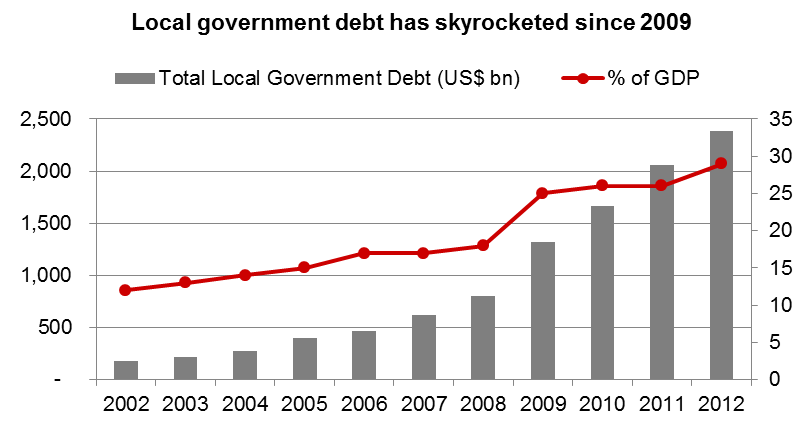
    FSG expects China’s GDP growth rate to be worse than the consensus forecast of 8.1% in 2013. Weaker-than-expected data in Q1 suggests the state of the Chinese economy is even weaker than the official number suggested, prompting concern of a sudden deceleration of the Chinese economy. One of the red flags is local government debt (see chart below), a problem just started to manifest when some city governments, such as Dongguan’s, cut back on public spending. Free bus service in Dongguan was canceled in April.

    Local Government debt has skyrocketed since 2009

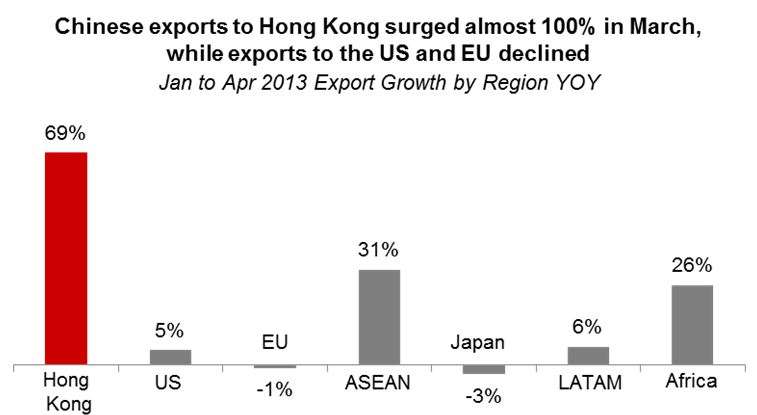
    Another red flag will be exports. China’s export numbers in the first four months of 2013 have come under scrutiny as concerns have been raised about their accuracy. China’s export growth to developed markets—the US, EU and Japan—remains lukewarm (see graph below).

    Chinese exports to Hong Kong surged almost 100 percent in March, while exports to the US and EU declined.png


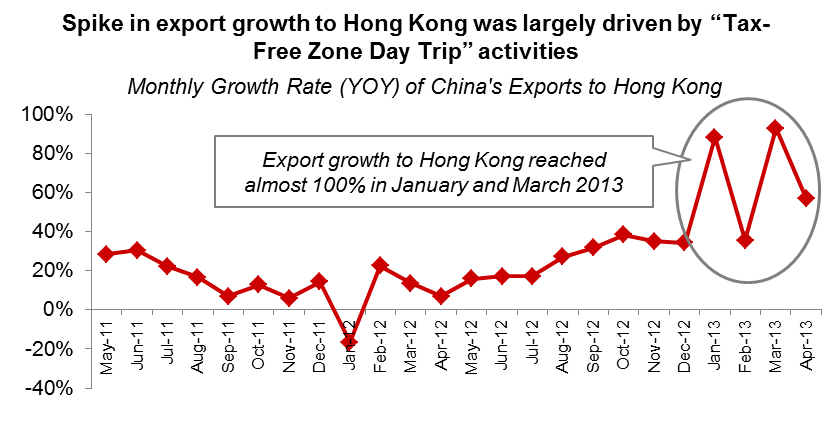
    Export growth to developing markets in ASEAN and Africa are strong but start from a lower base. Questions have been raised in particular about the extraordinary growth of China’s export to Hong Kong, which stands at 69% in the first four months based on official numbers indicated in the graph here:

      Spike in export growth to Hong Kong was largely driven by Tax-Free Zone Day Trip activities

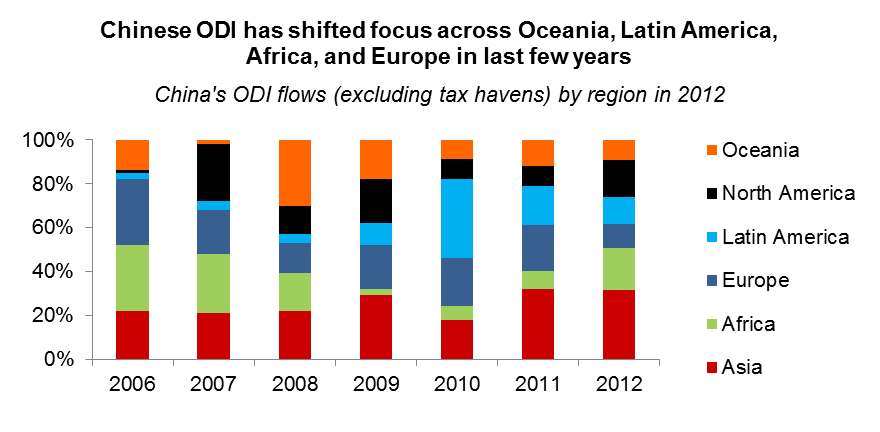
      We also believe slower growth at home will drive more Chinese investment overseas. Traditionally, Chinese outward FDI is state-led and resource driven. If we look at the geographical distribution of Chinese FDI overseas in last few years, they were focused on resource rich regions like Africa, Latin America, Oceania and some Asian countries like Indonesia. But with the economy slowing, we see that trend changing. We expect more participation of private Chinese companies who are investing for pure business purposes rather than national strategic reasons. And these private companies have the potential to pose a real challenge to multinationals, starting in the Chinese market, but increasingly in markets outside of China as well.

      Chinese ODI has shifted focus across Oceania, Latin America, African, and Europe in the last few years