FSG believes that as India continues to struggle with its prolonged phase of low growth, companies operating in the country need to actively find the hot-spots of opportunities where there has been sustained growth, wealth creation, and overall development. This necessitates a robust city-level study prioritization exercise that uses a sophisticated model to fully capture the true size of the pie.
Moving To City-level Studies - A Global Phenomenon with High Relevance in India
City studies are more relevant in India, because states are too big to be a “minimum unit” for prioritizing and wealth in urban areas far surpasses that in rural ones:
- Size of the states: States in India are often equal in size to individual countries; a study of smaller entities is necessary to zero in on a specific geographical opportunity
- India’s 80-20: Understanding where the pockets of wealth exist in India is more crucial than in other countries. While only 30% of the population lives in urban areas, they account for more than 60% of the GDP, and the number is expected to rise to more than 70% by 2030
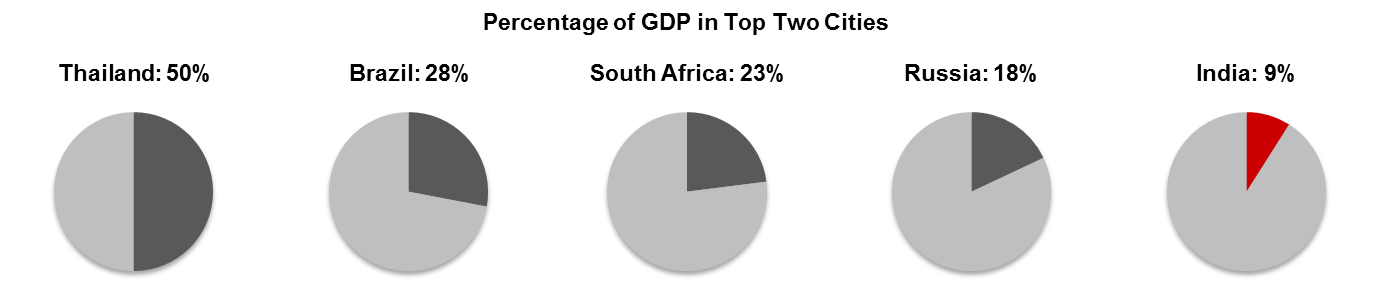
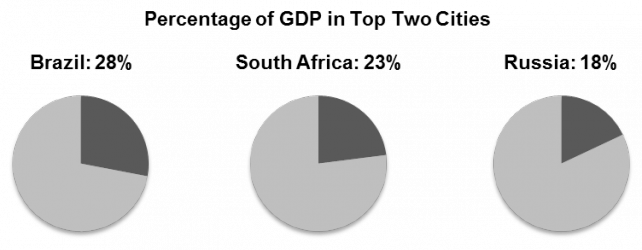
- High Wealth Dispersion: India, much like China, doesn’t have just two or three cities that account for most of the wealth, as is the case in several other emerging markets. Adding up the GDP of the top six cities in India would put it on par with Russia (18% in its top two cities), and it would require going as far as the top 15 cities to be on the same page as South Africa (23% in the top two cities)
- Complex Data Environment: Adding to the dispersion of wealth, the sheer size of the country makes any data-based analysis complex due to the number of variables. There are more than 400 geographical units that have a population of more than 100,000 people, and almost 4,000 geographical areas are classified as towns
Traditional Practice Has Been to Use Population: Rudimentary and Unproductive
Population-based Ranking Not Always Effective: When comparing the list of top 40 cities in India by population to the list of top 40 cities by GDP, two interesting conclusions are brought forward:
- The same names appear at the top of both lists: Companies that want to focus only on megacities (also known as the Eight Metros of India), can use population as a proxy for market potential and fund further research into understanding the more granular differences between the giants
- Overlap between the lists is as little as 50%: The disparity between the two lists increases substantially beyond the megacities. Companies that have a presence in the eight metros and are looking to conduct prioritization studies of the next batch of cities should invest in acquiring at least basic GDP data to make further studies more robust
Cities Have Evolved; the Analysis Needs to Do the Same: Over the past two decades, India’s growth story has become that of scattered development, with regional political movements playing a larger part in the advancement of many cities. This divergence in growth will require increasingly sophisticated studies to measure market potential
- While studies of the least-developed cities can still be focused on the basic building blocks of its economy and people, analyzing investment into cities with more than a million people will require the study of additional factors such as the quality of infrastructure, level of safety, provision of services, and availability of support functions to sustain growth
- Most studies conducted on Indian cities, both internationally and locally, have used population statistics as the starting point. The evolution of the cities’ characteristics now requires analysis to move beyond simple population figures
FSG’s Unique Prioritization Methodology: Cluster-based Model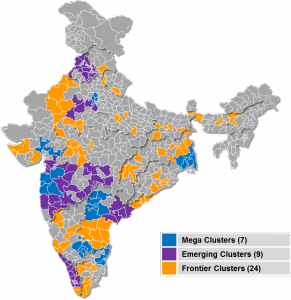
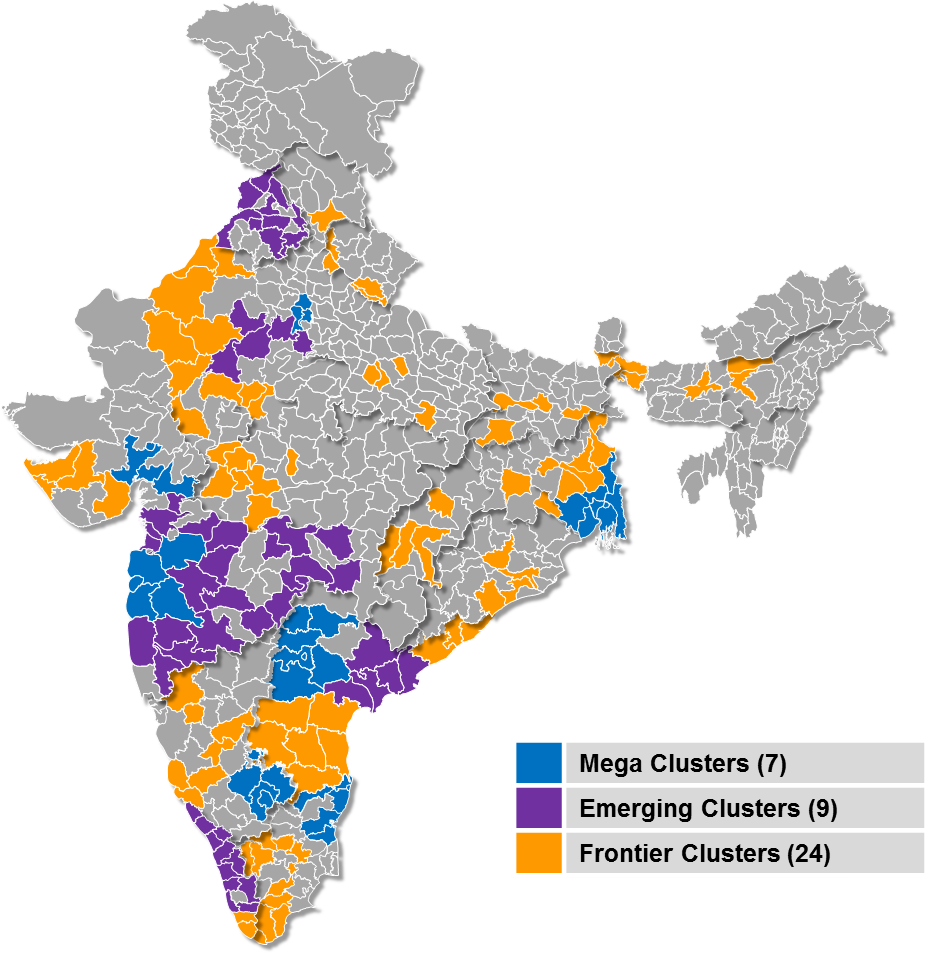
FSG has created a unique cluster-based model to prioritize the cities in India while doing away with the general approach of using a ranking-system that often creates impractical results, are overly dependent on population statistics and don’t internalize the distribution opportunities. The analysis resulted in the creation of 40 clusters in India, which were then divided into three categories (see the map, you may click to enlarge)
- Mega-Clusters: 7 Mega Clusters that account for 25% of the country’s GDP and have a total urban population of more than 140 million people
- Emerging-Clusters: 9 Emerging Clusters that account for another 15% of the country’s GDP and have total urban population of more than 60 million people
- Frontier Clusters: 24 Frontier Clusters that account for an additional 13% of the country’s GDP and have a total urban population of more than 80 million people


Speak Your Mind