Podcast: Localizing Manufacturing in Russia | Expert Interview

Blog-Podcast-revisedAs companies expand their presence in Russia, many are facing the question of whether to localize manufacturing in the market. In this interview, FSG Expert Advisor Alex Zaguskin highlights the factors and challenges companies need to consider when evaluating whether local manufacturing is the right next step for their Russia businesses when evaluating whether local manufacturing is the right next step for their Russia business.

Click here to download the podcast or alternatively access the FSG iTunes podcast library here.

________________________________________________________________

Alexander zaguskin

Alexander Zaguskin has many years of experience in the auto manufacturing industry. He worked as Vice President of Purchasing, Engineering, and Localization for Sollers in Russia, and was a Vice President for Engineering at Russian Machine Systems. He currently heads AZ Enterprise LLC, a management consulting firm specializing in the CIS market that supports MNCs in M&A, setting up manufacturing facilities in the CIS, and conducting government relations at both the federal and the local level. Mr. Zaguskin has wide-ranging relationships with government institutions in Russia, Turkey, and the CIS.

Alexander is available to FSG clients for private consultation – please reach out to your account manager to schedule a meeting.
China | Industry Analysis by Province

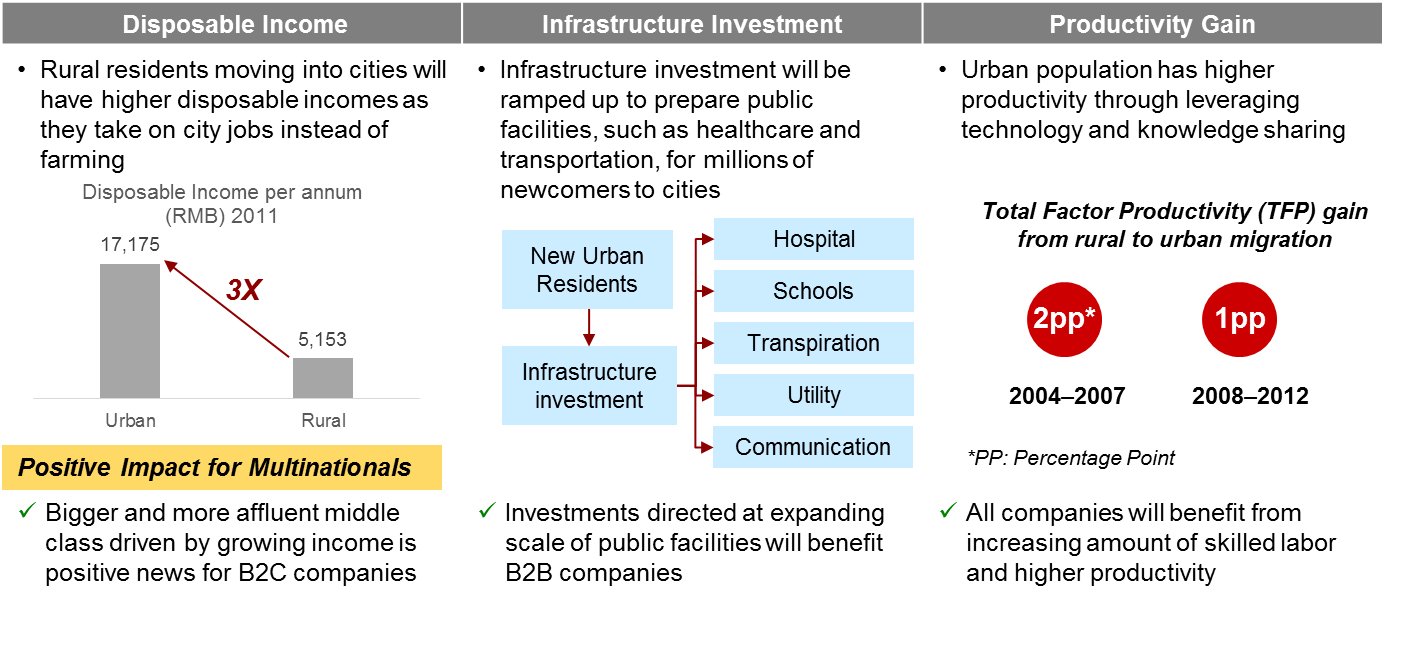
Continuing the topic of Provincial Opportunities in China, urbanization will become a major growth driver for China as 250 million farmers will enter cites in coming decade. However, the trajectory of this—the largest urbanization program in human history—is not certain; policymakers and academics are still debating the pros and cons of different urbanization scenarios. The path China eventually takes will have a huge impact on its economic future and wealth distribution, creating both threats and opportunities for multinationals. China’s urbanization plan will create growth opportunities for companies targeting private consumption, infrastructure investment, and productivity gain (see info-graph below)

Consumption, infrastructure investment, and productivity gain in ChinaProvincial governments in China have great power in designing industry polices and approving investment projects. 95% of FDI projects were approved by provincial governments and only 5% by the central government. Therefore, it is critical for multinationals to understand the government’s policy orientation at a provincial level and identify attractive provinces in each industry based on investment level and incentive structure.

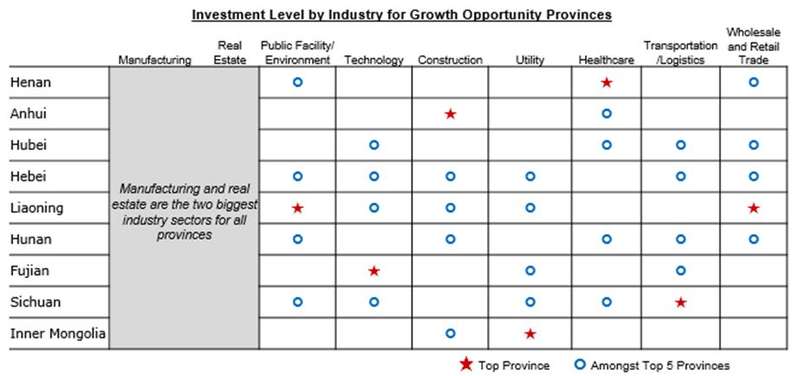
FSG has analyzed the growth opportunity provinces’ competitiveness in nine key industries. Manufacturing and real estate are not ranked, because all provinces invest heavily in those two, which represent about 60% of total investment in aggregate. Other 7 provinces are ranked based on investment level in that particular industry - you may click the image below to enlarge the chart:

Investment Level by Industry for Growth Opportunity Provinces

Cost-Effective Workforce Planning in Latin America

Getting the Right People in the Right Seats Has Never Been Cheap or Easy in Latin America

Even under the best of circumstances, it is difficult and expensive for multinationals to recruit and retain key talent in emerging markets. This is particularly true for the companies we work with in Latin America, given that governments across the region have historically under-invested in education and human capital. As a result, the supply of workers with the technical and managerial skills needed to carry out day-to-day business operations remains limited.

The underlying scarcity of skilled labor continues to drive up wages across the region, and in most cases, nominal wages outpace both inflation and productivity, boding poorly for the sustainability of current labor market dynamics and the consumption-led growth they have facilitated over the medium-term.

To make matters worse, demand for talent continues to rise as multinationals step up their investment in the region in an effort to compensate for sluggish growth in developed economies. Problems related to talent management have long plagued Brazil, and our expectation is that as companies strive to scale up their presence in Colombia and Peru, existing recruitment and retention challenges in these markets will be exacerbated, forcing companies to rely on costly expatriate hires.

Unfortunately, there is no silver bullet—today’s talent gaps are structural and will endure over the medium term even as governments begin to step up investment in secondary and tertiary education. However, conversations with our clients and expert advisors reveal that integrating workforce planning into the strategic planning process pays great dividends and helps companies move away from ad hoc, high-cost external hiring towards cost-effective, retention-boosting redeployment strategies.

Cost-effective Workforce Planning Is the Key to Unlocking Efficiency, Retention, and Revenue Gains

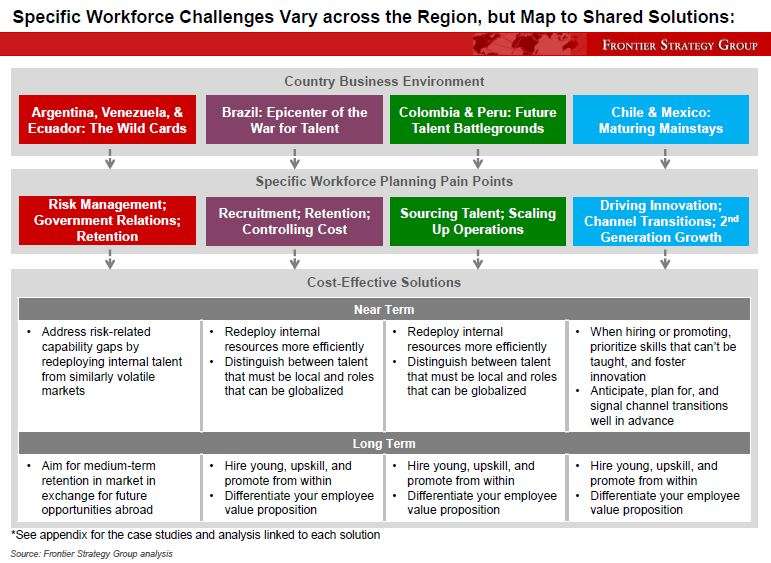
Redeploying internal talent more efficiently is a cost-effective near-term alternative to external hiring, while optimizing your regional organizational footprint offers a medium-term solution to the high costs associated with across-the board localization. Over the long term, hiring young and investing in top performers to ensure they gain the skills they need to assume leadership roles within the organization is the key to building a cost-effective, enduring talent pipeline with retention and brand building gains that compound over time.

The ability to redeploy existing talent is contingent upon increasing visibility into the internal labor pool. If visibility is a challenge, consider adopting programs aimed at increasing senior management’s exposure to high potential employees throughout the organization, across functional, geographic, and business unit lines.

Requiring senior managers to have succession plans in place, and ensuring that KPIs incentivize managers to develop their direct reports are two best practices for preventing managers from shielding their high performers in the hopes of keeping them on their teams to the detriment of broader organizational goals.

Additionally, grouping countries based on their business environments and labor market conditions allows you to leverage strategic economies of scale by prioritizing capabilities you need in each environment, cross-applying workforce planning best practices, and planning for the future as markets and competitive landscapes evolve.

One industrial company we work with offers a case in point: to mitigate the risks associated with heterodox macroeconomic policies in Argentina, their regional leadership team leveraged the expertise their Venezuela country manager had gained through years of navigating complex capital controls, high inflation, shortages, and retention challenges, and tasked him with strategic responsibility for Argentina. As ‘wild card’ manager, he was able to work with his Venezuela functional heads to quickly bring their Argentine counterparts up to speed on best practices for mitigating financial and operational risks.

There are benefits to be gained in extending this line of thinking to other types of business environments. For example, the workforce planning challenges that companies face today in Brazil are likely to be repeated down the road in Colombia and Peru as investment increases and subsequent demand for relatively scarce skilled labor accelerates. Internship programs and long-term investment in the training and development of local hires have proven successful in Brazil, and understanding common trends in labor market dynamics is essential to making the case for investing in similar programs in the Andean region, so that your company will be well-positioned to ride out the coming talent crunch.

Specific Workforce Challenges Vary across the Region, but Map to Shared Solutions

For further reading on cost-effective workforce planning strategies and organizational footprint optimization in Latin America, FSG clients are encouraged to review the following reports:

  • Click here to access our full report on cost effective workforce planning and regional labor market dynamics in Latin America

Podcast: Russia, Belarus and Kazakhstan Customs Union | Expert Interview

PODCAST

The Customs Union between Russia, Belarus, and Kazakhstan increasingly attracts the attention of multinationals interested in expanding their presence in the CIS. In this podcast, FSG interviews Alexander Rogan, CEO of Russia Supply Chain and FSG Expert Advisor on the practical implications of the Customs Union for companies looking to transport goods across the CIS, as well as the opportunities that the Union creates for companies investing in the region.

Click here to download the podcast or alternatively access the FSG iTunes podcast library here.

________________________________________________________________

Alex RoganAlexander Rogan is the CEO of Russia Supply Chain, a series of publications and a consultancy. He previously worked as Managing Director at Priority Freight CIS, a logistics and supply chain company with offices in the EU, UK, and CIS. Mr. Rogan has 28 years of experience in global logistics and currently works in Russia, Kazakhstan, and the Former Soviet Union. Mr. Rogan has also served as Managing Director of AJR Logistics, which provides inbound/outbound logistics in Russia. He has wide-ranging expertise in managing distribution in Russia. He was also the Russian editor for Logistics Leaders and published Russia’s Automotive Supply Chain magazine.

Alexander is available to FSG clients for private consultation – please reach out to your account manager to schedule a meeting.

On the Road in Indonesia: Economic Governance Good for Business in Long Run

Indonesia

Adam Jarczyk, Asia Pacific Practice Leader for FSG, is currently on the road in Indonesia. He is speaking with government officials, senior executives and industry thought leaders to provide our clients with the latest on-the-ground insight from the market. He will be posting key takeaways on the Emerging Markets Insights blog.

Indonesia is not a country well known for its economic governance. But over the course of my trip to Jakarta this week, I have consistently heard positive comments about the ruling coalition’s handling of the recent fuel subsidy cuts. Although the move has already started creating challenges for companies in terms of heightened inflation and higher interest rates, there is broad agreement that the long-term benefits will be worth the short-term pain.

In particular, the executives I’ve spoken with are hopeful that the money the government is saving on fuel subsidies will be put to good use on badly-needed infrastructure projects and social programs. The benefits of spending in both of these areas are recognized by business leaders across industries, regardless of whether their operations would be directly affected. After all, these are two areas in which increased government spending has the potential to bolster Indonesia’s long term growth and create opportunities for all.

With that said, some executives did express consternation during our meetings about the prospect of rising inflation. With gas prices up 44% and diesel prices up 22% post-reform, many executives are wondering how quickly inflation will accelerate and how long it will last. The good news is that because the fuel subsidy reform was a one-off measure by the government, we are unlikely to see sustained price growth over the medium-term. According to the World Bank, inflation should peak near the end of this year at around 9% before dropping back down to current levels by the end of next year.

Executives who are wary of rapid price growth should sleep easy. A small bout of inflation is well worth the potential gains from Indonesia’s fuel subsidy cuts.

Identifying Top Provincial Opportunites in China

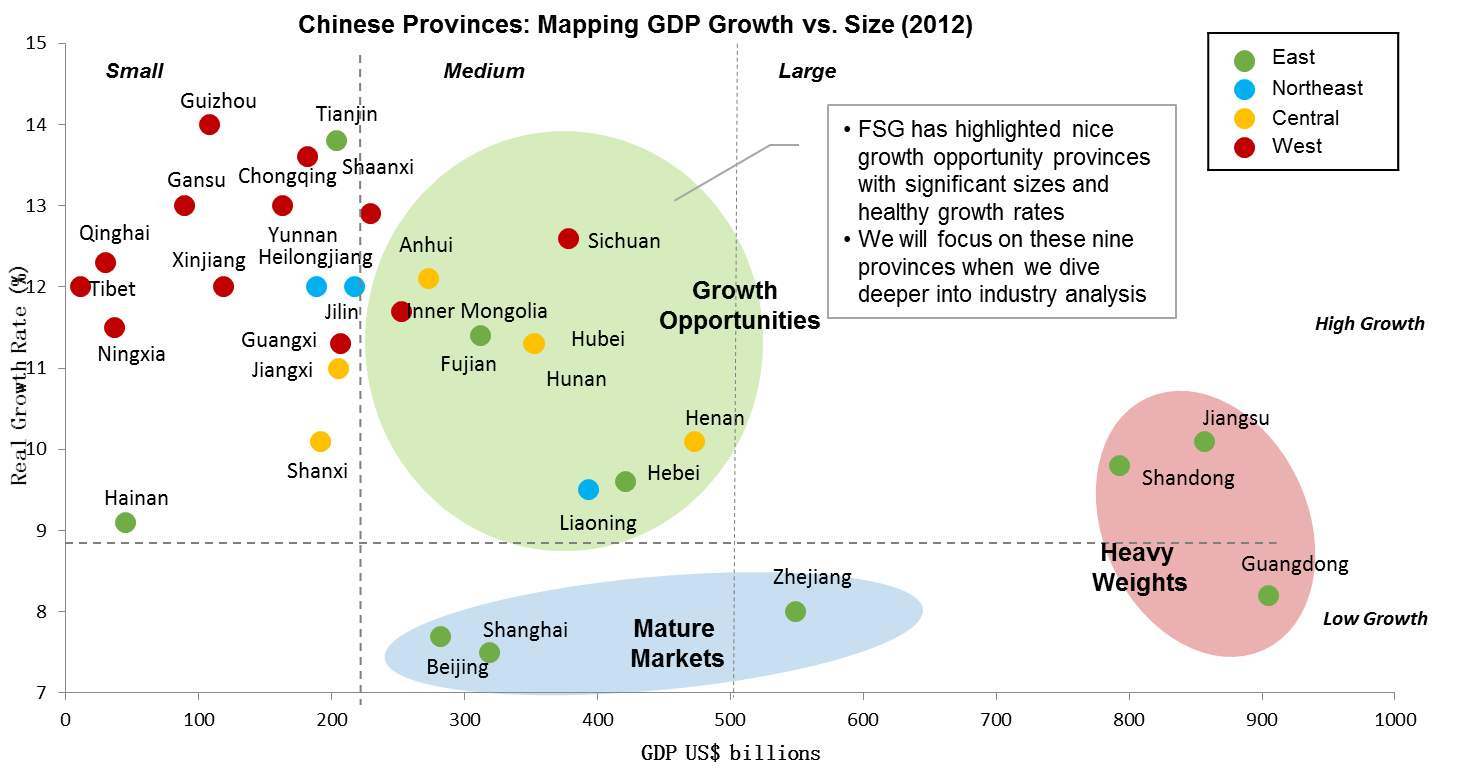
Companies are expanding beyond coastal provinces into inland central and west provinces to leverage low manufacturing costs and capture growing domestic markets. To be successful in geographical expansion, multinationals need to foresee the growth trajectory of provinces and regions in China to understand from where future growth will come. FSG has identified nine provinces of growth opportunity, which multinationals should focus on to maximize ROI in geographical expansion - refer to the green circle in the chart below (click image to enlarge):

Chinese Provinces Mapping GDP Growth vs. Size 2012

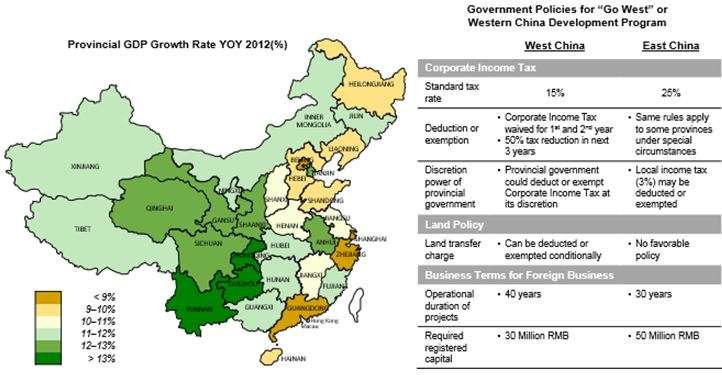
As indicated in the image below (click image to enlarge) strong economic growth in western China can be attributed to organic growth from the provinces’ low base and favorable government polices launched in 2010 to bridge the gap between eastern and western China.

Provincial GDP Growth Rate YOYI will have a subsequent post to continue the conversation of provincial expansion in China. Check back later for a look at China’s potential urbanization and a closer analysis of nine key industries in the region.

Regional Integration in Latin America

pacific_alliance

The Impact of the Pacific Alliance and Regional Integration for Multinationals: Interview with FSG Expert Advisor Barbara Kotschwar

Although it is only one year old, the Pacific Alliance is one of “the most exciting things going on today in Latin America,” as Chile’s Finance Minister Felipe Larraín put it. The trade bloc links Colombia, Chile, Peru, Mexico, and, most recently, Costa Rica. Unlike Mercosur, which has become increasingly protectionist, the Alliance represents a coalition of open markets that boast Pacific coastlines and are increasingly open to trade with thriving Asian economies. In this context, senior executives in LATAM are curious to learn how evolving regional trade dynamics will impact business in the region. I recently had the opportunity to sit down with FSG Expert Advisor and research associate at the Peterson Institute for International Economics, Barbara Kotschwar, to get her take on the Alliance’s progress and potential impact.

Regional Dynamics

The aim of the Alliance is to further integrate member countries’ economies, harmonize existing trade regulations, increase trade opportunities with Asia, facilitate the movement of goods, services, capital and labor, and integrate financial markets.

Goods: Liberalization of 91.8% of goods with the remaining 8.2% to be phased out within the next 7-15 years

Services: Current Pacific Alliance members participate in the International Service Agreement (ISA) negotiations

People: Visa elimination for nationals of other Pacific Alliance countries

Financial: Integration of financial markets (MILA)

Given the particular challenge of recruiting and retaining skilled workers in the region, companies are betting on the Pacific Alliance, as tertiary education initiatives and free movement of labor could relieve tight labor markets, particularly in Colombia and Peru. With a view to generating more entrepreneurship, particularly among youth, the Pacific Alliance has also agreed to create a joint scholarship fund that would allow students to study in any member country in areas that are critical for improving competitiveness. Similarly, country members have agreed to eliminate visas to the nationals of each country to move freely in the region, although at present this remains limited to tourists. Dr. Kotschwar believes, however, that if the Alliance proceeds with the same momentum as it has had and achieves the objectives it has put down on paper, the potential for movement of labor seems to be the most logical next step.

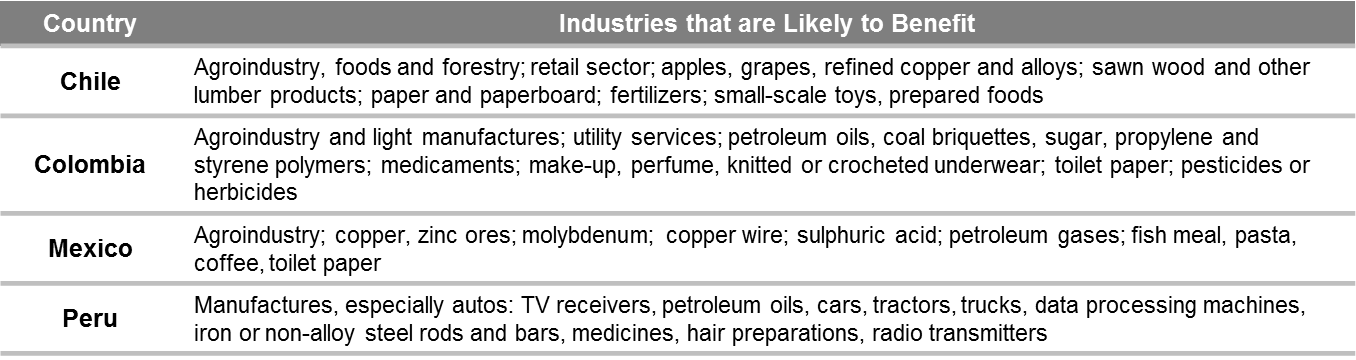
Industries likely to benefit from regional integration

Orientation towards Asia

One of the significant characteristics of the Pacific Alliance is to serve as an institutional bridge between Latin America and the Asia-Pacific. The effort to deepen economic ties with Asia bodes well given that a number of the Alliance members already have free trade agreements with several Asia-Pacific countries, including China, Japan, and South Korea. In the past, other blocs in Latin America, such as the Andean community, were also established as a base to increase scale and bolster regional value chains and domestic production. However, they failed due to exclusively promoting trade among members and insulating themselves with high tariff barriers.

Under the Pacific Alliance, increased competition from Asia will allow multinationals in Latin America an opportunity to integrate their supply chains. However, LATAM senior executives grow wary as trade opportunities with Asia may drive down margins and market share. In order to mitigate risk, this is where the PA governments should encourage the private sector to lead the agenda. Studies discussed by Dr. Kotschwar indicate that other initiatives unfolding in the region, namely the Trans-Pacific Partnership, could bring income gains by 2025 of: $1.8 billion for Chile, $16.4 billion for Mexico and $3.3 billion for Peru.

Signposts to Monitor

The main barrier to effective implementation of the Pacific Alliance is if countries do not take the tough steps to upgrade infrastructure, streamline customs and administrative procedures, and invest in education to make the region a sound trade and investment hub. This will be more difficult in a climate of slowed growth, but reasons for optimism include the commitment and political will member countries have demonstrated thus far. Another obstacle is if the bloc allows itself to become a victim of its own success and allows too many countries to accede. New countries may be less prepared or committed than the original four. Allowing such growth could render the bloc yet another regional talk shop.

While challenges are still ahead of us, the Pacific Alliance has proved to be a brilliant piece of diplomatic effort. Now it is time to add substance. South America has largely benefited from the region’s great commodity boom, however, economic growth in the future will come mainly from productivity, investment, and efficiency—all pillars of focus of the Pacific Alliance.

_________________________________________________________________

Barbara KotschwarBarbara Kotschwar has been a research associate at the Peterson Institute for International Economics since 2007. Her research focuses on trade, investment, and regional integration. Recent projects include comparative analyses of Latin American experiences with free trade agreements, Chinese foreign direct investment (FDI) in Latin America, an assessment of Mexico’s economy, and studies on commercial relations between the United States and Middle East and North Africa (MENA) partners. Kotschwar is also adjunct professor of Latin American studies and economics at Georgetown University, where she has taught courses on political economy and trade and integration in the Americas since 1998.

Before joining the Institute, she was chief of the Foreign Trade Information System at the Organization of American States, where she also provided technical and analytical support to the Free Trade Area of the Americas (FTAA) process in the area of standards and technical barriers to trade in her capacity as senior trade specialist. She has advised Latin American and Caribbean governments on trade-related issues and has worked with multilateral and regional development banks on a variety of trade and development projects.

Engaging Distributors in ASEAN

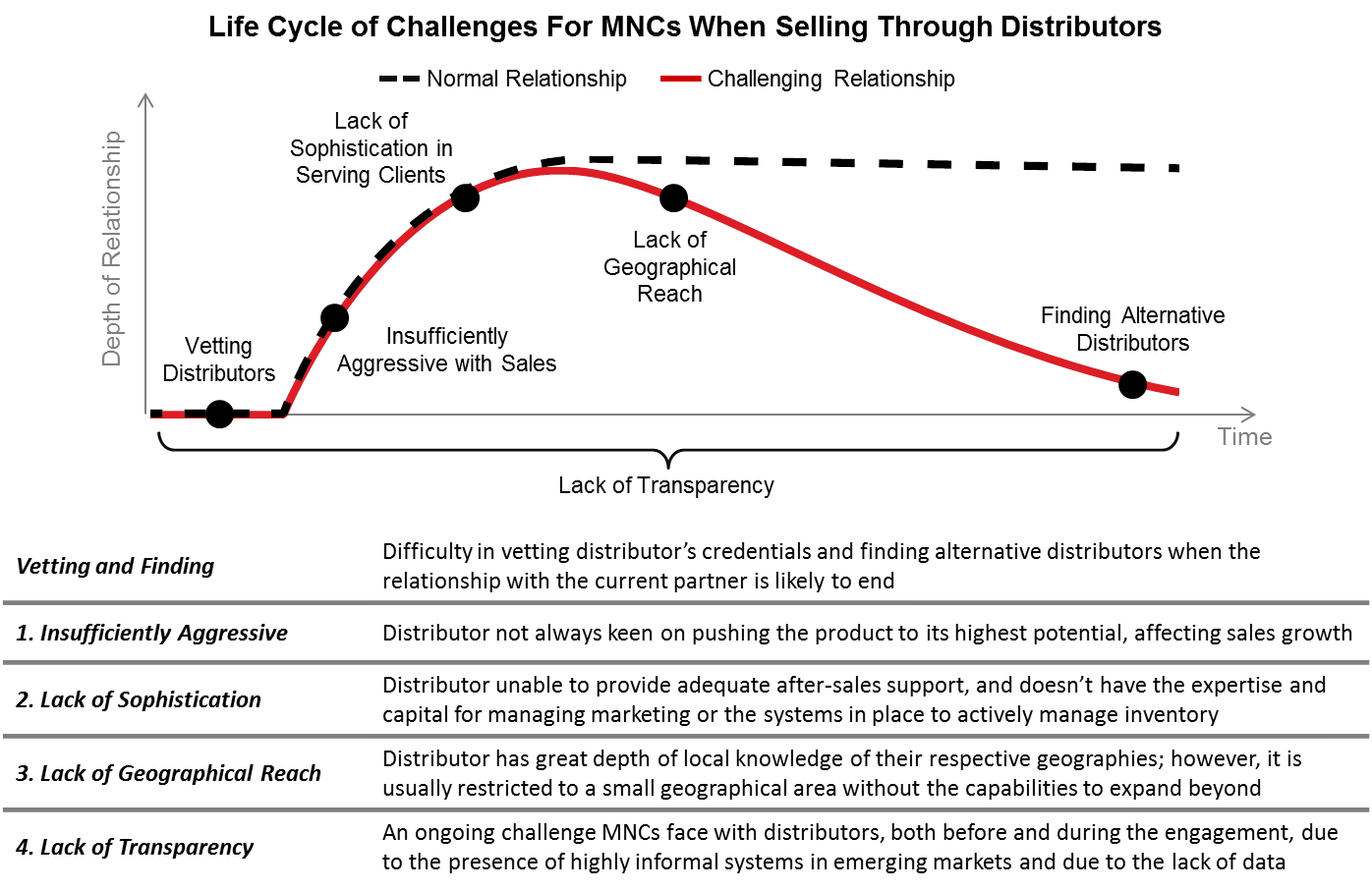
Following my previous post on optimal management of distributors in ASEAN, I want to discuss several key issues that arise when engaging distributors in the ASEAN region as indicated in the image below:


Life Cycle of Challenges for MNCs When Selling Through Distrubutors

Address the Lack of Aggressiveness

Understand Where Your Product Fits in the Distributor’s Portfolio

■ Sales representatives of MNCs might not find their distributors to be aggressive enough until they truly understand the role their product is playing in the distributor’s portfolio and his business

■ Training your team about the economics of the distributor’s business will allow your sales representatives to set more realistic targets while creating a more sustainable relationship between both parties

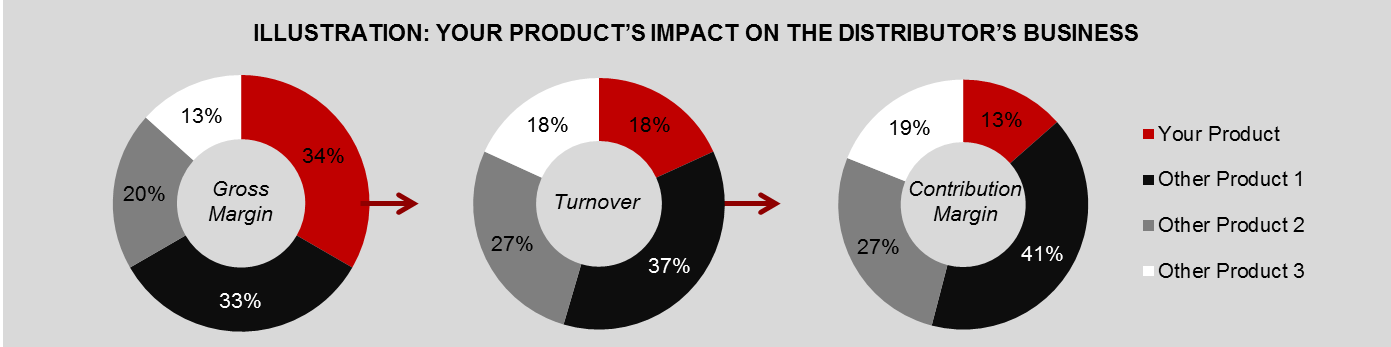
Your Product's Impact on the Distributor's BusinessWhat is happening: In the illustration above, your product provides the highest gross margin (34%) to your distributor’s business, but it has a relatively lower inventory turnover (sells slower) and provides the lowest actual contribution (impact on the bottom line) to their business compared to products 1, 2, and 3

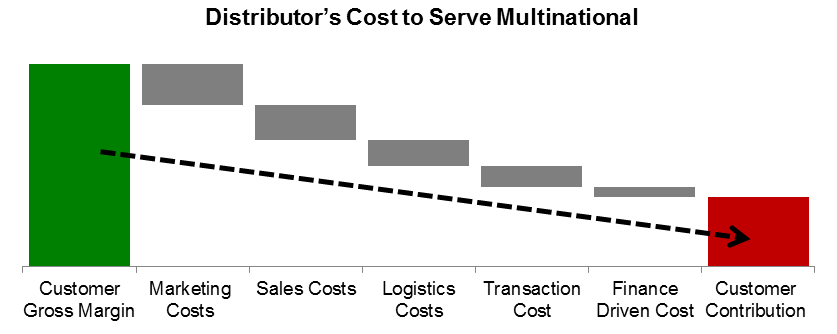
Distributor's Cost to Serve MultinationalWhy is this the case: The distributor has to incur several variable costs in order to sell your product; thus your actual contribution value to their business can differ. The illustration on the right explains some of these costs that to serve your business


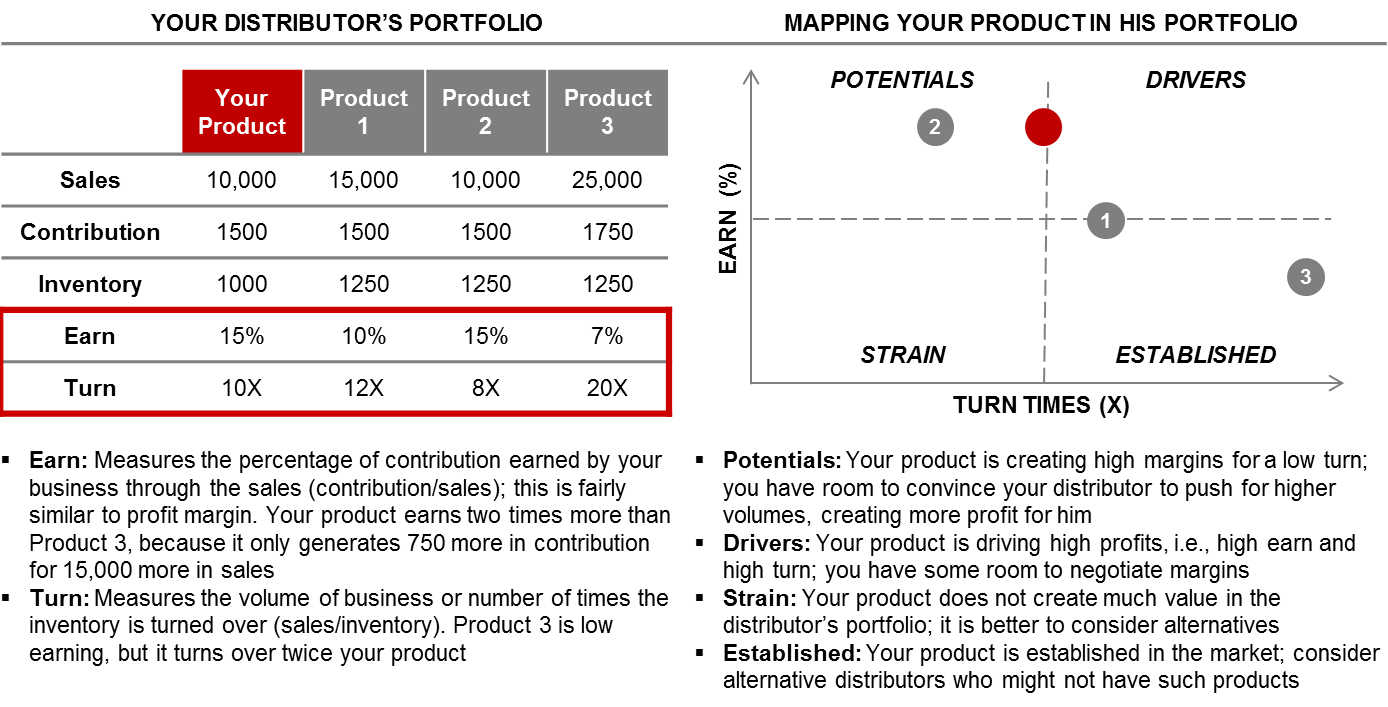
Choosing the Right Partner by Learning the Distributor’s “Earns” and “Turns”

Right Partner: Detailed knowledge of how your business contributes to the bottom line of the distributor can help you chose the most suitable partner—one whose current product portfolio complements the attributes of your product

Right Fit: Distributors who can attain higher “earn” and “turn” are likely to be much more aggressive about pushing your product


Distributor Portfolio

Optimistic About Mexico’s Second Half Performance

While FSG clients continue to view the Mexican economy as a source of opportunity, revenue growth came in under expectations in the first quarter, and targets for 2013 reflect lower expectations than in previous years. That said, executives remain relatively optimistic about the potential for stronger growth in the second half of the year, contingent upon accelerated government spending and investment in infrastructure, progress on the structural reform front, and continued economic recovery in the US.

From a macroeconomic perspective, manufacturing exports, the troubled construction sector, and stalled government procurement proved to be significant drags on growth in recent months. Additionally, Mexican consumer and producer confidence declined during H1, and the pace of consumption and credit growth have moderated, reflecting the impact of sluggish external demand, falling remittances, currency depreciation, and inflationary pressures on domestic sentiment and purchasing power.

Broadly speaking, Mexico’s near-term prospects remain highly contingent upon US economic performance, although Peña Nieto’s commitment to accelerating investment in infrastructure and pushing through fiscal and energy reform also has the potential to drive growth and foreign direct investment in the months ahead.

It is against this economic backdrop that FSG believes multinationals should be tracking the following three trends during the third quarter of this year as an indication of how the business environment is likely to evolve over the medium term:

  • Ramping up of government spending under the new administration
    • Recent developments: During the first quarter of 2013, government expenditure fell short of budgeted amounts by 4.9% in Q1. This slowdown, while common in Mexico during periods of political transition was a key driver of Mexico’s underperformance during the first half of the year.
    • Forecast: Our expectation is that government spending will accelerate in the second half of the year. Companies in the construction sector stand poised to benefit as infrastructure projects are prioritized.
  • Near-term exchange rate volatility
    • Recent developments: In recent weeks, the peso has depreciated sharply against the US dollar amid speculations that the Fed will begin to wind down bond purchases as the US economy continues to improve.
    • Forecast: Over the long term, recovery in the US bodes well for Mexico. As such, near-term capital outflows should be interpreted as a reaction to the shift in US monetary policy rather than perceived weakening of Mexican fundamentals.
  • Healthcare reform efforts will emphasize preventive care
    • Recent developments: In addition to pushing for reduced costs and expanded access to healthcare services, Peña Nieto has indicated that preventive care will be prioritized when healthcare reforms are rolled out.
    • Forecast: Companies in the pharmaceutical, medical device, and consumer goods spaces should consider low-cost, high impact ways to proactively align their marketing, government relations, and product development strategies with government efforts to reshape consumer behavior and promote a healthy lifestyle.

FSG clients may click here to access a full report for further reading on FSG’s quarterly market view of Mexico.

Tomorrow’s Latin America Won’t be Won with Yesterday’s Playbook

Frontier Strategy Group is witnessing a dizzying array of changes to the business landscape in Latin America. Some are highly visible shifts in the external political and economic conditions in key markets such as Brazil, Mexico, and Venezuela, to name a few, while others involve subtle evolutions in internal corporate mandates for Latin American business units of multinational corporations. For this reason, FSG recently released a new Regional Overview of the factors influencing the results of our clients as well as emerging trends likely to impact performance and shape strategy for the coming years. The research is drawn from extensive interviews with senior executives at leading multinationals, independent experts, and analysis of surveys of FSG’s client base. Below are featured trends from the report, accessible to FSG clients:

Economic Performance is Strong, but Risk - and Skepticism - is Growing
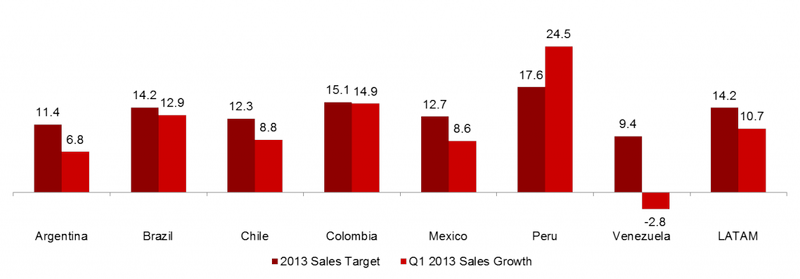
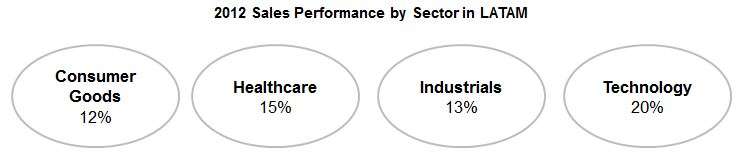
Compared to global averages, and even in comparison to other emerging market regions, Latin American growth remains, in the aggregate, relatively robust. Yet many industries in Latin America in 2012 either just met or underperformed expectations, and now with a persistent slowdown and protests in Brazil and crisis always on the horizon in Venezuela and Argentina, skeptics are growing louder, forcing executives to justify further investments in the region. Furthermore, FSG’s data indicates that slow growth in Argentina, a weak Q1 in Mexico, and the devaluation in Venezuela threaten goal attainment of sales targets in 2013 as well.

2013 Performance Targets in Key LATAM Markets

2012 Sales Performance by Sector in LATAM

Latin America Splitting into Two Distinct Groups: Pacific and Atlantic
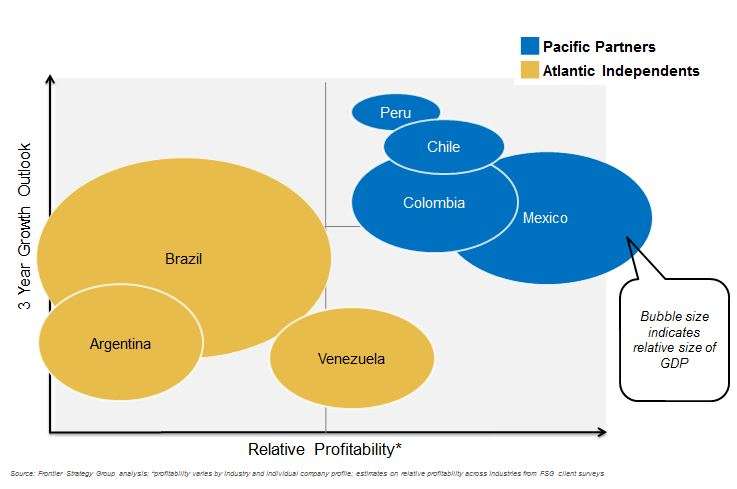
The dynamic Pacific economies are integrating rapidly, as evidenced by the creation of the Pacific Alliance trade group, creating new trade dynamics and opportunities for increasing scale and reorienting supply chains. In contrast, the Atlantic economies are increasingly insular and crisis prone, a trend typified by the increasingly dysfunctional Mercosur customs union. These distinctions are growing and becoming more tangible as companies position to mitigate risk from reliance on Mercosur and maneuver to gain from new opportunities presented by the Pacific Alliance.

The “Grow-fast, Worry about Profitability Later” Days are Coming to an End
Many executives perceive a strong shift in corporate mandates for Latin American business units towards bottom line results, rather than purely on top line growth. This shift is changing the way executives prioritize markets, evaluate organizational structures, measure and orient workforces, and make the case for resources.

New Blueprints for Success
As both internal corporate and external dynamics have changed, senior executives are drawing up new blue-prints for success by examining existing assumptions around optimal organizational footprints and structures and by prioritizing markets and communicate opportunity based new criteria such as relative profitability and operating margins.

3 Year Growth Outlook v Relative Profitability

Conclusion
FSG’s LATAM Regional Overview expands on these trends and shares analysis of client survey responses on how they are responding to these shifts. FSG believes that despite increasing volatility and growing macroeconomic and political risks, Latin America continues to offer excellent opportunities and high returns relative to other regions. That said, today’s business environment already is significantly different from that of just a year or two ago, and regionally-focused executives are wise to recognize that their strategies must evolve in tandem.