 Multinationals have for years considered Colombia one of the safest long-term bets in Latin America, but over the last several months a more negative picture of the country has emerged. Colombia, much like other emerging market countries, has faced weakening external demand and currency volatility in recent quarters. The country has also faced prolonged protests from farmers and laborers against recent currency volatility and lower trade barriers impacting them. Despite all this, Colombia’s economic performance has remained remarkably robust.
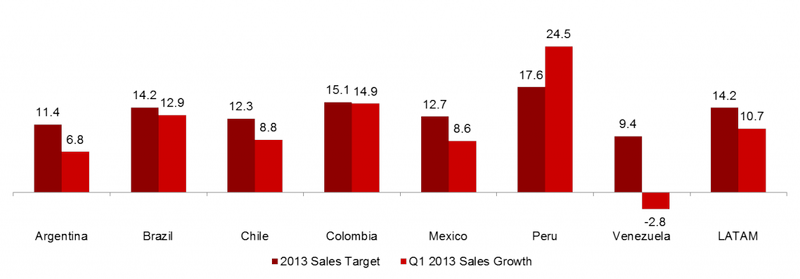
FSG expects that Colombia will see 3.8% YOY growth in 2013, with the economy accelerating to 4.6% YOY in 2014, driven by stronger consumer spending and increased government spending, particularly in the first half of the year. Companies have experienced strong revenue growth in the first half of 2013, though local operations mention that increasing energy costs and operational disruptions due to recent protests are hurting both profit margins and productivity. While expectations for the economy and the country’s long-term potential remain strong among multinationals, companies continue interpreting news coming out of Colombia with a heightened sense of uncertainty.
It is against this economic backdrop that FSG believes multinationals should be tracking the following three trends during the last quarter of 2013 as an indication of how the business environment is likely to evolve over the medium term:
- Increased demand for public services is leading to calls for tax hikes
- Recent developments: The Santos government is responding to recent protests and recurrent troubles in the healthcare sector by promising increased spending, leading multinationals to expect higher taxes in the near future.
- Social protests are disrupting operations and hurting confidence
- Recent developments: Continued protests from unions and social groups across the country in recent months have created significant disruptions for the operations of multinationals in Colombia, leading to a dampening of short-term growth prospects and lower consumer sentiment.
- The construction sector continues to be a strong driver of growth
- Recent developments: The Colombian economy’s strong performance amid weakening external demand has been largely driven by resilient construction spending, particularly commercial and residential construction
Colombia’s strong fundamentals still point to resilient economic performance in 2014. While the external environment has remained difficult for exporters, Colombia continues to be among the strongest performers in the region. The potential for progress on peace talks with the FARC and the ELN, as well as higher government spending ahead of elections, should drive improved economic growth in 2014.