PODCAST: Anticipating Channel Transitions in Emerging Markets

FSG Podcasts

Exiting a distribution relationship is often a very painful process, resulting in lengthy disputes, lawsuits and reputation damage. Diminish your exposure to this pain by anticipating a channel transition well ahead of time, allowing you to signal to distributors that change is coming. Identify your position on a 4 stage channel maturity path and consider reviewing your channel strategy annually. Learn how leading multinationals are anticipating channel transitions in this podcast from Dan Kornfield, FSG’s Director of Strategic Research.
2 Issues to Tackle When Operating a Business in India

1. Fragmentation:

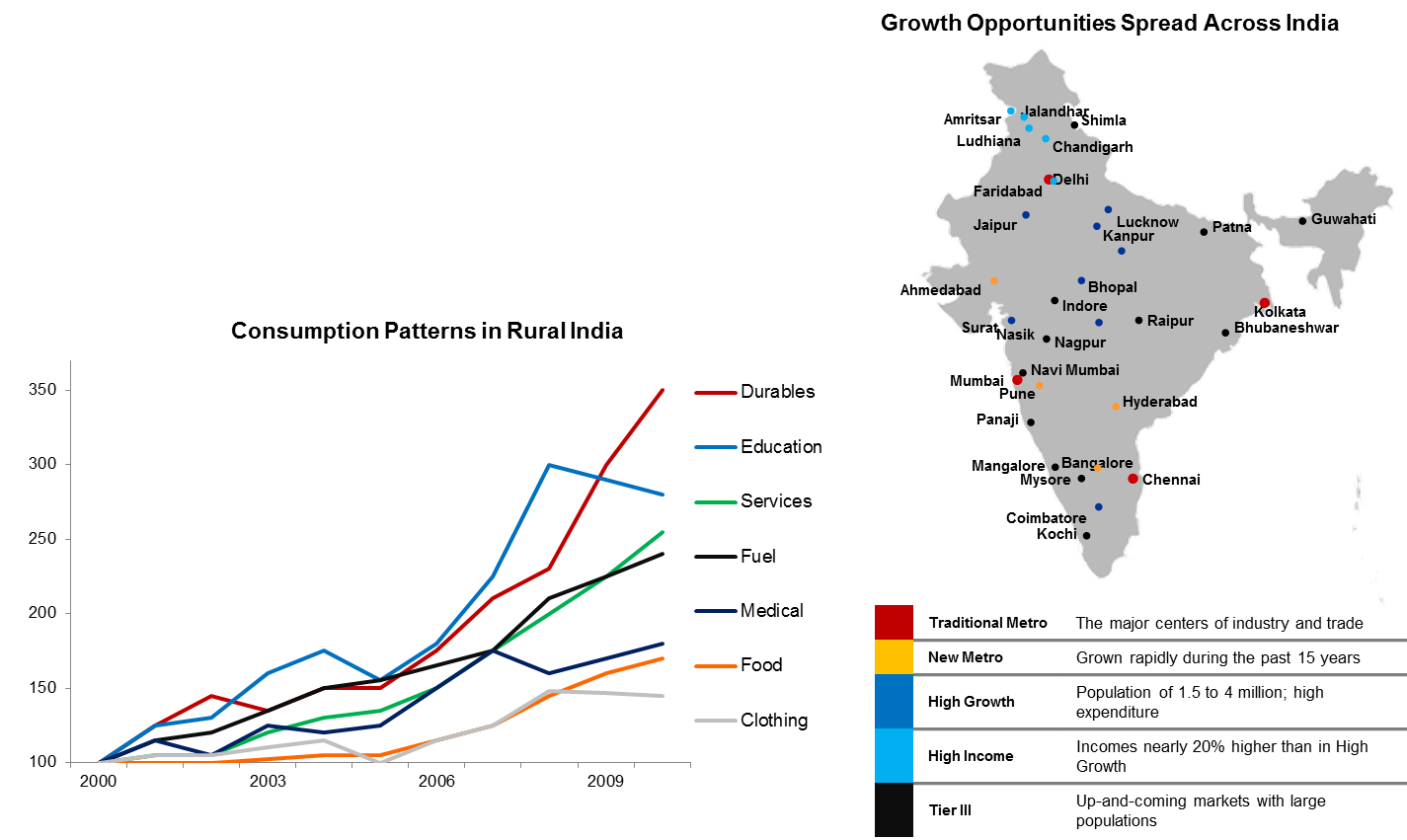
Multinationals have to move out of the traditional Tier-1 cities in order to adapt to India’s unique urbanization trend:

The rise of manufacturing in rural India has led to robust job and wealth growth, which means a lot of the rural population, is not interested in moving to large-cities but instead, we can expect small villages to turn in to small towns, then big towns and eventually into large cities. This means that as a multinational- you will have to go to your end customers, and not the other way around- waiting for them to come to the traditional metro cities

Towns simply grow into densely populated cities, as opposed to a conventional migration of people from towns to cities

Expenditure on durable goods, education, consumer services (entertainment, transport, etc.), and fuel have grown faster than the average over the last 10 years

India distribution

2. Infrastructure Issues:

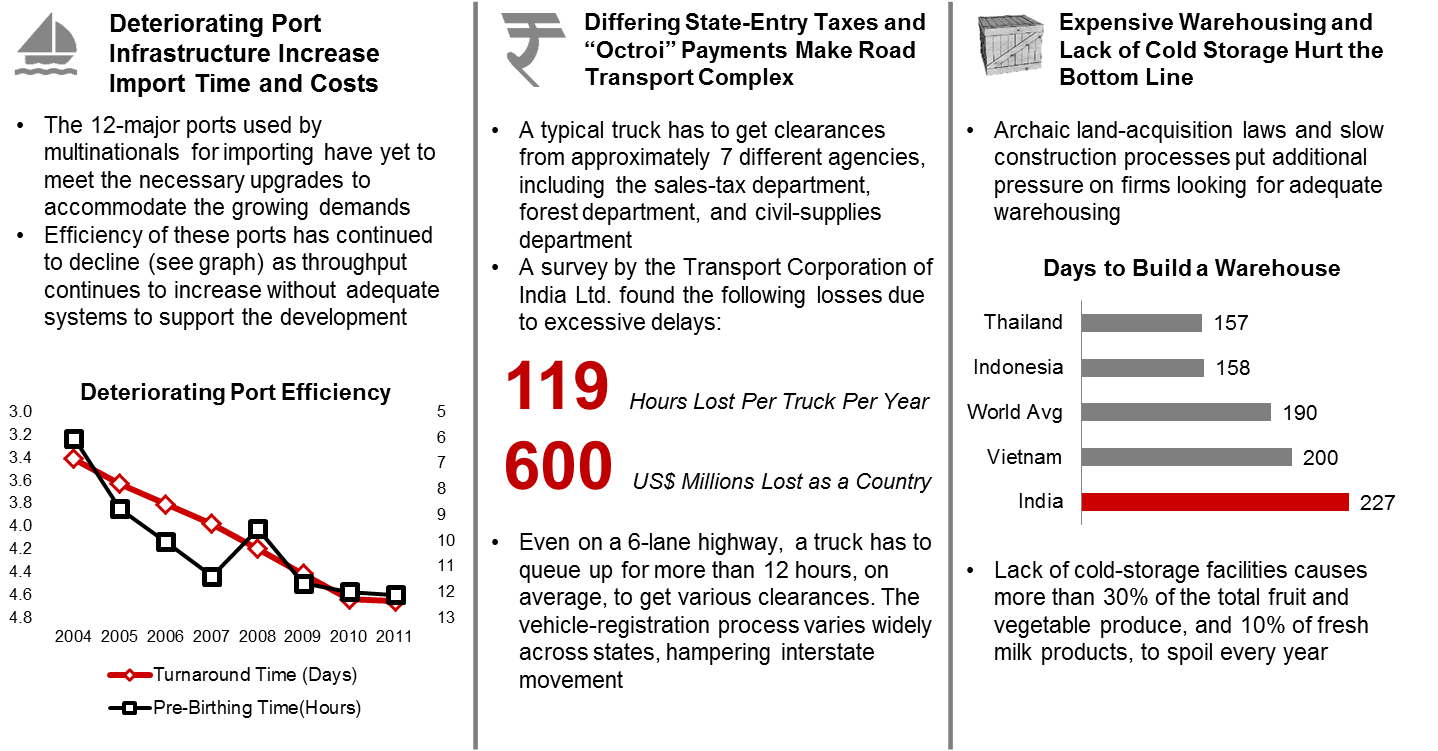
India’s consistent underinvestment in infrastructure, lack of regulatory reforms, and generally unstructured style of conducting business adds an additional layer of complexity for multinationals operating in the country:

Stay tuned for the next blog-post on distributor sophistication in India and FSG’s assessment criteria to identity gaps in your channel strategy


As Multinationals Plan for Growth in Brazil, Profitability is Key

FSG recently surveyed our clients and expert advisors regarding their expectations for their businesses in Brazil over the next 5-10 years, and the results reflect two important trends: cost-consciousness and path-dependency. For many years now, companies have invested in Brazil and been content with robust top-line growth. However, in the wake of the financial crisis, as the US and Eurozone markets have struggled and China is currently experiencing a slowdown, many multinationals are running out of patience. Increasingly, top-line growth in Brazil is not sufficient, and our clients are concerned with cutting costs and improving operational efficiency so as to improve their bottom-line performance.

As they do so, they remain cognizant of the potential for government action to address specific constraints—while many of our clients are skeptical about the true impact reforms will have, our view is that government actions will help mitigate the impact of some constraints, most notably infrastructure and access to financing, while failing to address others, due in large part to domestic politics. This variation is impacting our clients’ strategic plans in quite interesting ways.

For example, while companies continue to equate geographic expansion in the Northeast and Center-West with growth potential, they are primarily planning for product-led growth over the near term, due to the logistical costs associated with expanding to lesser-penetrated regions where infrastructure is poor or non-existent. It should be noted that a zero-sum approach is neither evident nor expected. FSG clients are not discounting geographic expansion, but many executives are being forced by cost concerns to make trade-offs, and this often results in short-term concerns dictating strategic priorities.

Over the medium-to-long term, we do expect that push and pull factors, including market saturation and the need to serve existing accounts will continue to drive expansion, and we also expect infrastructure reforms to decrease the marginal costs associated with geographic expansion, making this approach much more feasible from a cost-benefit perspective. Of critical importance are external urgency drivers, including the 2014 World Cup and 2016 Olympic Games, which help raise the stakes and motivate the government to engage the private sector in infrastructure projects.

As executives plan for growth in Brazil, their decisions are increasingly motivated by the need to ensure the growth they deliver is profitable. Trends worth tracking in light of this paradigm shift are those that promise to tilt the balance down the road in favor of outcomes that may not be feasible from a cost-benefit perspective at present.

Multinationals in Venezuela Should Prepare for a Slowdown in 2013

Post by, Antonio Martinez & Christine Herlihy

On October 7th, Venezuelan president Hugo Chávez was re-elected with 54% of the vote. While opposition candidate Henrique Capriles did manage to unite Venezuela’s historically fragmented opposition and garner a significant percentage of the vote, Chávez’s populist policies and mass-mobilization tactics ultimately allowed him to win a sizable victory. What this means in real terms is that Chávez and his macroeconomic tools of choice—namely, price controls, capital controls, expropriation, and populist social programs— will be around for another six years, barring health-related complications. As if bellicose rhetoric and a tendency to expropriate at will while belittling executives and political leaders alike on national television weren’t enough to look forward to, consider this: in addition to calling the election for Chávez, Frontier Strategy Group also expects significant currency devaluation sometime in early 2013 as well as a slowdown in government spending, with overwhelmingly negative implications for consumer spending.

This degree of pessimism may surprise many executives—after all, among FSG’s client base, especially among consumer goods companies, 2012 has been an extremely strong year in terms of revenue growth. However, the combination of government policies which have helped facilitate this success by bolstering consumer purchasing power through relatively low inflation, loose credit conditions, and robust government spending, are unsustainable over the medium-term. It is important to emphasize the extent to which the ‘health’ of the Venezuelan economy in 2012 has been driven by political, rather than macroeconomic fundamentals: not only is the current lending rate negative relative to inflation, but high levels of government spending are unsustainable given Venezuela’s growing debt burden and inability to capitalize on higher oil prices due to pre-existing oil-for-loans agreements with the Chinese.

Venezuela’s monetary policy has depleted foreign exchange reserves, and given that a large portion of the country’s outstanding loans come due in early 2013, FSG expects a devaluation of at least 32%, which will most likely take place after regional elections and the Christmas holidays, sometime between January and March 2013. Furthermore, as the spread between Venezuela’s official ‘non-essential’ exchange rate and the black market exchange rate continues to grow, there’s an increasing chance that the devaluation may be as high as 55-60%.

This devaluation will have a tremendously negative impact on consumer purchasing power, and CPG companies will be especially hard hit. Healthcare companies and luxury goods manufacturers are likely to continue bearing the brunt of price controls, and the risk of expropriation looms as large as ever. Of particular note—time is of the essence: multinationals have long struggled to access dollars and repatriate their profits in Venezuela, and these challenges will only increase in the wake of both an expected devaluation, and a government dealing with severe debt obligations. Multinationals need to plan ahead for a rocky 2013 in Venezuela.

Gerardo’s Cautionary Tale: Pharmaceutical Companies and Distributors in Brazil

Brazil Flag

Last week I interviewed Gerardo Mendoza, one of Frontier Strategy Group’s Expert Advisors. Gerardo is originally from Mexico, and also spent some time working in Argentina, before landing in Brazil where he has been an entrepreneur and business advisor for the last fourteen years. He has become a specialist on corporate tax concerns and the healthcare industry, but this post will be about neither of those themes, per se. Instead, I want to discuss a trap that Gerardo has seen pharmaceutical companies fall into in Brazil. This trap is a cautionary tale, because it could easily become a problem for companies in other countries and other industries.

Before I go further, since this is my first post on the FSG blog, let me also introduce myself. My name is Dan Kornfield, and I spend my time interacting with clients and working with them to uncover useful perspectives on and solutions to common management challenges they face in emerging markets. I tackle these challenges primarily from a thematic rather than geographic angle. Specifically, I serve as FSG’s Director of Strategic Research.

One of the areas where I believe FSG is doing truly groundbreaking work is on “channel management,” which is business jargon for managing sales channels, or the variety of ways a company gets its products to end customers. For many global businesses operating in emerging markets, the most common sales channel is to operate through distributors. In fact, a great deal of business in emerging markets would come to a screeching halt if distributors stopped offering their services.

Distributors are intermediary third party companies that serve as a sales organization (and usually logistics provider as well) for their clients, the producers. Unlike wholesalers, transactional links in the value chain that simply purchase based on bulk discount and then resell, distributors become active agents for their business partners. Some distributors work for one company, but most work for several at once. Some companies have one distributor authorized to operate in a country or region, and others have many.

Distributors represent the producer client’s brand, and take its products to end customers more efficiently and/or more effectively than the client believes they could accomplish by themselves. Sometimes, distributors are also hired by a company to avoid hassle, or, whether they know it or not, to take on risks that the producer would rather not assume. For example, a company recently told me they employ a distributor to sell to the Mexican government, because they do not want to have to deal with all the paperwork.

Regardless of industry (e.g. consumer goods, healthcare, heavy industrial, or technology and telecom), about 94% of our clients rely at least partially on distributors, and just over 50% of our clients’ sales volume is brought in through these “indirect” (distribution) channels.

Okay, enough background. Now back to Gerardo and his cautionary tale.

He explained that many pharmaceutical companies in Brazil have relied too heavily on distributors. The distributors have grown up to become indispensable partners. And as the market has grown, distributors have undergone a flurry of M&A activity amongst themselves. Now some pharmaceutical companies have to reach their end customers through distributors that have larger annual revenues than their clients, and they gain that revenue from a more diversified set of partnerships. This has led, and is continuing to lead, to a significant imbalance of power in the producer-distributor relationship.

At the end of the day, this means that it is hard for pharmaceutical manufacturers to be able to offer enough sales volume to really matter to some of the major distributors. Now the only way they can gain preferential time and attention from their own third party agents is to pay them more – at the risk of beginning a margin-conceding arms race with other companies that employ the same distributor. The alternative is to exit the distributor relationship and, if there are no good alternatives, to shift to operating their own direct sales force. Now that the market is both complex and well developed, the easiest way to “go direct” would be to acquire some existing distributors. Unfortunately, many of the good targets have already been gobbled up.

Gerardo believes pharmaceutical companies in Brazil waited far too long to make their move. If they had diversified earlier into more of a hybrid model, employing distributors while simultaneously developing their own formidable sales force, they would be better off and less drastically dependent. They also should have had their eyes on acquisition targets earlier, before the distribution market became more consolidated on someone else’s terms.

If you are operating in a fast-growing emerging market country, this story could happen to you. In your team meeting this month, ask your team members whether they are concerned about overdependence and the potential for consolidation in the distribution space. You’ve heard the warning that your value chain is only as strong as its weakest link. But what happens when one of the links in your value chain becomes stronger than you are? That, too, is a problem.