
Preparing Your Business for Subsidy Rollbacks in Morocco

More than two years of economic and political turmoil in North Africa has reoriented foreign investors toward the most stable market in the sub-region: Morocco. The country’s relative stability is mostly driven by two factors: steep increases in food and fuel subsidy spending and modest political reforms following street protests in February 2011. These two factors have allowed Morocco to avoid the same fate as its North African neighbors and emerge as a top investment destination.

Running out of money

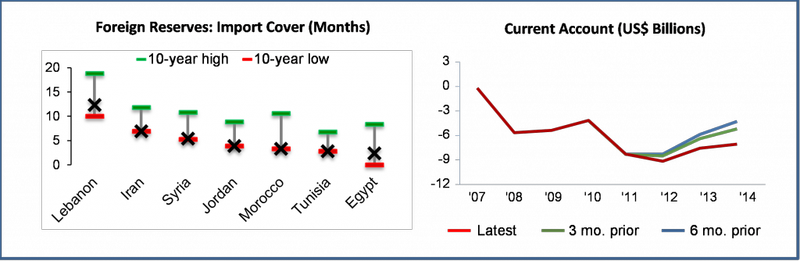
Government spending on subsidies has promoted stability, but it has also contributed to Morocco’s precarious fiscal position. FX reserves are barely enough to cover four months of imports, which is a 10-year low, and the budget and current account deficits are straining the economy. This is forcing the government to consider cutting the same food and fuel subsidies that promoted stability. Such a move could come this year and impact all industries operating in the country, raising input and supply chain costs and reducing customer purchasing power. The government estimates that reducing or eliminating subsidies would lead to annual inflation rates jumping to 7% from 2% during the next few years.
 

Planning for subsidy rollbacks this year

Companies should prepare a flexible response to Moroccan subsidy rollbacks to mitigate risk and identify opportunities. The impact of subsidy rollbacks will depend on which areas of the economy are targeted and speed of implementation. Below are three subsidy rollback scenarios and recommended actions for foreign companies:

1. Full subsidy rollback (high impact/ least likely)

This scenario includes rolling back fuel subsidies, which comprise more than half of total subsidy spending. A change to heavily subsidized fuel would reverberate across Morocco’s economy and lead to a higher cost of distribution and inputs. Companies should plan to adjust tactics for core functions like finance, marketing, and sales in the context of a period of significant belt-tightening in 2013. All industries should look into forward contracts for local inputs given the likelihood of a spike in inflation. Technology companies should position their products as cost-saving solutions and emphasize their after-sales services.

2. Partial subsidy rollback (medium impact/ most likely)

This scenario includes electricity and sugar with an initial reduction of up to one-third of total subsidy spending. The plan would undermine private consumption, especially for the middle class which is not eligible for cash payments that could go to as many as 2 million poor Moroccan families. Companies should consider supporting top partners and offering special prices to important customers, because higher electricity costs would hurt local businesses. Consumer goods companies should switch to smaller packaging and emphasize value items in their product portfolio.

3. Limited subsidy rollback (low impact / somewhat likely)

This scenario primarily focuses on sugar, which is an obvious target for the government. Artificially low prices created by subsidies led Moroccans to become among the highest per capita sugar consumers in the world. Not all companies will need to respond to limited subsidy rollbacks. FMCG and other consumer goods companies should consider offering short-term financing to top partners and engaging the overnment as a preemptive step to turn the potential crisis into an opportunity.

Do not run, Do not hide

Instead of investing time and energy in lobbying the government to spare your industry, leading companies should consider preempting the reform initiative. Assess the feasibility of waving your eligibility for subsidies, agree to replace government payments for top suppliers for a two- or three-year period, or adjust pricing downward as part of a corporate social responsibility effort. This effort could be a high-profile move and highlighted as an effort to support the Moroccan people during tough economic times.

Maintaining a foothold in Morocco is critical for foreign companies operating in North Africa, which has the greatest long-term investment potential in MENA. The region is not for the faint of heart, but companies are often rewarded for sticking out short-term instability for long-term opportunity. Other companies may leave in response to protests or uncertainty, opening up opportunities for gaining market share.


Taking the Pulse of China Strategy

I’m writing en route to Washington DC from Shanghai, where I moderated a fascinating breakfast roundtable of FSG clients, all MNC general managers or heads of strategy for Asia-Pacific and China. We brought together diverse perspectives, representing companies with a mix of consumer, industrial, and government customers, some with products aimed at the mass market and some in a premium position. Everyone had something to teach and something to learn from others.

Here’s what I heard from top executives trying to make the most of today’s China opportunity for their parent multinationals:

  • We’ve all seen the headlines projecting the demise of labor arbitrage in China, starting with top managers and technical workers. The executives at our event deal with spiraling wages every time there’s a job opening, but they are much more focused on improving productivity than on containing costs. For example, revenue per sales rep tends to be low given frequent travel to maintain customer relationships, which flags China as red on the corporate dashboard. But overall cost of sales as a percentage of revenue tells a more favorable story. Sometimes the metrics that HQ expects to see are a poor guide for managing operations inside China.
  • Companies with relatively mature penetration of China’s markets are seeing pressure from corporate to deliver profits as revenue growth slows. It’s a different type of challenge that that of relatively new entrants who, if their product brings something unique to the Chinese consumer, can still pursue high double-digit growth targets without tight margin constraints. The more mature players are finding some leverage in revisiting their distribution strategy, consolidating channel partners or going direct in tier-two and tier-three cities.
  • China gets no shortage of attention and investment from headquarters in the US or Europe. It is, after all, the biggest long-term opportunity regardless of ballyhooed concerns about its aging workforce. That said, local leaders still struggle with HQ’s tendency to look at China as a monolith. Again and again, people noted that many Chinese provinces are larger than entire nations in Southeast Asia. Despite that recognition, not one of the companies represented directly compares Chinese provinces to similarly sized Asian countries when making investment decisions. Country boundaries still drive corporate strategy.
  • Organizational design and leadership talent remain considerable hurdles to executing growth plans. One China GM flatly stated that there is no way for him to understand what’s happening on the ground across the vast country, so he has decentralized authority to five regional CEOs - each of which, he added, run larger operations than many of his country peers around the world. But how to fill such roles with ready leaders? The scarcity of seasoned local talent (especially with MNC experience) was cited, as usual, as no less a limit to growth as any inflection in the economy.
  • Time and again, I heard similarities between our Shanghai discussion and my recent meetings in São Paulo. Geographic complexity, an outsized role in the regional portfolio, talent challenges — the parallels are striking. Any company that isn’t “buddying up” its China GM with its Brazil GM is missing an opportunity to cross-pollinate internal best practices and innovations between two big-bet markets.


PODCAST: Kenya Prepares for Upcoming Elections

Aly-Khan Satchu, FSG Expert Advisor and Anna Rosenberg, Senior Analyst for Sub-Saharan Africa discuss the implications of Kenya’s imminent election and how businesses operating in the region can best prepare.

Key questions answered include:

  1. Atmosphere in Kenya preceding general elections –how high is the risk of post-electoral violence?
  2. What impact will the election have on companies currently operating in the region and what can companies do to prepare?

To listen to or download the podcast, click on this link to access the iTunes store.

___________________________________________________________________________________________

Aly KhanAly-Khan Satchu is the CEO of the East African Financial Portal http://www.rich.co.ke. He is a banker by training and worked several years in the City of London. He worked for Credit Suisse First Boston, was a Managing Director at Sumitomo Bank, as well as at ANZ Investment Bank and Dresdner Bank. Aly Khan is originally from Kenya and returned to his home country six years ago, and today is an advisor to a number of African Governments and Investors. For the last three years, Aly-Khan has been an active Investor at the Nairobi Stock Exchange, the USE and various other African Stock markets.

 

FSG Survey Reveals Latin America as High-Profit Region

Frontier Strategy Group’s survey of senior business executives was recently featured in a nationally syndicated article by Amy Guthrie of Dow Jones Newswire. The article, which was picked up by major news companies like Fox Business, highlighted Latin America’s high-profit performance relative to other emerging market regions.

FSG’s proprietary benchmarking data obtained from a survey of executives at multinational companies operating in Latin America’s emerging markets was highlighted in the piece as a solid indication that Latin America is well-poised for further growth. Ryan Brier, Practice Leader for Latin America at FSG, was interviewed for the news piece and delivered further insight to the high-performing Latin America region:

“Optimism is skewed toward the region’s second-biggest economy, Mexico, aided by the country’s overhaul agenda and improved manufacturing competitiveness, as well as toward Colombia, whereas the outlook for Brazil is less certain given a slowing economy, burdensome regulation and a generally high cost of business in the region’s biggest economy. Yet executives still see Brazil’s long-term potential as promising, given the country’s large youthful population and natural-resource potential.”


Emerging Market View: What Our Analysts Are Reading – 2/22/2013

Setbacks in the hopeful open sky policy for ASEAN, as well as more nervy news for Egypt’s declining fiscal health round off this week’s headlines highlighted by our research analysts:

The Wall Street Journal wrote an article on ASEAN’s open sky policy setbacks due to Indonesia:

“A good example showcasing the good intentions of the community and their positive impact on commerce in the region, but the unfortunate slow progress due to its consensus based approach of ratifying policies.”
- Shishir Sinha, Research Analyst for Asia Pacific

Arham Online, an Egyptian news website, reported currency reserves declining as Egypt’s state grain buyer steps aside:

“Egypt’s announcement that it is running out of wheat reserves is very troubling. Currency has weakened 15% since 2011 and FX reserves are down to US$13.6 billion. So it is becoming more expensive to import wheat and Egypt is running out of money to pay for it. Any significant spike in global commodity prices, a drought in Russia or Ukraine, etc. could lead to a larger economic crisis.”
- Matthew Spivack, Practice Leader for the Middle East and Africa

The Financial Times’ Beyondbrics blog, centered on emerging market news and also frequently read by FSG, posted a potential pulse in the Brazilian economy; the optimistic sentiment is not universally shared with regional executives:

“Though the Central Bank of Brazil is now stating that economic growth came in stronger than expected in 2012, this contrasts substantially from the sentiments our senior executives operating out of Brazil have expressed to FSG over the last few months. Most senior executives continue to see Brazil suffering from a sharp slowdown through the beginning of this year.”
- Antonio Martinez, Senior Research Analyst for Latin America

*Compiled by Hal Olson

PODCAST: Regional Expansion in Russia - FSG Expert Interview

In this podcast interview, FSG expert advisor Chris Gilbert discusses practical steps for building a successful regional expansion strategy in Russia with Martina Bozadzhieva, FSG’s Senior Analyst for Central and Eastern Europe.

Key points discussed include:

1. Developing a process to select regional markets in Russia; gathering the necessary information to properly evaluate secondary markets in Russia beyond Moscow and Saint Petersburg.

2. Identifying key resources in the regions to assist Russian expansion and how to navigate government and non-government agencies while mitigating exposure to government corruption.

3. Managing the internal conversation and overcoming the reluctance from corporate to expand in Russia, a high-risk market.

To listen to or download the podcast, click on this link to access the iTunes store.

____________________________________________________________________________________________

Chris Gilbert

Chris Gilbert has extensive commercial and managerial experience in Russia with a proven track record of increasing sales and developing new income streams in Russia. Chris currently serves as the Regional Development Director at IAL Group Limited where he is responsible for developing the international and local client base within key regions of Russia. Prior to his work at IAL Group Chris was the Russia Director at Russo-British Chamber of Commerce serving as the bridge between Russian and British businesses to foster successful and profitable UK-Russia relations.

Chris is fluent in written and spoken Russian and is available to FSG clients for Russian business strategy consultation on request. Please feel free to email us at sales@frontierstrategyroup.com or contact your account manager if interested in scheduling time with Chris.


Brazil’s Tech Execs are in for the Long Haul

I spent last week in São Paulo meeting with GMs of Brazil and Latin America based there. Among the highlights was a working breakfast with eight country and region heads of US technology and telecom companies. My colleague Antonio Martinez shared the LATAM research team’s latest outlook for Brazil and the region, and we had a robust discussion about the Brazilian business environment and its proper place in the Latin America portfolio. Here are a few of my top takeaways:

  • Tech has outperformed other industries recently in Brazil, but individual corporate performance divides largely by maturity in the market. Established firms are more impacted by the overall economy’s slowdown, but Brazil’s massive size still allows for rapid growth for tech companies that bring something innovative to the market.
  • Brazil’s fragmented tax regime is the biggest headache for country managers. The complexity of state and local tax codes (companies must comply with >200 taxes!) adds to the cost of doing business and impedes companies’ ability to expand into fast-growing cities beyond the highly developed southeast, especially in northern states where millions of people are taking on middle-class spending habits and governments continue to invest heavily in infrastructure. From the LATAM perspective, Mexico’s simple, if higher, tax rate looks better and better.
  • Country managers are in an uncomfortable dialogue with corporate headquarters. Top execs in the US are used to the BRICs story and are having a hard time wrapping their heads around the constant flow of downward revisions in the government’s growth forecasts. Everyone around the table believes in Brazil’s medium term growth prospects (on a 4-5 year horizon), but managing expectations for 2013 is tough. Particularly challenging is helping HQ understand currency volatility and inflation.
  • Horror stories about Brazil’s political culture were abundant. “Labor litigation is becoming a monster.” “The political mentality is: for the friends, everything, and for everyone else, the law.” But frustrations aside, the group was unanimous in its belief in Brazil’s long-term opportunity and commitment to invest. The lessons learned and innovative practices shared around the table – some of which our clients may well see in case studies later this year – were the true highlight of the session.

Next week I look forward to sharing insights from a similar executive breakfast I’ll be attending in Shanghai, discussing the long-term outlook for China.


Emerging Market View: What Our Analysts Are Reading – 2/15/2013

Recent economic headlines reflected what FSG’s research reports have indicated around the world. Ranging from the economic implications of the Syrian civil war to Argentina’s controversial elections and Estee Lauder’s successful EM portfolio, here are a few articles that our analysts read this week pertaining to emerging markets:

Estee Lauder reported big success in emerging markets via MSN Money online Emerging markets drive Estee Lauder’s profit growth:

“Not surprising that the Asia Pacific region was the largest contributor to Estee Lauder’s sales growth. From a global perspective, we are noticing an uptick in consumer goods companies that are prioritizing the strong consumer environments available throughout the region.”
-Sam Osborn, Senior Analyst

The Financial Times’ Beyondbrics blog, centered on emerging market news, posted an interesting entry about Vote buying in Latin America:

“The numbers validate FSG’s view that Hugo Chavez essentially bought his reelection in 2012 with huge increases in public spending, for which the country is now suffering a hangover. This article highlights other countries with a strong propensity to inflate the economy prior to elections, of relevance in 2013 to the growth outlook in Ecuador and Argentina in particular.”
-Clinton Carter, Head of Latin America Research

The Washington Post reported Syrian business exodus gains pace:

“Syrian businessmen are shifting their investments, operations, and focus abroad amid increasing chaos of the civil war. FSG mentioned how this impacts Jordan and Lebanon in the recently released MENA regional overview. This article also cites examples involving Egypt and the UAE.”
- Matthew Spivack, Practice Leader for the Middle East and North Africa

*Post compiled by Hal Olson

Emerging Market View: What Our Analysts Are Reading – 2/8/2013

Helping you stay informed on the world happenings in emerging markets, here is a quick glimpse of what FSG’s top research talent has been reading from this week’s headlines:

New social media opportunities look promising with The Wall Street Journal identifying Brazil as the social media capital of the universe (full article here):

“Brazilians are among the world’s top users of social media like Facebook, YouTube and Twitter, but digital’s share of marketing spend is just half the global average. This presents an opportunity for MNCs to accelerate brand awareness by adapting world-class social media strategies to the highly receptive Brazilian market.”
- Joel Whitaker, Senior Vice President and Head of Global Research

Elsewhere in the world, Hürriyet Daily News, a Turkish newspaper, reported new transportation routes between Turkey and Russia (full article here):

“Turkey’s aggressive export market diversification is increasing the country’s linkages with markets in Central Asia and Russia, making Turkey an increasingly attractive regional hub.”
- Martina Bozadzhieva, Associate Practice Leader for Central and Eastern Europe

From Reuters, an article on Argentina’s poor data reporting:

“The official censure of Argentina by the IMF is quite rare and could even lead to expulsion by the fund. The measure illustrates how blatantly Argentina has been doctoring official statistics, particularly inflation figures. In this article, FSG advisor Dr. Riordan Roett reiterates the severity of the situation and the Argentine government’s apparent lack of concern.”
-Clinton Carter, Head of Latin-America Research

Read the article here: IMF reprimands Argentina for inaccurate economic data. Additionally, be sure to listen to a recent FSG Podcast with Dr. Riordan Roett for 2013’s Brazil outlook for more LATAM coverage – FREE in iTunes: FSG Teleconference: 2013 Outlook for Brazil (Track 11).

*Post compiled by Hal Olson

Indonesia: Watch Jokowi’s Flood Initiatives to Assess Jakarta’s Growth Prospects

Indonesia Flood

Companies should monitor Jakarta’s flood prevention initiatives to determine whether the new governor can affect change.

A recent deluge in Indonesia, which drove over 100,000 people from their homes and brought much of Jakarta to a standstill, has drawn significant attention to the country’s infrastructure deficit. For the second time in six years, Indonesians in the nation’s capital found themselves underwater as a result of a neglected drainage system.

Jakarta’s new governor Joko Widodo (a.k.a. “Jokowi”) aims to put things right by making flood prevention a priority. According to media reports, his administration plans to normalize 13 rivers running through the capital and dredge all its dams and lakes. He has also announced plans to conduct a wide-ranging audit and require all buildings in the city to have infiltration wells.

Jokowi certainly has his work cut out for him. He will have to plow through the entrenched interests and bureaucracy that have traditionally slowed infrastructure development in Indonesia if he is to put these plans into action. With this in mind, companies and investors should monitor his progress.

If Jakarta’s governor is able to implement his proposed flood prevention measures, this will suggest that some of the barriers that have traditionally hindered infrastructure development in Indonesia are beginning to fall. If he is not, then it is unlikely that infrastructure development in the capital will accelerate anytime soon. After all, if a wildly popular governor can’t install flood prevention systems in the wake of a devastating deluge, what hope is there for the rest of Jakarta’s infrastructure?