Growing Opportunities Behind Turkey’s Soft Landing

Turkey Economy

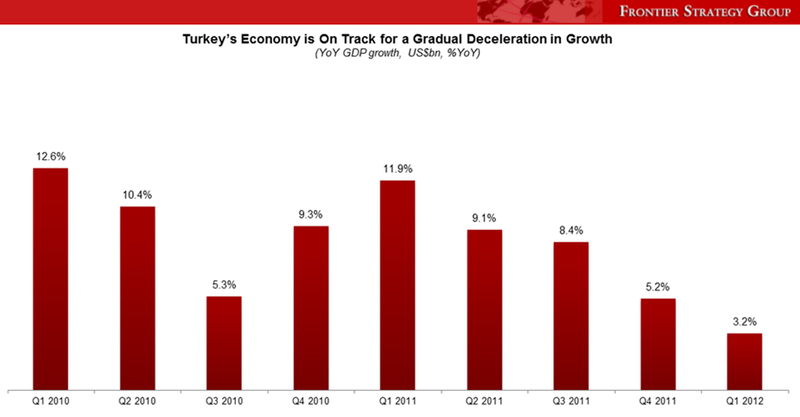
Turkey is on a clear slowdown trajectory. Both the consumer and the business sectors are seeing a gradual deceleration of growth, and GDP expanded by only 3.2% in Q1 2012, compared with last year’s annual growth of 8.5%. We expect Turkey’s slowdown to continue through the end of the year as the eurozone crisis continues to depress export demand while high inflation, a weakening currency, and more expensive consumer credit undermine consumer demand.

However, this slowdown should not lead multinationals to consider Turkey a declining opportunity. In fact, now is a critical time for companies to invest in positioning themselves for the post-crisis opportunity in the market.

While Turkey is slowing, it is still weathering the eurozone crisis better than most of Central and Eastern Europe. With strong demographic fundamentals, growing investment, a diversified economy, and increasing importance as a regional hub, Turkey offers long-term opportunity that promises a relatively fast recovery once the eurozone crisis is back on a path of growth.

More importantly, we’re seeing growing investor interest in the market. Cash-rich multinationals, many of them European, are taking advantage of the weak lira to make cheaper investments in setting up or expanding their local presence, including through local manufacturing. A reflection of this trend was healthy growth in FDI at US$6.5 billion in the first five months of 2012.

Turkey’s government is aggressively working to attract foreign investment, in particular in local manufacturing. Its recently-announced incentive program has attracted substantial interest from multinationals, with over 270 applications for incentives already submitted.

This trend of increased investment in the economy, however, does not just signal multinationals’ continued confidence in the Turkish market as well as growing opportunity for B2B companies. It will also contribute to growing competition on the Turkish market, already one of the most competitive emerging markets globally. Companies caught off guard will see growing competition on price from both local companies and multinationals with a local presence undermine their profitability and restrict their ability to take advantage of the opportunity in Turkey. For companies committed to the market, this is the right time to invest in Turkey.
2013 will not be a year of recovery in CEE

CEE

Companies need to prepare for a continued deterioration of the macroeconomic environment in Central and Eastern Europe through the end of 2012 and at least the first half of 2013. Demand from both the business sectors as well as the consumers in the region will slow, and public spending cuts will limit opportunity for companies selling into the public sector.

Several drivers are contributing to this bleak picture, all of them linked to the eurozone crisis.

Exports are the main culprit as most CEE economies are highly dependent on export-driven growth and the majority of their exports are destined for the eurozone. In addition, a dependence on lending from the local subsidiaries of eurozone-based banks is leading to a tighter credit market across the region and depriving already struggling local businesses from access to capital. Adding to this, the deeply depressed consumer sectors across CEE further exacerbate the slowdown in regional economies. Finally, regional governments, eager to cut public debt and budget deficits in the face of the sovereign debt crisis, are cutting spending and raising taxes, further depriving their economies of much-needed growth. Together, these trends reinforce each other, creating a perfect storm of weak growth in the region. Because regional governments are unwilling, and some are also unable, to increase spending to break this vicious cycle, CEE’s recovery is largely out of the region’s hands and instead depends on how and when European leaders find a sustainable solution to the eurozone crisis.

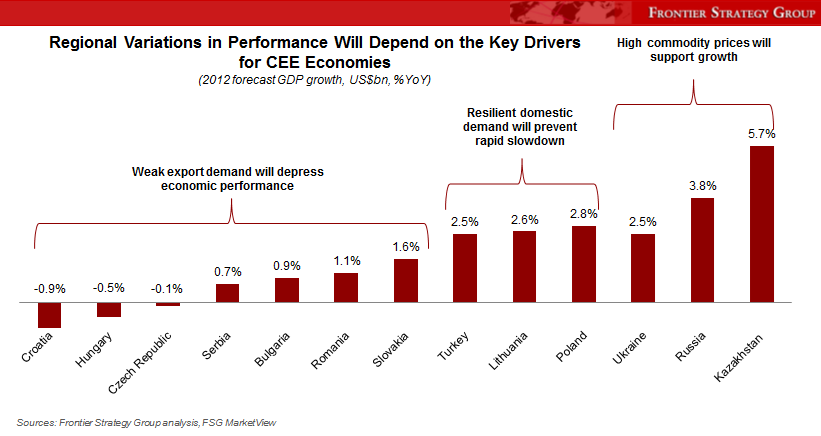
While these trends apply broadly to the region, there are differences. Russia, Turkey, and Poland are benefiting from the size of their economies and resilient consumer demand which will support a softer decline in growth. Russia, Kazakhstan, and, to a small extent, Ukraine will also benefit from commodity exports. However, both consumer demand and energy exports stand substantial risk of rapid deterioration of the eurozone crisis, such as may be triggered by an exit by Greece and/or Spain. In this case, no CEE economy will be spared and the starting point of the recovery will be delayed even further.

Executives Highly Optimistic About Indonesia Amid Global Uncertainty

Country Sentiment Index Indonesia Q2 SCORE = 77*

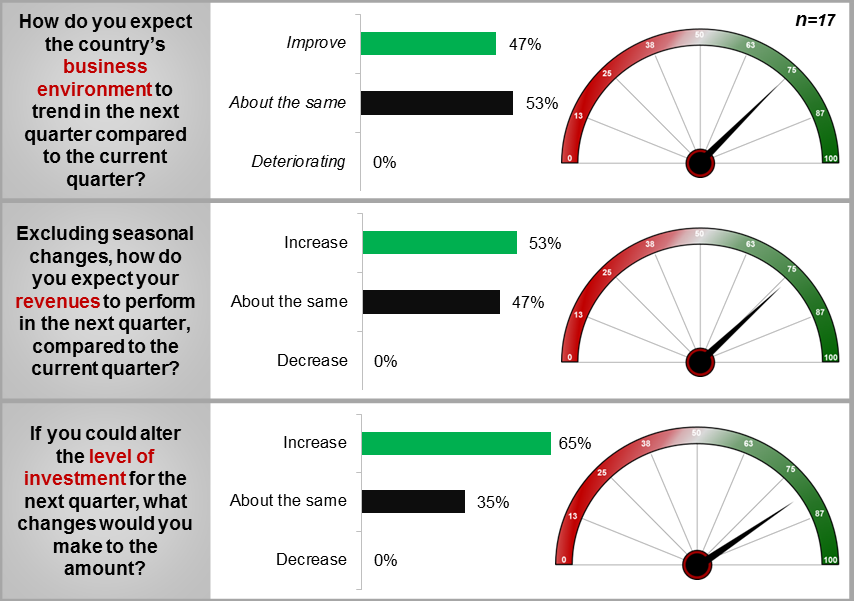
Executives Highly Optimistic About Indonesia Amid Continuing Global Uncertainty (see graphs)

■ The majority of the executives questioned expect the country’s business environment to remain at a similar level or improve further, even as the government attempts to implement protectionist measures that could potentially hurt multinationals

■ Moreover, 53% are also expecting their revenues to rise further in Q3 2012 compared to Q2. The decidedly positive sentiment is the likely result of Indonesia’s resilient and strong domestic demand, which is expected to sustain high growth in the long run

■ Indonesia’s demography shows many people in a productive age range, increasing employment rate, and a rising middle class. This has convinced 65% of those surveyed to consider increasing their investment level in the near future

Indonesia

*UNDERSTANDING FSG’S COUNTRY SENTIMENT INDEX (CSI)

Companies can use FSG’s CSI to track long-term sentiment amongst executives regarding our key markets

■ FSG calculates Country Sentiment Index (CSI) based on the responses gathered from our senior executives in the region. Each response is given a score on a scale of 0 to 100 by assigning the following values: 0=decreasing, 50= about the same, 100=increasing. A total score above 50 would indicate positivity while a score below 50 would indicate negativity

This is the first CSI; companies can monitor Long Term trends in the upcoming quarters


Conditions in Greece Worsening - FSG Analyst Insights

Interview with Matt Lasov, head of EMEA research for Frontier Strategy Group:

“There is a lot of tough talk coming out of Germany after the government approved the Spanish bank loans. Some officials are essentially challenging Greece to leave, claiming that the Greek problem is ring-fenced. It’s mostly rhetoric designed to rile up domestic voters. We are very skeptical that we’ll see German-led action to force Greece out. Politicians are simply jockeying for power as the domestically unpopular Spanish loans created a political opportunity. Forcing Greece out still has the potential to destabilize thinly-capitalized German banks and the broader European financial system.

The next signpost to watch is the upcoming Troika visit. Greece has closed only 12 public agencies from a target list of 120. At the same time, the Greek government is expected to ask for a budget deficit cut extension that will cost the Troika an additional 30-50 billion Euros. This will be hugely unpopular with taxpayers across Northern Europe.

Markets are not taking the news well and, as a result, Spanish 10yr yields shot to a record 7.5% today. A bit more under the radar, 2yr yields shot up to 6.4%, so even rolling over short-term debt will be painful and difficult. When yields spike in Spain on the back of Greek news, it highlights the continued interconnectedness of the European financial system despite German claims that Greece is ring-fenced. A disorderly Greek exit still has the potential to create bank runs and bond strikes in Spain. The market’s response to Italy has been more measured. 10yr yields increased to 6.4%.”


3 Proven Strategies for Improving Employee Alignment to The Strategic Plan from NACCO

Naaco


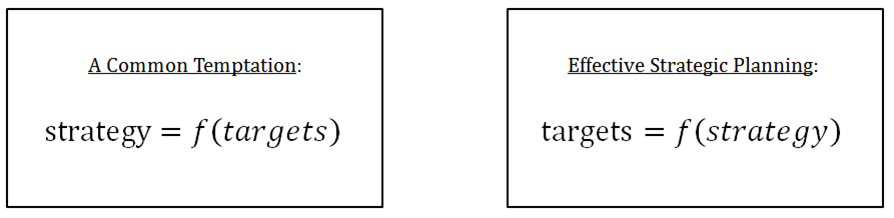
A simple mathematical function can help describe the root-cause behind many companies failed efforts at strategic planning.

It is a common pitfall that companies first create their targets and budgets, and then develop their strategic plan around that foundation. In essence, the strategic plan becomes a function of targets. In this type of strategy, promoting accountability becomes almost impossible in volatile and unpredictable emerging markets. With the budgets and targets setting the direction and path forward instead of the strategic plan, many companies become victims to their own financial urgency and end up laying the groundwork for their own demise.

A subtle yet clear swap from the first model results in a much more reliable strategic plan, and NACCO’s Managing Director of Asia Pacific Andrew Satterley is one of the few bright minds capable of distinguishing this difference, and changed his company’s planning into the more effective model. In this model, the strategic plan exists as its own entity, and targets are derived from the pre-established and overarching growth strategy. Andrew was willing to sit down with Frontier Strategy Group and share three of his best practices for ensuring that his employees buy into the strategic plan, can execute on the initiatives, and manage results on an ongoing basis

1) Know where you stand

With NACCO’s Asia Pacific headquarters managed from Australia, Andrew recognized that they were losing touch with core marketing leads in different countries due to lack of contact. One of Andrew’s first steps was to not only localize the regional headquarters closer to the region, but to do a thorough examination of NACCO’s local business. He spent months observing organizational structure and sales processes, and also implemented external surveys of customers as well as staff to understand how they were perceived in market. Afterwards, Andrew used the results to create a robust SWOT analysis and develop a vision for their plan of attack in the future.

AS: “We decided we needed to document where we are, where we want to be, and how we want to get there. A lot of the times it’s always about the next sale etc, but I need to understand our overall objectives, numbers should be an outcome of our strategic direction”

2) Give employees the strategic plan…literally

For Andrew, every single person in the organization gets a copy of the strategic plan, from the head of a business unit to the person working a factory line job at 4am. Every single person gets walked through the plan and the why/where/when/how, going through the relevant details line by line. This has led to tremendous amounts of idea-generation through employee feedback.

AS: “I take them through why we are sitting down, what we expect, and depending on who I am talking to we will take them through the relevant parts of the plan (accounting gets accounting, warehouse manager gets warehousing). When I listen to my front-line people react, I have heard some fantastic ideas”

3) Improve succession planning, transparency, and visibility

Employees who only receive cascaded down information often struggle to make the connection between their purpose and corporate objectives. Andrew realized that a mandate-down approach doesn’t yield the desired employee alignment, so he made a concerted effort to give employees a clear view into why changes were being made. By improving employees understanding of the strategic plan, how they fit in, and how they can grow with the company, Andrew was able to achieve improved employee engagement and alignment.

AS: “Some of the best ideas come from people on the floor, when I speak with someone who is in it every day it can really change the thinking. A lot of it [employee alignment] is improving succession planning and training. We want to give them as much information as possible to that they have confidence in not just the company but also themselves”.

Saudi Arabia: Uncovering Opportunities Outside of Jeddah and Riyadh

Saudi

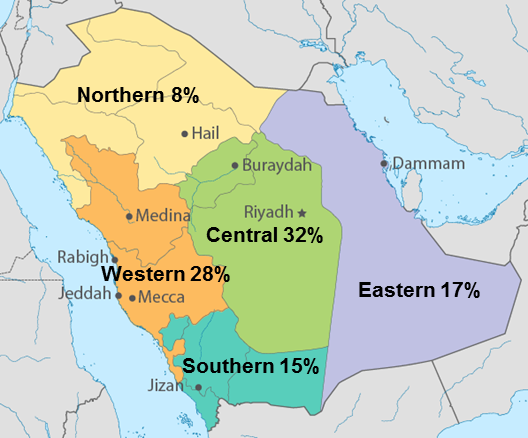
Photo: Regional cement demand demonstrates opportunity across Saudi Arabia

The Saudi government is spending more than US$300 billion on major infrastructure projects through 2014. Development projects are dispersed throughout the country to create jobs, raise the standard of living, and attract foreign investment in less-developed areas. As a result, companies should no longer expect to capture the full potential of the Saudi market if they are only based in tier 1 cities like Dammam, Jeddah, and Riyadh. Expanding outside of Saudi’s major cities allows companies to reach more customers in the country’s population centers, where major public investment is targeted. Government funds will support rapid growth and these cities are likely to grow faster than the core markets, because they are starting from a lower base.

Concentrate on western Saudi Arabia in the medium term

The Saudis are pouring in money to develop various cities in the western region, which accounts for nearly 40% of construction activity through next year. Public expenditure is driven by education, healthcare, housing demand, and religious tourism in the region. The spending trends are attracting foreign investment to Rabigh, Mecca, and Medina.

  • Rabigh: importance is tied directly to the construction of nearby King Abdullah Economic City (KAEC), which is already attracting investments from major foreign multinationals like pharmaceutical company Sanofi and chocolate manufacturer Mars. Both companies plan to invest at least US$60 million in manufacturing facilities. Rajhi Steel is building a US$4 billion heavy steel complex as part of KAEC. The plant will have a capacity of 1.8 million tons per year and will play an important role in future development in the city and region.


  • Medina: benefits from infrastructure development related to religious tourism and construction plans for Knowledge Economic City (KEC). CBH Real Estate Development plans to build a shopping mall in Medina with an initial budget of US$530 million to accommodate the growing demand for retail space due to religious tourism. The Saudi government has allotted US$8 billion for Medina’s Knowledge Economic City, which is expected to be completed in 2020.


  • Mecca: religious tourism drives infrastructure development. An estimated US$40 billion will have to be spent in Mecca within the next decade to meet rising demand for hotel accommodations. The number of pilgrims is expected to double to 13.8 million by 2019, requiring 82,000 rooms. There are currently an estimated 50,000 rooms in Mecca.

Frontier and service cities offer long-term opportunities

The Saudi government aims to develop the country’s north and south in order to raise the standard of living and promote stability. Government spending priorities provide companies with opportunities in frontier cities as a result. Expanding into frontier cities such as Hail and Jizan is a way to capture long-term ROI with an Economic City being built in each location. Buraydah is becoming increasingly important as a trade corridor for Riyadh, which will continue to attract government investment in public sector and IT projects.

  • Buraydah: location means it will play a critical part in the US$5 billion North-South Railway. The rail project is meant to connect the northern mineral-rich region with Riyadh via Buraydah. The national budget allocates US$183 million to establish and equip hospitals in Qassim Province. Much of the money will be directed to Buraydah due to the city’s role as commercial center of the province. Al Baik Food Systems, a Saudi-based fast food restaurant chain, has announced plans to open two outlets in Buraydah by 2014.

  • Hail: attracts investment as part of the country’s strategy to increase industrial activity in the north. Alfanar Construction Company is upgrading the Hail -2 Power Plant to extend electrical capacity. The US$120 million project was delayed by a year, but it is expected to be completed this year. Saudi Arabia’s Health Ministry approved US$400 million in projects in Hail Province. The new projects include the establishment of two 300-bed hospitals with a total cost of more than US$140 million.

  • Jizan: development is tied to the government’s desire to create jobs and increase the standard of living in the southern region. Bids are set to be accepted next quarter for King Abdullah Bin Abdulaziz Airport, which will be an important component of future development in Jizan and the rest of the southern region. After several delays, KBR Inc. is building a refinery in Jizan for Saudi Aramco. The facility will refine up to 400,000 barrels of oil per day when it is completed in 2015.


Expert Post: China and the BRICs

Frontier Strategy Group Expert Adviser, David Wolf recently wrote the following on his Silicon Hutong blog:

While the Fourth BRICS (Brazil, Russia, India, China, and South Africa) summit was nearly three months ago, the meta-message that is emerging from the aftermath is that these countries do not yet form anything resembling a bloc of interests.

Ruchita Beri’s short piece (linked above) is guardedly optimistic about the grouping, but if you read between the lines you can almost feel the divergence of interests that is pulling this grouping apart. Beri, a senior researcher at India’s Institute for Defence Studies and Analyses, gently suggests that China is part of the problem.

“While the BRICS grouping does provide an opportunity for each member to play an important role on the global stage, one of the challenges that it faces is cohesiveness. Take the issue of the BRICS development bank. While it is indeed a laudable initiative, the challenge lies in aligning the differing interests of the member countries. Moreover, other members of the grouping are wary of China’s domination over the bank given that China holds very large foreign exchange reserves ($ 3 trillion).”

All of this serves to underscore the real elephant in the room, which is the fact that while some of the BRICS might trust each other, most are having a hard time trusting China. As it considers its soft power challenges, China also needs to see that being a trustworthy player in the global system would do a lot toward making it influential (rather than disruptive) in such international groupings, and in turn toward making those groupings influential.

To view the original post, click here.

Brazil and Mexico…Heavyweights or Lightweights?

Results

How important are the Brazilian and Mexico markets to your business? Are they important enough? With multinational companies placing an increasing emphasis on these two Latin American giants, many executives yearn to understand how Brazil and Mexico fit into the big picture.

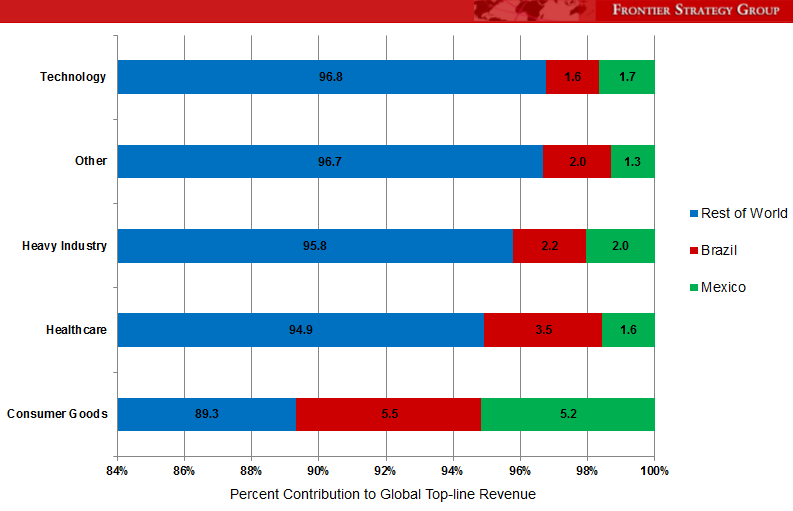
In a recent senior executive poll, Frontier Strategy Group benchmarked the relative revenue contributions of Brazil and Mexico to total global revenue, on a company-by-company basis. By segmenting the results into industry cohorts, our clients are able to see in detail how their organizations stack up against their peers.

Consumer goods companies are far outpacing other industries in their expansion into these markets, which indicates that industrial, pharmaceutical, and technology companies have a huge opportunity to solidify their positions in these markets and create a more sustainable growth platform for the future.

With the often conflicting growth and profitability imperatives, it is useful to know where you stand in order to set reasonable expectations with corporate centers. And as is true with any business, knowledge is the key to unlocking the secrets of effective growth.

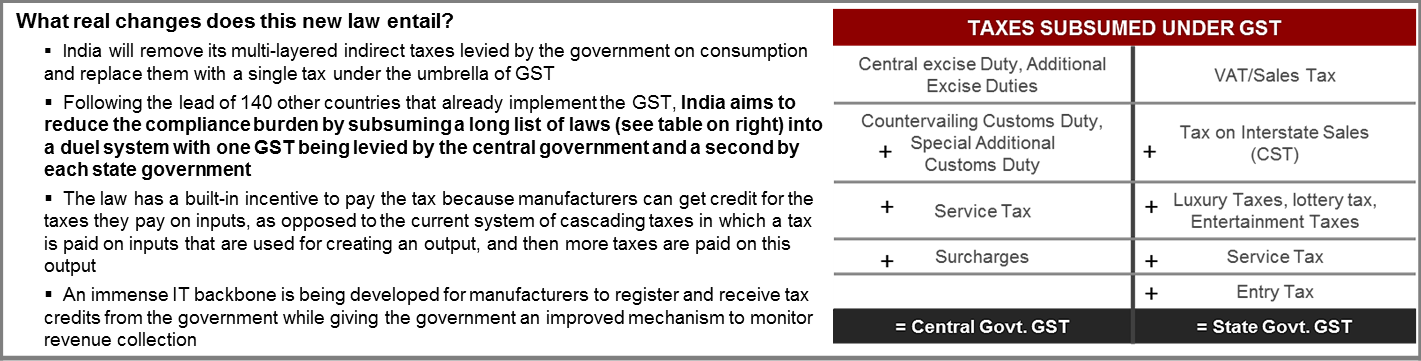
India Aims to Introduce Landmark Goods & Service Tax in H2 2012

The India government has proposed the launch of the landmark Goods and Services Tax (GST) bill during H2 2012 in order to reduce the compliance burden for companies and meet international consumption tax standards

  • With the law meeting international standards and signaling the government’s attempts to simplify the process of doing business in India, FDI is expected to rise as well
  • Initial studies show that it will add about 1.5% to the GDP due to the lower compliance burden, more competitive exports, and higher tax revenues

Frontier Strategy Group View:

Companies can expect the law to be delayed due to the bargaining that will take place between the state and central governments in terms of revenue sharing and level setting

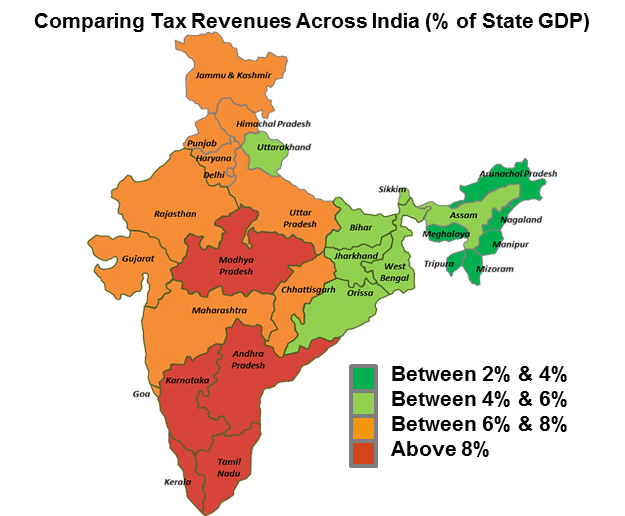
The 28 state governments have vastly differing interests; those with higher revenues are more unlikely to share their wealth with the central government (see map below)

While the reform is headed in the right direction, companies will bear the cost of inefficient resource allocation and more expensive logistics as the differing state GSTs will continue to divide the Indian market into several sub-markets.

India Map

India Policy


Looming Confrontation Impacts Investment Climate in Egypt

Egypt’s military and the Muslim Brotherhood are inching closer to a direct confrontation, which has serious ramifications for the country’s investment climate. Today Egypt’s Supreme Constitutional Court rejected President Mohammed Morsi’s decree to reinstate parliament, which the judiciary dissolved in June. The Muslim Brotherhood has called for a “million-man march” to support the return of parliamentarians tomorrow.

Frontier Strategy Group warned that the parliament’s dissolution was a potential flashpoint for confrontation between the Muslim Brotherhood and the military in a June 22 executive brief for clients. Our view remains that companies should delay reinvestment due to Egypt’s increased uncertainty, which will drive economic deterioration in the short-to-medium term.

While Egypt is focused on political volatility, the economy is on the verge of a deepening crisis. Ongoing political turmoil increases the likelihood of a disorderly currency devaluation of up to 30% or more. This would significantly raise food and fuel prices, increasing social tensions. Egypt has approximately US$15 billion in foreign currency reserves, which can only support the pound for a few more months.

Immediate investment ramifications

Demonstrations could disrupt day-to-day business, but it is unclear whether or not the Muslim Brotherhood can attract broad support that would be necessary for sustained protests. Companies should monitor the size of protests tomorrow and whether they continue through Friday at which time their size could grow significantly. A severe military or police crackdown on protesters could lead to demonstrations across the country and the MENA region.

Risk mitigation strategies

  1. Set up alternate/satellite locations for the workplace: Position your organization to overcome transportation disruptions if there is a return of demonstrations, clashes between the police and protesters, or industrial actions
  2. Focus on people for long-term sales growth: Companies can differentiate themselves as employers of choice and improve retention levels by prioritizing the safety and well-being of staff amid political and economic instability
  3. Highlight your brand’s commitment to the country through tough times: Demonstrate your support through a marketing campaign to build brand loyalty in turbulent times, which will be critical for future investment