Eight big questions for Africa in 2012 (Part II)


(5) With a mandate to govern, can Nigeria’s new government implement positive and sustainable reforms?

Between its petroleum-dominated economics and mind-bending demographics, Nigeria is well-positioned for sustained growth and diversified foreign direct investment in the decade ahead: a leading economist has picked the country to be the world’s fastest growing across the four decades to 2050. With its new government now in place for the best part of four years following the 2011 elections cycle - including key individuals favored by business in seat at the both the Finance Ministry and the Central Bank - the time is overdue for a meaningful political vision to capture that opportunity and steer the country towards its eventual destiny as Africa’s regional super-power. Following the creation of a sovereign wealth fund to manage oil-related windfalls and restructuring of the country’s troubled banking sector under the previous administration, future critical reform milestones to look for in President Goodluck Jonathan’s first full term must include tangible progress on tackling entrenched official corruption at all levels of the country’s extensive bureaucracy. In terms of both their immediate creation of investment opportunities and their wider demonstration of an improvement rather than inertia culture in the country’s legislative system, meanwhile, movement will also be expected on finally enacting long-overdue measures to reform the country’s hydrocarbons industry (the delayed Petroleum Industry Bill) and to liberalize the its public healthcare provision (the National Healthcare Bill, now over six years in hiatus).

(6) Will there be a leadership challenge in South Africa?

Better the devil you know, or the devil you don’t? That’s the dilemma facing many businesses with a footprint in South Africa as they contemplate the possibility of controversial President Jacob Zuma facing a serious challenge to his leadership position and broader policy platform at the ruling African National Congress (ANC)’s elective conference in Mangaung (Bloemfontein) in December 2012. Zuma has disappointed businesses with his inability to kick South Africa’s economy into rapid growth, his apparent inertia (and, at times, alleged complicity) in the face of creeping official corruption at all levels of the country’s bureaucracy, and perhaps most damagingly his ambivalence to growing calls from the ANC’s radical youth wing (the ANCYL) for the nationalization of various sectors of the private economy. Ironically, however, it is steps in recent weeks by Zuma’s leadership team belatedly to silence the ANCYL’s outspoken leader Julius Malema – whose support was critical to Zuma’s initial ascendancy - that have upped the stakes for Mangaung and created the possibility of serious attempts throughout 2012 to displace pro-business moderates from government.

(7) Will Asian companies continue to make the running in Africa?

The story of Chinese investment, and to a slightly lesser extent companies that hail from other Asian countries, in Africa is a popular academic and media topic. The appetite for African growth from businesses that honed their model in Asia is apparently boundless. Asian vehicle manufacturers Honda, Hyundai, Toyota, Suzuki, Tata and Mahindra have all set their sights on South Africa; Samsung hopes to generate $10 billion in annual revenue in Africa by 2015 with a R&D hub in Kenya; and in recent weeks Chinese handsets manufacturer Huawei has announced a major play for the booming Nigerian telecommunications market. Part of Africa’s attractiveness as a market – beyond its raw consumer potential – is its relatively uncluttered competitive landscape. With every year that passes, that scenery becomes more congested. Western companies arguably already lag behind their Eastern counterparts in numerous markets across various verticals; the danger is that recession or slowdown in their home markets into 2012 sees Western firms revisit ever stronger conservatism and risk aversion towards the African opportunity, despite its favorable growth profile, allowing that gap to widen further – potentially beyond reach – as Asian investment continues to flow unchecked into the continent. Meanwhile, side-effects of this trend can also be expected to accelerate in 2012: diversifying trade and investment partners strengthens the hands of African governments, and lessens their dependence on, and motivation to defer to the legislative and regulatory preferences of, Western operators. Given many Asian investors’ emphasis on long-term manufacturing, research/development and supporting infrastructure components to their investments, the overall bar for all businesses entering the market can also be elevated as a result; relationships between employees and host communities and investing businesses can also be substantially altered by these Asian pioneers.

(8) Can East Africa meaningfully integrate?

The East African Community regional bloc (comprising Kenya, Tanzania, Uganda, Rwanda and Burundi) on 1 January 2010 formally launched a common market. All five countries have already adopted a common external tariff, an identical tax applied to imports from outside the bloc, and allowed duty-free regional trade with the exception of Kenya, the largest economy. Given that East Africa lacks a single economy of the scale of Nigeria in the west or South Africa in the south, material progress on implementing the common market and transitioning towards the free movement of people, capital and services across the five countries’ borders, as well as the abolition of import duties, is critical to the region’s future growth prospects. If precedent is a guide, implementation during 2012 and beyond is likely to be under-funded and therefore slow and patchy – while structural obstacles to meaningful integration from both inadequate transportation infrastructure and deficient electrical power supplies will remain significant. Nevertheless, with its booming demographics and swelling natural resource potential as well as its proximity to Middle Eastern and other Asian markets, East Africa remains an exciting growth frontier for investment. Ultimately, the aim is also to introduce a single EAC currency to further simplify regional trade.

To learn more about Frontier Strategy Group’s regular Market Intelligence on Africa’s key investment markets, contact africa@frontierstrategygroup.com to learn how we can help

Eight big questions for Africa in 2012


(Tradition continues along Mozambique’s Maputo Development Corridor)

Part one

With unprecedented levels of investor interest both on merit, and because growth may well prove elusive elsewhere, 2012 promises to be an exciting year for sub-Saharan Africa. In this two-part series, I examine some of the key questions businesses looking to the continent should ask themselves as they plan ahead:

(1) Can the continent withstand continuing volatility in commodity prices?

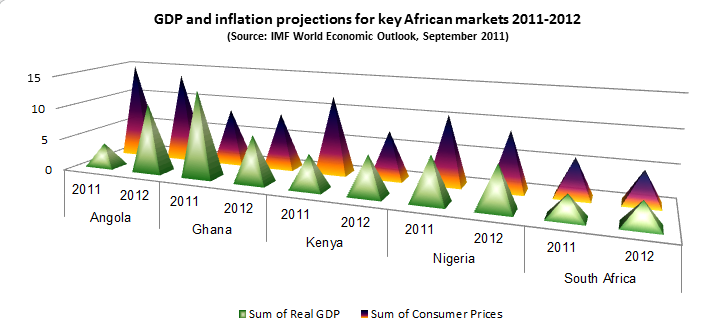
While broadly insulated from sovereign debt and banking-related contagion from the OECD countries, Africa’s vulnerability to commodity price movements – particularly in the form of inflation – remains considerable, and will be a key theme for the region’s macro-economic outlook alongside an average 5.25-5.75% GDP growth projection into 2012, driven by strong domestic consumption. Importers of food and fuel – including Ethiopia, Kenya and Uganda – are already facing sharp inflationary pressure, a situation that could worsen in the year ahead if costs for those inputs trend upward. Producers of oil and industrial metals – Angola and Nigeria the giants in the former category, countries such as Zambia and Congo (DRC) falling in the latter – will meanwhile see their fortunes rise or fall depending on global commodity price and demand shifts, with higher prices boosting government currency earnings but also creating upward pressure on domestic prices. A renewed recession in Western markets, meanwhile, would impact African economies through lower remittances and renewed risk aversion amongst investors from those affected countries. South Africa, with its exposures on metals prices, established manufacturing exports, developed tourism sector, looks particularly vulnerable should worst-case macro-economic scenarios play out in North America, Western Europe and Japan.

(2) Will a series of major elections cause seismic shifts or entrench the status quo?

2011 has been a busy time for elections in Africa: larger countries that have been or are yet to go to the polls this year include Cameroon, Congo (DRC), Nigeria, Uganda and Zambia. Assuming Zimbabwe’s vote is delayed as expected, that country will join a similarly important list for 2012 that also includes Angola, Ghana, Kenya (whose outlook I cover in more detail elsewhere in this list), Mali and Senegal. In addition to the familiar potential for delays, disputes and protests, this wave of elections could be demonstrative of a number of wider cross-border trends. To begin with, that so many countries are organizing and holding broadly free and fair voting each year represents a dramatic and continuing important shift away from the autocratic norms of the 1980s and early 1990s. On the flip side, with accountability and transparency also comes greater policy unpredictability – as mining companies in Guinea discovered in 2010, when a change of president via the ballot box in that country catalyzed a major review of mining licences and royalty payments. Many of the elections will pit very elderly incumbents – Senegal’s Wade and Zimbabwe’s Mugabe are both over 85, while Angola’s dos Santos is entering his 70s – against younger opponents promising an agenda of change, reform and renewal. In addition to generational and policy change, how to manage and beneficially spend these countries’ growing mineral wealth will be a prominent issue in many of the elections – most especially in oil- and diamond-rich Angola and in Ghana’s first vote since it joined the ranks of petroleum producers, but also in Mali and Zimbabwe where mineral finds have yielded much-needed new government revenue streams.

(3) Will North Africa’s wave of anti-government protests shift southwards?

It hasn’t escaped the notice of many Africa watchers that the same cocktail of raw ingredients that broadly underpinned the so-called Arab Spring – long-entrenched and corrupt undemocratic regimes presiding over increasingly youthful and socially connected, technology-savvy populations struggling with unemployment – are also present in a fair number of sub-Saharan countries. It should be noted that mass uprisings leading to regime change are not unknown in the region – the toppling of Madagascar’s previous president in 2009 providing but one recent example – while military-led coups, although far rarer than in previous decades, also continue to occur sporadically in some countries. For some, the question has become why such ‘revolutions’ are not more commonplace given the potentially volatile causal factors in place. The answer to that question likely varies location, but includes – channeling de Tocqueville’s theory of what causes revolutions – a certain degree of lower expectations on the part of poorer African populations (often focused more on basic subsistence / survival or emigrating than marching on the streets) than their Arab counterparts, combined with governments that by and large have still maintained a sufficient monopoly of force and willingness to stamp out dissent fairly ruthlessly before it spreads. With public expectations rising alongside GDP – and food prices – in the months ahead, the potential for more unrest during 2012 is highly credible. Whether this manifests as more ‘manageable’ street protests of the type witnessed already in a number of countries during 2011 (such as Burkina Faso, Mauritania and Uganda) or more sustained disturbances remains to be seen. Other candidate countries for turmoil in the year ahead include Senegal, Gabon, Zimbabwe and Cameroon.

(4) Can Kenya come through a pivotal year unscathed?

It’s been a tough few weeks for Kenya, East Africa’s critical hub market: from the serious food crisis in its north, through the abduction of a female British tourist and the murder of her husband in the coastal resort of Lamu, to a major pipeline fire near the capital Nairobi. The negative impact of such developments on tourist visitor numbers and investor appetite would be negligible compared to the situation should the serious nationwide political violence that accompanied its December 2007 election resurface surrounding new polls due in August 2012. The implementation of a new constitution and wider Kenyan politics remain effectively on hold pending the long-awaited start of hearings at the International Criminal Court in The Hague, involving a number of key politicians accused of involvement in the clashes that paralyzed the country in 2007-2008. Any resurgence in political violence due to the Court’s findings or around the next poll will reverse recovery in the tourism sector, and with it any chance of growth close to the 5.7% YOY GDP figure projected for 2011. In the long-term Kenyan politics needs to move on from confrontational, ethnic-based divisions into more ideological / policy-based debates in order to achieve stabilization and much-needed reform.

To learn more about Frontier Strategy Group’s regular Market Intelligence on Africa’s key investment markets, contact africa@frontierstrategygroup.com to learn how we can help
Russian ruble taps two-year low on Kremlin shift

From MarketWatch

The Russian ruble fell to a more than two-year low versus the U.S. dollar Monday, under pressure after the nation’s Finance Minister Alexei Kudrin resigned over a policy dispute with President Dmitry Medvedev.

Kudrin resigned Monday as Russia’s finance minister and deputy prime minister, citing differences with the president on economic policies, the state-run RIA-Novosti reported.

Putin to return as Russian president

WSJ’s Richard Boudreax looks a how Vladimir Putin’s return as Russian president could hamper U.S. efforts to advance arms-control and trade agreements.

Some investors had seen Kudrin as a guarantor of the country’s financial stability, the news agency said.

“It is difficult to see how Mr. Kudrin’s resignation can be anything but market-negative,” said Neil Shearing, chief emerging market economist at Capital Economics, in a note to clients.

The ruble weakened following the news, with one U.S. dollar (ICAPC:USDRUB) buying 32.48 rubles, up 1.5% from Friday. It traded as high as 32.55 rubles earlier, a more than two-year high for the dollar, according to data on FactSet Research, which tracks closing levels.

Medvedev on Saturday endorsed Vladimir Putin’s return as president. Kudrin has reportedly refused to join Medvedev’s government should Putin become the new president after elections in March and appoint Medvedev as prime minister.

“For all Mr. Medvedev’s warm words on the need to progress market reforms, Mr. Kudrin has arguably been more influential in rebuilding Russia’s balance sheet from the ashes of the 1998 ruble crisis,” said Shearing.

And “with oil prices starting to slide and financial markets still jittery, now is not a good time for the government to lose its arch-fiscal hawk and one of its most influential liberal voices,” he said. “It is unlikely that Mr. Kudrin’s replacement will share his predecessor’s credentials and clout.”

Ruble, equities risks

For now, the Russian markets will likely take their cue from events in the global economy and the outlook for commodity prices in particular, Shearing said.

And the risks to the ruble and Russian equities “lie firmly on the downside,” given Capital Economics’s view that the euro-zone crisis is likely to deepen, Group of Seven growth will grind to a halt in 2012 and oil prices will fall further, he said. Crude-oil futures prices (NMN:CL1X) have fallen by around 15% year to date.

Matt Lasov, director of global research at Frontier Strategy Group, said the negative impact on Russia’s market from Kudrin’s resignation won’t be enough to change market fundamentals.

But “Russia will still struggle with an over-reliance on oil in an environment where European demand is set to drop, impacting Russia’s revenues and growth trajectory,” he said.

It wasn’t clear if news of Kudrin’s resignation came before or after the stock market’s trading session ended. The ruble-denominated Micex stock index closed 1.5% higher on Monday at 1,346.86 points, according to the Micex Group’s Web site. Year to date, the index is down 20%.

At Moscow’s other stock exchange, the dollar-denominated RTS stock index (RTG:RU:RTS) fell 0.1% to finish at 1,315.25 points. Competition authorities earlier this month approved merger plans for RTS and the Micex Group.

Putin’s return to the presidency – not all good news

Saturday saw Russia’s biggest political riddle resolved – Vladimir Putin announced he was running for another term as president and offered Medvedev the post of prime minister. What does this mean for Russia’s business climate?

We now have clarity about Russia’s leadership for at least another six years. United Russia is set to win the elections this fall, and there is no doubt Putin will win the presidential elections in March 2012. This implies continuity in current government policies and actors, and will certainly boost investor confidence in Russia. It should at least partially support Russia’s falling currency and weakening stock market. Although the continuing crisis in the euro zone and the falling oil prices will minimize the announcement’s positive effect on the ruble, we can at the very least expect greater capital inflows through the rest of the year as well as an increase in FDI in the country.

In the short-to-medium term, this is good news for MNCs selling and operating in Russia, especially in the context of an unpredictable global economy. However, there are several potential threats down the road companies should watch out for.

First, there is wide consensus that the Russian economy requires fundamental reform away from its dependence on oil prices and high government spending. Such reform would mean reducing government spending on social programs, and will certainly be met with discontent among the population, something that Putin may or may not be ready to face. There is significant inertia in the Russian government and Putin is if anything a symbol and perpetuator of the status quo. Should oil prices remain high, Russia will hum along well enough. However, a prolonged fall in oil prices will bring about a very serious crisis in Russia, and the country is nowhere nearly as well prepared to weather it now than it was in 2008.

Second, while Russians still see no political alternative to Putin, there is a growing sense of stagnation – political, social, and economic within Russia that Putin is increasingly beginning to symbolize. Russians may vote for Putin, but that doesn’t mean they actively support him and his policies. In the short-to-medium term this has few implications. In the long term, however, it’s the stuff of social upheaval. Russia is inevitably headed into a major political transformation, and it’s now clear its current political leadership is not ready to steward the country through to it.

To sum it up, MNCs will benefit from a relative improvement in Russia’s business climate in the short term, will need to watch carefully for whether and what economic reforms the government undertakes after March 2012, and expect that in the long term, the rules of the game in Russia will change.

Threats and Opportunities Await MNCs in Turkey

Explosive deterioration of its relationship with Israel. A trip of the post-Arab Spring Middle East. Turkey’s foreign policy is generating quite a lot of attention in the Middle East these days.

Beyond its political implications; however, the policy of courting key Middle Eastern countries like Egypt also has a serious domestic driver: Turkey’s economy is charting precarious waters.

Turkey has been struggling with a rising current account deficit driven by strong domestic demand. The rise in household consumption has been financed by capital from Europe, making Turkey increasingly vulnerable to an outflow of short-term capital as European economies continue to struggle.

The other pillar of Turkey’s economy – exports, is also threatened by the potential of a Eurozone recession. With over 50% of Turkish exports going to the EU, Turkey is particularly vulnerable to a drop in demand from such key countries as Germany, Italy, and Spain. FSG Monitor estimates that a US-EU recession would lead to a 2% drop in Turkey’s GDP in 2012. The projected decline may not be as dramatic as in other countries in the region, but compared to Turkey’s Q1 2011 11.6% GDP growth, followed by 8.8% for Q2 2011 (Turkey had the highest H1 2011 GDP growth in the world), it’s very significant.

In this unstable environment, the Turkish government has announced it will seek to promote export-oriented domestic production. But this strategy will only work if there is enough demand for Turkey’s increased exports. With the European economy in a shaky state, Middle Eastern markets will be increasingly instrumental to Turkey’s economic stability. Currently, the Middle East is the second biggest regional market for Turkish exports, accounting for 20% of the country’s exports, plus another 4.9% of exports going to North Africa.

Turkish businesses are clearly seeing the writing on the wall and are aggressively seeking expanded influence in the Middle East, as evidenced by Prime Minister Erdogan’s large business delegation on his recent trip to Egypt and his promise to increase trade between the two countries to US$5 billion.

In this context, MNCs should expect Turkish competitors to aggressively pursue opportunities in the post-Arab spring markets. As we already discussed, MNCs with overly risk-averse strategies in the region can fall behind regional competitors with a greater risk appetite. It also means, however, that MNCs with Turkish partners can use these relationships in support of strategic expansion in the MENA region, benefitting from the good will Turks are enjoying among the region’s populations and leadership.

In this context, the role of Turkey as a manufacturing hub for the Middle East and North Africa region is becoming increasingly attractive, not just to MNCs but also to the Turkish government itself. As a result, MNCs with local production facilities meant for export to the region are well-positioned to lobby the Turkish government for additional incentives and support.

Growth in Brazil Presents a Double-edged Sword


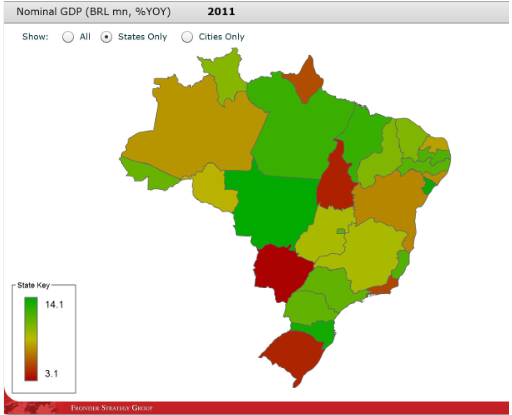
As developed economies continue to muddle through an increasingly tenuous economic recovery, the need for multinationals to find new sources of growth in emerging markets is becoming ever more important. This is a trend that Frontier Strategy Group has been tracking for some time across our client base, and one that is particularly apparent in Latin America, where renewed focus on the region has led to average growth targets in excess of 20% for 2011. In order to meet these growth targets, executives are adopting a combination of strategies that includes expansion into new geographies and consumer segments as well as implementation of aggressive M&A plans.

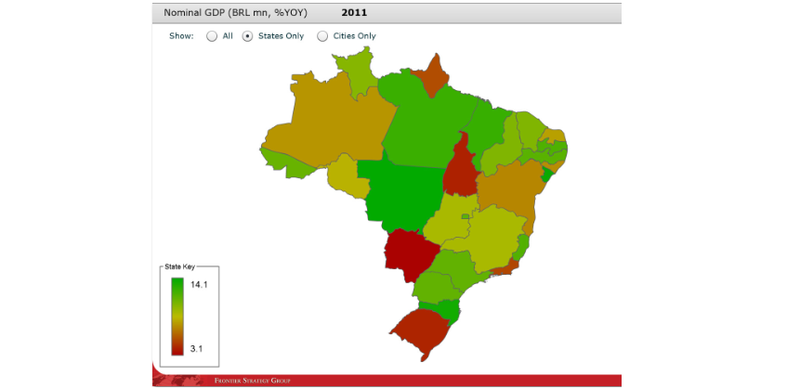
One country where multinationals have seen a tremendous amount of growth over the past two years is Brazil. In the first half of 2011 Frontier Strategy Group member companies averaged 27% YoY growth in Brazil despite a cooling economic environment. These types of results are capturing the attention of corporate centers; however, the stellar performance of Brazilian business units presents a serious conundrum for many heads of region.

The conundrum stems from the fact that as regional heads are seeing more and more of their top-line growth in Latin America come from Brazil, they are experiencing a narrowing of bottom-line margins. The cost of doing business in Brazil, or Custo Brasil as it is known locally, is so high that business units there contribute significantly less to overall profitability than they do in other countries. For executives tasked with maintaining current levels of profitability while achieving unprecedented growth targets, the challenge posed by Custo Brasil is particularly daunting.

For this reason, Frontier Strategy Group is undertaking an effort to help multinationals diagnose and quantify Custo Brasil. The output from this effort will give executives the tools to identify and mitigate some of the more pernicious effects of Custo Brasil in their cost structures and determine which costs are due to local conditions as opposed to organizational structure and execution. By finding ways to narrow the gap in profitability between Brazilian business units and the rest of Latin America, Frontier Strategy Group is looking to ensure the continued success of multinationals in O País do Amanhã.

If you are interested in participating in this effort, please take a moment to fill out the following survey by clicking here (go to survey) or pasting the following link into your web browser: (http://vista-survey.com/survey/v2/survey2.dsb?ID=5131690207).

S&P lifts Turkish lira rating to investment grade

From MarketWatch

Standard & Poor’s Ratings Services raised its local-currency sovereign ratings on Turkey to investment grade at BBB- from BB+ on Tuesday.

In a statement, it attributed the local-currency upgrade to its “view of continuing improvements in Turkey’s financial sector and the deepening of local markets,”

The news briefly shocked traders more than it should have.

Some news agencies mistakenly reported that it was the nation’s sovereign rating that was lifted to investment grade, instead of the local currency rating, which temporarily added to strength in Turkish stocks, according to The Wall Street Journal.

The Turkey ISE 100 index XX:XU100 had climbed by as much as 6.5% Tuesday, then eased to post a gain of 5.1% for the session.

Still, the S&P move is certainly a promising one. “S&P is simply confirming what smart investors and leading multinationals already knew,” said Matt Lasov, director of global research at Frontier Strategy Group — that “Turkey looks a lot more credit worthy than many investment grade markets in Western Europe.”

The local-currency rating upgrade also strengthened the Central Bank of the Republic of Turkey’s “hand for further policy easing,” as pressures on the lira are more likely to recede with the investment grade, analysts at BNP Paribas, said in a report.

Given that, they expect the central bank to cut its policy rate by 50 basis points till the year end, if the Federal Reserve introduces another round of quantitative easing.

In recent trading a dollar USDTRY bought 1.78 Turkish lira, compared with around 1.72 lira at the beginning of September.

The War for Talent in Emerging Markets

“When it comes to engaging and retaining top talent in emerging markets, multinational companies are often their own worst enemies.”

An executive running Asia for a major industrials company shared this comment during Frontier Strategy Group’s Shanghai Executive Round Table last week. The event brought together more than 20 executives from a range of different companies that shared a common pain point: high attrition among key local talent is a major impediment to achieving the aggressive growth expectations that have been set for companies not just in Asia, but in high-growth emerging markets globally.

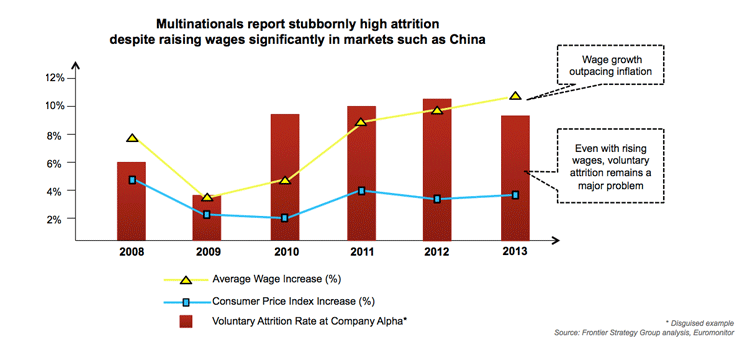
Demand for local talent is increasing as more companies expand their local teams, and supply remains limited. This imbalance has created a seller’s market. Those with the most highly sought after skills are aggressively recruited and offered 20, 30, even 40% of more increases in compensation to leave their current firm. To address this dynamic, most companies have attempted to fight fire with fire. They offer big pay increases to their key talent in hopes of convincing them to stay with the firm for just a bit longer. However, what our clients have observed is that this type of tactic is not only unsustainable, it is also not working. Wage costs are skyrocketing, but attrition remains high.

A great deal of ink has been spilled on this topic (a Google search for “emerging markets war for talent” returns over 2.3 million hits), but I think we hit on a few breakthrough ideas during our discussion in Shanghai. We surfaced dozens of different tactics that our clients have deployed to chip away at this stubborn challenge, but a common thread among the most successful companies was that they had taken steps to resolve a critical misalignment that continues to characterize most Western multinationals’ talent strategies. The misalignment is a result of companies decentralizing their talent, yet centralizing their talent management and human resources (HR) organizations. Put another way, most companies have recognized that moving decision-making further away from customers has a negative impact on growth, but many companies have failed to take a similar approach to managing their own talent.

Companies that have been most successful in combating attrition in emerging markets have resolved this misalignment by focusing on doing three things:

  1. Building local HR capacity and moving HR decision-making closer to the “customer” (i.e., talent)
  2. Reallocating resources from “one to one” wage increases for individuals to “one to many” investments in localized talent engagement initiatives
  3. Dedicating senior management time on an ongoing basis to drive continuous innovation and improvement in HR strategy and tactics; they recognize that today’s innovative engagement strategy will lose its differentiation and impact over time

Success in these three areas will yield significantly greater return on investment than outsized wage increases in the form of improved development programs (which, in turn, yield more effective and capable local talent), higher employee engagement (which results in more productive and motivated talent, with lower turnover of high performers), and a more stable and capable local team. Put together, these benefits will allow executives to decentralize more decision-making and further empower their local teams, which FSG’s research has shown is highly correlated with accelerated growth.

We’ll unpack and explore some of these concepts and share a few examples of successful engagement strategies in future posts.


Indonesia’s Workers Demand Higher Wages

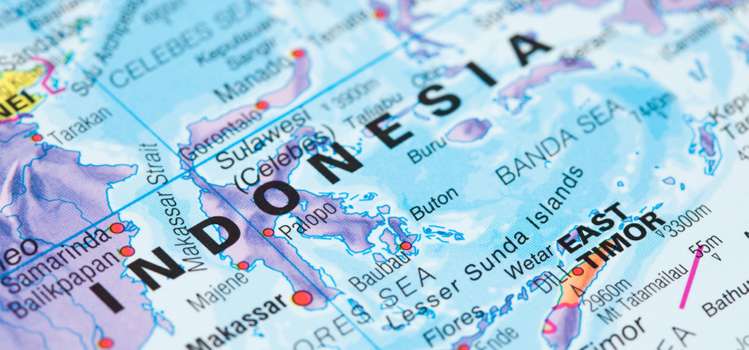
Indonesia’s increased demand for workers calls for creative solutions and higher salaries. There is a limited pool of skilled workers in Indonesia, especially for positions that require English language proficiency or technological skill. Liberalizing investment policies and increasing FDI will continue to put pressure on the pools of both skilled and unskilled workers. MNCs are struggling to retain the talent that will be key to long-term growth in Indonesia.

In Frontier Strategy Group’s view:

  • MNCs need to launch rigorous training programs for both skilled and unskilled employees. Partnerships with local universities, trade schools, and government institutions should be set up to build a pipeline of qualified new hires.
  • Creative incentive packages are the key drivers of talent retention. Selected examples FSG has observed include co-signing of car loans or mortgages and provision of scholarships for children study at foreign universities.
  • MNCs fearful of wage increases in China who are looking to relocate operations to South East Asia need to consider the long-term implications of high demand for skilled and unskilled workers in Indonesia.


What drives private consumption in Russia?


The World Bank’s latest report on the Russian economy made headlines because of the Bank’s revision of its 2011 GDP growth forecast for Russia to 4%, down from 4.4%. However, a less conspicuous piece of analysis in the World Bank’s report carries particular importance for MNCs operating in Russia.

World Bank economists ran an analysis of the drivers behind consumer spending in Russia. The three most important factors were, not surprisingly, the level of economic activity, the external environment (price of oil, etc.) and labor market conditions.

The interesting discovery was in the effect of labor market conditions on consumption in Russia. The Bank’s estimates show that the level of unemployment has a strong negative impact on consumption, while short-term fluctuations in incomes do not translate into significant changes in consumption. For every 1% rise in the unemployment rate in Russia, private consumption falls by 2%, according to the Bank’s model.

The real-life logic behind this is that Russian businesses adjust to negative shocks mostly by lowering salaries, rather than firing employees. As a result, Russians have adjusted their consumption patterns to reflect more volatile wages, mostly seen as a temporary condition. Unemployment, on the other hand, is perceived as a much more permanent state, and directly affects Russian consumers’ choices.

The good news here is that the unemployment rate in Russia has been on a largely downward trajectory and was relatively low at 6.5% in July, a slight increase from June’s 6.1%. Coupled with a strong ruble, and a rise in consumer credit, MNCs can expect this trend to support a strong performance in Russia through the rest of 2011.